Lighting Rules for Riding After Dark in Idaho
There's nothing quite like extending a day of riding into the cooler, quieter evening hours, especially after a long, hot Idaho summer day. But that magical twilight can quickly turn into a stressful situation if your machine isn't properly equipped for after-dark travel. Many riders find themselves scratching their heads, wondering exactly what kind of lighting Idaho requires, especially if they plan to touch a county road or just want to avoid a ticket on the trail. This guide is here to shine a light on those confusing rules, helping you understand Idaho's lighting requirements so you can ride safely and legally, long after the sun dips below the horizon.
Why Your Lights Matter: Safety and Legality After Sunset
When you're out on the trails or even just crossing a county road in your ATV or side-by-side, your lighting isn't just a suggestion; it's a critical safety feature and a legal requirement. The vast open spaces and winding mountain trails of Idaho can become disorientingly dark once the sun sets, making visibility a primary concern for everyone.
Enhancing Rider Visibility
Think about it: whether you're encountering another rider heading your way, navigating a tight corner, or trying to spot a deer about to dart across your path, your lights are your eyes in the dark. A good headlight system doesn't just illuminate the path directly in front of you; it projects light wide enough to show you potential hazards on the periphery and far enough down the trail to give you time to react. Similarly, your taillights and brake lights aren't just for show; they tell riders behind you where you are and what you're doing. This is particularly crucial in dusty conditions or when riding in groups, where a sudden stop without proper illumination can lead to a dangerous pile-up. Without adequate lighting, you're not only putting yourself at risk but also anyone else who might be sharing the trail or road with you.
Meeting Idaho's Legal Requirements
Idaho takes safety seriously, and that's reflected in its regulations for off-highway vehicles (OHVs). These rules aren't just arbitrary; they're designed to reduce accidents and ensure that everyone sharing public lands and designated roads can do so safely. If you plan on riding on any public land or designated OHV trail after dark, or if your route includes crossing or traveling on a county road, you absolutely must comply with Idaho's lighting requirements. Failure to do so can result in hefty fines and ruin an otherwise perfect evening ride. Beyond the financial penalty, being cited for inadequate lighting means a ruined trip and potentially a record that could impact future riding privileges. It's a frustration many riders know well: trying to juggle the thrill of the ride with the sometimes-complex legalities. Understanding these rules is the first step in protecting yourself, your machine, and your wallet.
The Idaho Basics: Mandatory Lighting for Night Riding
Let's break down the absolute must-haves for anyone venturing out on their ATV or UTV in Idaho after dark. These are the core components that Idaho law typically requires, whether you're on a designated trail or traversing a county road. Missing any of these can land you in hot water with the authorities and significantly compromise your safety.
Functional Headlights
Your machine absolutely needs to be equipped with at least one headlight that emits a white light and is visible for a certain distance. For most ATVs and UTVs, this means a pair of headlights, much like a car. The key here isn't just having a light, but having one that works effectively. It needs to be bright enough to adequately illuminate the trail or road ahead, allowing you to spot obstacles, dips, or other riders well in advance. Riders often find that stock headlights, especially on older machines, just don't cut it for serious night riding. You might struggle to see past the immediate ten feet, which is terrifying when you're moving at speed through unfamiliar terrain. Consider the type of riding you do: do you need a wide beam for open areas or a focused beam for cutting through dense forest? Many riders opt for aftermarket upgrades to ensure they have sufficient illumination, not just to meet the legal minimum but for their own peace of mind and safety. After all, what's the point of riding at night if you can't see where you're going?
Visible Taillights and Brake Lights
Equally important as seeing where you're going is ensuring that others can see you. Idaho law typically requires your OHV to have at least one taillight that emits a red light visible from a specific distance to the rear. This light must be on whenever your headlight is on. But it's not just a steady red glow; you also need a functional brake light. This brighter red light comes on when you apply your brakes, signaling to anyone behind you that you're slowing down or stopping. This distinction is critical for preventing rear-end collisions, especially in a group ride or when sharing a road with other vehicles. Imagine the heart-stopping moment of a rider behind you not realizing you've hit the brakes until they're right on your bumper. Again, stock taillights can sometimes be dim or poorly positioned, leading many to upgrade to brighter LED units. These not only last longer but often provide much better visibility, making you a less ambiguous presence in the dark. Don't underestimate the importance of your rearward visibility; it's a silent communicator that keeps everyone safe.
Reflectors for Added Safety
While not lights in themselves, reflectors play a crucial role in your machine's visibility, especially if your active lighting fails or is temporarily obscured. Idaho often specifies that OHVs must be equipped with red reflectors on the rear of the machine, visible from a certain distance. These passive safety devices catch the light from other vehicles' headlights, making your machine stand out even when your own lights are off or dim. Think of it as a last line of defense in terms of being seen. It’s a small detail, but a legally required one that adds a layer of protection. Many aftermarket parts, especially bumpers or cargo racks, already come with integrated reflectors. If yours doesn't, or if they're damaged, it’s a simple and inexpensive fix to add them. Don't overlook these often-forgotten components; they contribute significantly to your overall visibility in low-light conditions.
Road-Ready Rig: Additional Lighting for County Roads and Towns
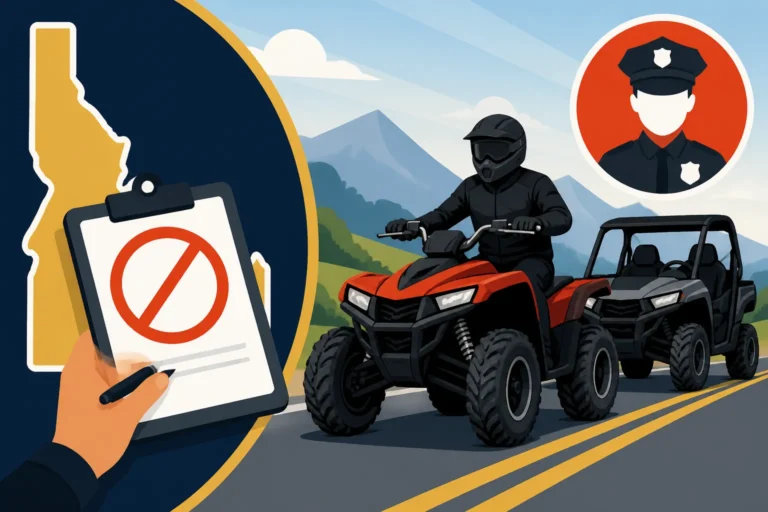
While the basics of headlights, taillights, and brake lights will get you by on most dedicated OHV trails after dark, venturing onto county roads and into small Idaho towns opens up a whole new set of lighting requirements. This is where the distinction between a "trail-only" machine and a "street-legal" one becomes clear, and it’s a common point of confusion and frustration for riders. Many a rider has been surprised by a sheriff's deputy just trying to get from one section of trail to another across a paved road. [What Idaho Requires Before You Ride a County Road] is a great resource if you plan to hit the pavement.
Turn Signals for Communicating Intent
Unlike pure trail riding where hand signals might suffice, operating your OHV on a public road demands the same communication tools as any other vehicle. This means having functioning turn signals. Idaho law generally requires turn signals for any vehicle operating on public roads, and OHVs granted restricted road access are no exception. These signals, typically amber in color, must be visible from the front and rear of your machine. Having them allows you to clearly indicate your intentions to other drivers – whether you're making a turn, changing lanes (if applicable), or pulling over. This is not just a courtesy; it's a vital safety mechanism that prevents accidents. Many ATVs and UTVs don't come equipped with turn signals from the factory, especially older models, making this a frequent aftermarket addition. It can feel like a significant upgrade, involving wiring and switch installations, but it's non-negotiable for road use. Companies like SuperATV offer comprehensive turn signal kits specifically designed for various OHV models, making the transition to road-legality much smoother.
License Plate Illumination
If you're going to be using your OHV on Idaho's restricted county roads, chances are you'll need an Idaho Restricted Vehicle Plate, often referred to as an "R" plate. And just like any other vehicle on the road, that license plate needs to be illuminated after dark so it can be easily read by law enforcement and other drivers. The law usually specifies a white light that makes the characters on the plate visible from a certain distance. This is often a small LED light positioned above or beside the plate bracket. It might seem like a minor detail, but a non-illuminated plate at night is an easy reason for a law enforcement officer to pull you over. Make sure your plate is mounted securely, clean, and brightly lit. It's an often-overlooked requirement that can lead to unnecessary hassle.
Horn and Mirrors: Beyond Just Lighting
While not strictly "lighting," a horn and mirrors are essential components for road-legal OHVs and directly relate to your ability to safely interact with other traffic, especially in low light. A horn is necessary for signaling warnings or drawing attention in situations where visual cues might be missed, particularly at night. Idaho law often requires a horn that can be heard from a certain distance. Similarly, mirrors provide you with crucial rearward visibility, allowing you to see vehicles approaching from behind, especially when preparing to turn or change position. Without mirrors, you're constantly craning your neck, which is a significant distraction and safety hazard, especially in the dark. Most factory UTVs come with side mirrors, but many ATVs do not, making them another necessary addition for road use. These components, combined with proper lighting, help create a comprehensive safety system for navigating Idaho's roads after dark. [Idaho Plates That Begin With R] details why this plate is crucial.
| Component | Trail Riding (Night) | Road Riding (Night) | Purpose |
|---|---|---|---|
| Headlight(s) | Required | Required | Illuminate path, be seen from front |
| Taillight(s) | Required | Required | Be seen from rear |
| Brake Light(s) | Required | Required | Signal deceleration/stop to rear |
| Rear Reflectors | Required | Required | Passive rear visibility |
| Turn Signals | Not typically | Required | Signal turns/lane changes |
| License Plate Light | Not applicable | Required (if plated) | Illuminate license plate |
| Horn | Not typically | Required | Audible warning |
| Mirrors | Not typically | Required | Rearward visibility |
Beyond the Minimums: Enhancing Your Night Visibility and Safety
Meeting Idaho's legal minimums for lighting is a good start, but for serious night riding or simply for enhanced safety and enjoyment, many riders go above and beyond. The standard factory setup, while legal, often leaves much to be desired when you're truly out in the dark, whether on a remote trail or just trying to navigate a poorly lit gravel road. These enhancements can transform your night riding experience, making it safer and more confidence-inspiring.
Auxiliary Lights and Light Bars
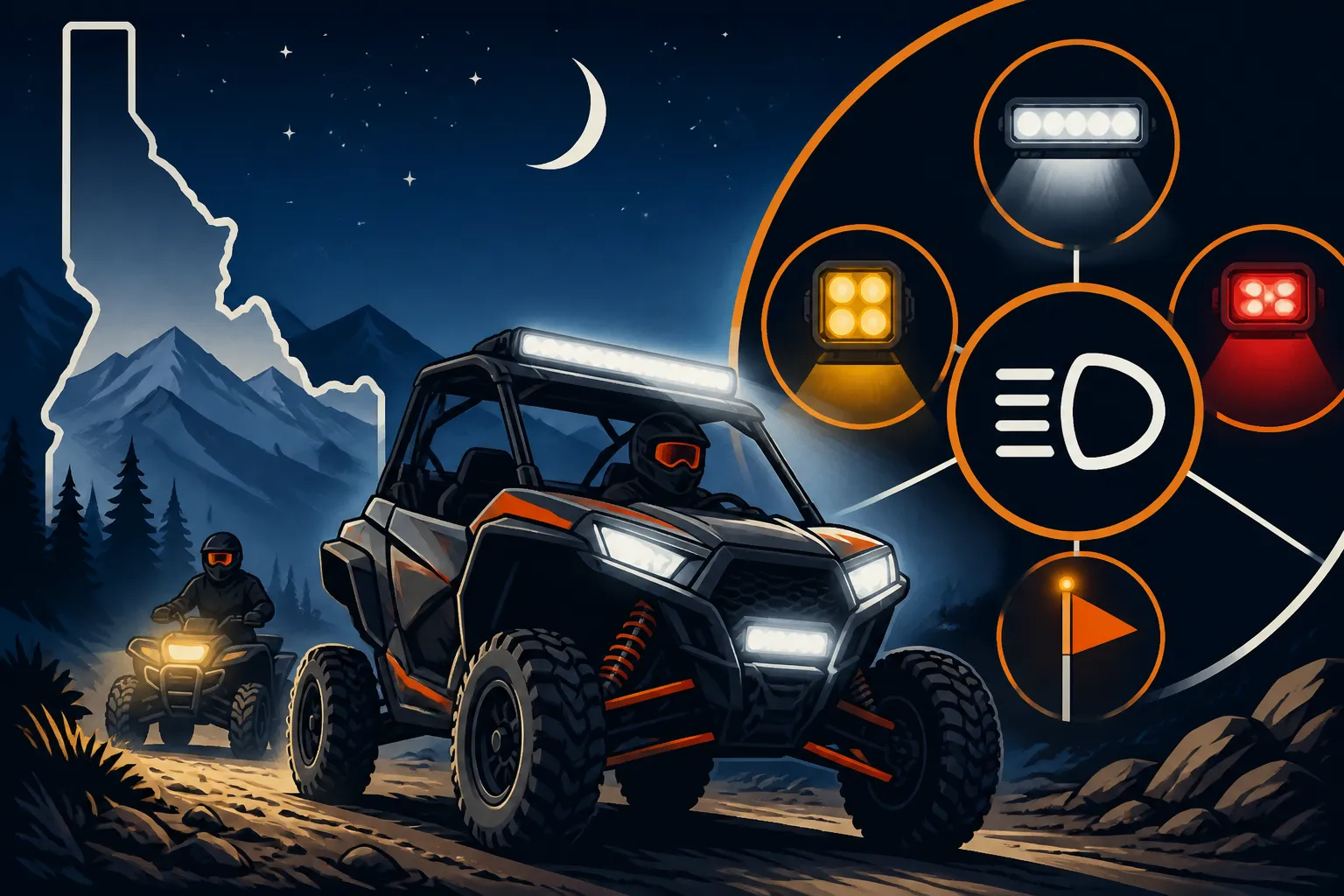
One of the most popular upgrades for night riders is the addition of auxiliary lights or light bars. Stock headlights, even good ones, often have a limited beam pattern and intensity. When you're tackling challenging terrain after dark, you need more. Auxiliary lights, such as spot beams, flood lights, or combination bars, can be mounted to your bumper, roll cage, or roof rack to provide vastly improved illumination. A flood beam can dramatically widen your field of vision, helping you spot wildlife or obstacles lurking at the edges of the trail. A spot beam, on the other hand, can pierce through the darkness far down the trail, giving you extra reaction time. Brands like SuperATV offer a wide array of LED light bars and pods in various sizes and beam patterns, making it easy to customize your setup to your specific riding needs. The key is to remember that while these are incredibly helpful, they often aren't street-legal to use on public roads with oncoming traffic due to their intensity. You’ll typically need to wire them to a separate switch and only use them when appropriate, usually off-road.
Strategic Use of Reflective Tape and Markings
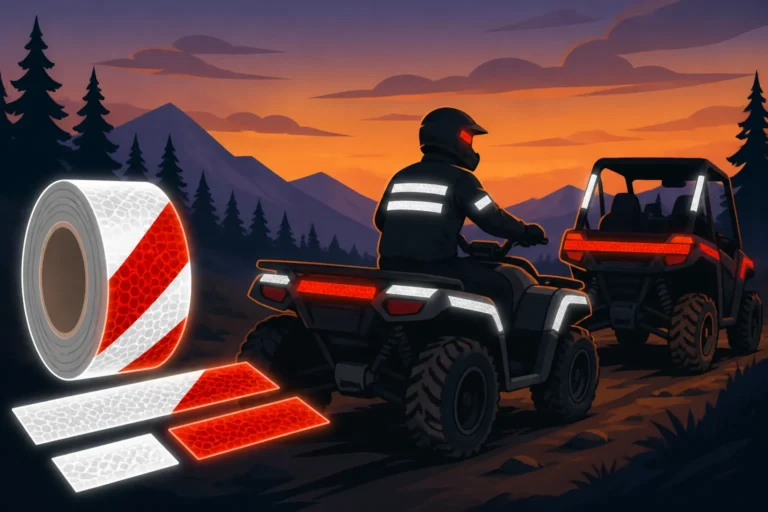
While your machine has legally required reflectors, adding strategic reflective tape can significantly boost your visibility. Think about the sides of your machine, the rear of your helmet, or even parts of your gear. High-quality reflective tape catches and bounces back light from other sources, making you more noticeable from multiple angles, even if your active lights are partially obscured by dust or mud. This is particularly useful if you frequently ride in groups or might encounter other vehicles on less-traveled roads. It’s a low-cost, high-impact safety upgrade that doesn’t draw power or require complex installation. Just ensure the tape is durable and placed in areas where it won't peel off easily. This passive enhancement acts as an extra layer of protection, especially when sharing the trail or crossing unlit areas.
Regular Maintenance and Pre-Ride Checks
The best lighting system in the world is useless if it's not working. Regular maintenance and pre-ride checks are absolutely crucial for night riding. Before every evening ride, take a few minutes to walk around your machine and ensure every light is functioning correctly: headlights, taillights, brake lights, turn signals, and your license plate light (if applicable). Check the wiring for any frays or loose connections, especially after a rough ride that might have jostled things. Ensure your lenses are clean and free of mud, dust, or scratches that can reduce light output. Carry spare bulbs or a small repair kit if you're venturing deep into the backcountry, as a blown fuse or a loose wire can plunge you into darkness miles from help. The frustration of a headlight going out mid-ride is immense, and it’s easily avoidable with a quick check. [Riding Home From the Trailhead at Dusk] is a good time to remember these checks.
Navigating the Dark: Rules on Different Terrain Types
One of the most common sources of confusion for ATV and UTV riders in Idaho is how lighting rules change depending on where you're riding. It's not a one-size-fits-all situation, and what's perfectly legal on a dedicated trail might get you a ticket on a county road. Understanding these distinctions is crucial for seamless, stress-free night riding.
Public Trails and Forest Service Roads
When you're deep in Idaho's vast network of public trails, whether it's within a national forest or on BLM land, the core lighting requirements generally apply: you need working headlights, taillights, and brake lights when riding after dark. These are non-negotiable for safety and to comply with the Idaho Parks and Recreation (IDPR) OHV regulations. Forest Service roads, even if unpaved, typically fall under these same basic rules. However, the use of auxiliary lighting like high-intensity light bars is usually permitted on these types of roads and trails, as there's less concern about blinding oncoming traffic. The primary goal here is to maximize your own visibility for obstacles, terrain changes, and potential wildlife, as well as to be seen by other trail users. Just remember to be courteous; if you see another rider approaching, it’s good etiquette to dim your bright auxiliary lights to avoid temporarily blinding them. The remote nature of these areas means help can be a long way off if you have an accident due to poor visibility.
County Roads and Designated OHV Routes
This is where the rules become more stringent and resemble those for conventional vehicles. If your riding plan involves crossing or traveling on Idaho county roads that are open to OHV use (often requiring an "R" plate), then your lighting requirements significantly expand. In addition to the basic headlights, taillights, and brake lights, you will need functional turn signals, a horn, and an illuminated license plate. [Idaho Roads Open by Default to Restricted Vehicles] provides context on which roads are generally open. These additional requirements are in place to ensure that your OHV can safely integrate with other road traffic. Using high-intensity light bars on these roads is generally prohibited when other vehicles are present or if it would cause glare. The intent is to make your machine a predictable and visible part of the traffic flow, not a blinding hazard. Many riders find themselves making temporary modifications or installing comprehensive kits to meet these requirements when they want the flexibility of road access.
Private Land and Exemptions
Riding on private property, such as your own land, a friend's ranch, or leased hunting ground, offers a bit more leeway, but it's not a free-for-all. Generally, Idaho's OHV lighting laws do not apply to riding strictly on private land, as long as you are not operating on a public road or trail. However, this doesn't mean you should ride in complete darkness! Common sense and safety still dictate that you should have adequate lighting. Even on familiar ground, hazards can appear, and you want to be able to see them. If you're on someone else's property, always confirm with the landowner what their expectations or rules are regarding night riding and lighting. While you might be exempt from state regulations on private land, you're never exempt from the laws of physics or common sense. Moreover, some machines used exclusively for farm or ranch work on private land may have specific exemptions, but if those machines ever touch a public road, even briefly, the standard road rules will apply. [Farm Exemptions From Idaho OHV Rules] can offer more insight here.
Staying Out of Trouble: Penalties and Best Practices for Night Riding
Ignoring Idaho's lighting regulations isn't just a minor oversight; it can lead to serious consequences, from costly fines to dangerous situations. Understanding the penalties and adopting best practices for night riding is key to ensuring your safety and enjoyment on Idaho's trails and roads.
Penalties for Non-Compliance
Idaho law enforcement officers, including county sheriffs and Idaho Parks and Recreation (IDPR) rangers, actively patrol OHV areas. If you're caught riding after dark without the required lighting, you could face citations and fines. These penalties vary depending on the specific violation and the officer's discretion, but they can quickly add up and put a damper on your ride. Imagine ending a fun day with a ticket because your taillight wasn't working, or because you didn't have turn signals on a county road. Beyond the monetary cost, repeat offenses could lead to more serious repercussions. It's far better to invest in proper lighting and conduct regular checks than to face the financial and legal headaches of a citation. [Fines for an Unstickered OHV in Idaho] is a good parallel, showing how Idaho enforces its OHV rules. The stress and frustration of dealing with a ticket are simply not worth it.
Pre-Ride Checks: Your Night Riding Checklist
Before you head out into the darkness, a thorough pre-ride check is your best defense against unexpected lighting issues. Make this a ritual for every night ride:
- Headlights: Are they both working? Are they clean? Are they aimed correctly to illuminate the path without blinding others?
- Taillights: Is your steady red taillight visible?
- Brake Lights: Does the brighter brake light activate when you press the brake pedal(s)? Test both front and rear brakes if applicable.
- Turn Signals: Do all four (front left/right, rear left/right) flash correctly?
- License Plate Light: Is your "R" plate clearly illuminated and readable?
- Reflectors: Are all required reflectors present, clean, and intact?
- Wiring: Quickly inspect visible wiring for any loose connections, pinches, or frays.
- Battery: Ensure your battery is fully charged, especially if you have auxiliary lighting, as a weak battery can lead to dim lights or failure.
A quick five-minute walk-around can save you hours of hassle, a potential accident, or a costly fine.
General Safety Tips for Riding After Dark
Even with the best lighting, night riding presents unique challenges that require extra caution.
- Slow Down: Your reaction time is naturally slower in the dark, and depth perception is diminished. Reduce your speed, especially on unfamiliar trails or rugged terrain. [Idaho Speed Limits for Restricted Vehicles] reminds you that slower is often safer, particularly at night.
- Increase Following Distance: If riding in a group, allow more space between machines. Dust kicked up by the rider in front can significantly reduce visibility, even with good headlights.
- Wear Eye Protection: Dust, bugs, and branches are harder to see at night. Clear goggles or a face shield are essential to protect your eyes and maintain clear vision.
- Watch for Wildlife: Animals are more active at dawn and dusk. Be extra vigilant for deer, elk, and other creatures that might cross your path.
- Tell Someone Your Plans: Inform a friend or family member of your route and expected return time, especially if you're riding in remote areas. Cell service can be spotty, and getting stranded in the dark is a serious situation.
- Carry a Backup Light: A headlamp or powerful flashlight in your pack can be a lifesaver if your machine's lights fail unexpectedly.
- Dress Appropriately: Night temperatures can drop quickly, even in summer. Layer your clothing to stay warm and comfortable.
- Avoid Alcohol: Never operate an OHV under the influence, especially at night when your senses are already challenged. [Idaho Alcohol Limits for OHV Operators] applies just as strictly after dark.
By understanding Idaho's lighting rules, performing diligent pre-ride checks, and adopting these safety practices, you can confidently extend your riding adventures long after the sun has set, experiencing the unique beauty of Idaho's trails under the stars.
Disclaimer
This article is for general informational purposes only and does not constitute professional advice. Laws, prices and regulations vary by location and change over time. Consult a qualified professional for guidance on your specific situation.