OHV Injury Claims After a Road Crash
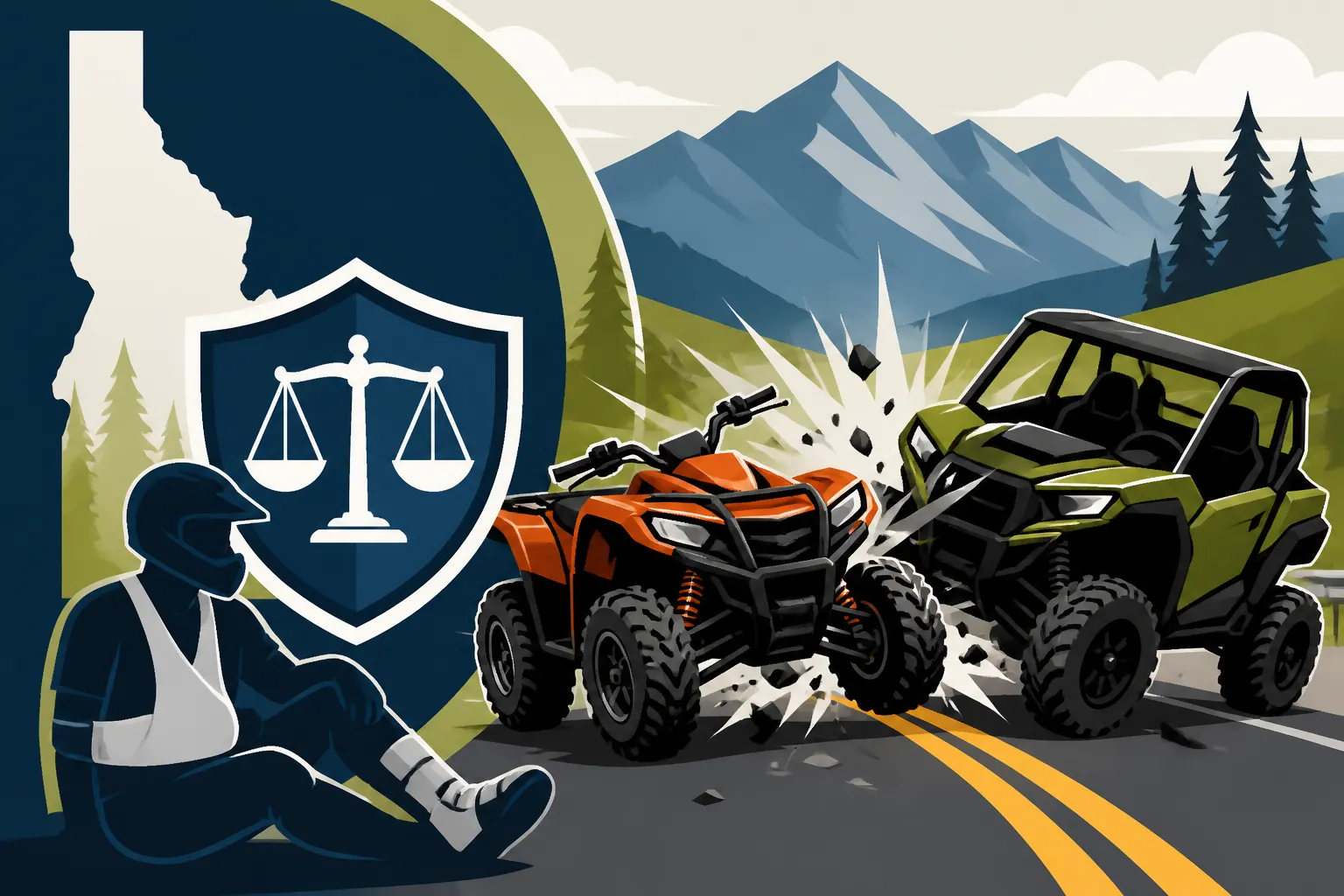
Experiencing an off-highway vehicle (OHV) accident on an Idaho road can be a truly harrowing and confusing experience. One minute you're enjoying the freedom of the trail connecting to a county road, and the next, you're dealing with the shock, potential injuries, and the overwhelming headache of insurance adjusters, medical bills, and legal questions. It's not just about getting your machine fixed; it's about navigating the complex world of injury claims, especially when you're already in pain and trying to recover. This comprehensive guide is here to walk you through the often-stressful process of understanding and pursuing injury claims after an OHV road crash in Idaho, offering clarity and practical steps when you need them most.
Understanding the Idaho Legal Landscape for OHV Road Use
Riding an OHV on Idaho's public roads isn't like riding your car, and it's certainly not like riding exclusively on designated trails. The rules change, and so do the legal implications when an accident occurs. It's a unique blend of motor vehicle law and OHV regulations, creating a complex web for anyone involved in a crash.
The Nuances of "Street Legal" in Idaho for OHVs
When we talk about "street legal" for an OHV in Idaho, it's not a blanket term. For most ATVs and UTVs, it refers to obtaining an Idaho Restricted Vehicle Plate, often just called an "R Plate." This plate allows you to operate your OHV on certain paved and unpaved county roads, as well as Forest Service and BLM roads, provided the county or agency hasn't specifically closed them to OHV traffic. You see these vehicles, sometimes from a brand like SuperATV, cruising through small towns or linking up trail sections. However, possessing this plate doesn't automatically grant you the same rights or responsibilities as a passenger car on all roads. [Idaho's Restricted Vehicle Plate Explained] The "restricted" part is key—it means there are limitations on where and how you can ride. If you're on a road not authorized for OHV use, or if you don't have the proper plate and stickers, your legal standing could be severely compromised in the event of a crash. This distinction is paramount when an injury claim arises, as the legality of your presence on the road can influence liability.
Duty of Care and Rules of the Road for OHV Operators
Just because you have a restricted plate doesn't mean you can throw caution to the wind. In fact, operating an OHV on an Idaho road comes with a significant "duty of care." This means you are expected to operate your machine safely and responsibly, adhering to all applicable traffic laws, just as any other driver would. This includes obeying speed limits, stopping at stop signs, signaling turns, and generally exercising reasonable care to avoid collisions. [What Idaho Requires to Ride a County Road] If you were exceeding the speed limit, failed to yield, or were distracted at the time of the crash, even if the other party was also at fault, your actions could be scrutinized. This applies to your equipment too; your lights, brakes, and tires must be in good working order. A police report will often detail any citations issued at the scene, which can weigh heavily on who is deemed at fault and, consequently, who can pursue an injury claim successfully.
The Role of a Restricted Plate in Liability
Having an Idaho Restricted Vehicle Plate signifies that your machine meets certain equipment requirements for road use and that you've acknowledged the regulations. If you were involved in a crash on an approved county road and possessed a valid R Plate, it generally strengthens your position by demonstrating that you were legally operating your OHV in that location. [Idaho Plates That Begin With R] However, if you were riding on an unauthorized road, or if your machine was not properly stickered and plated for road use, the other party's insurance company or legal team might argue that you were operating illegally, which could significantly impact your ability to recover damages for your injuries. Even if the other driver was primarily at fault, your illegal operation could be used to reduce your compensation under Idaho's comparative negligence laws. This is why understanding where you can and cannot ride, and ensuring your machine is fully compliant, is so crucial before you ever hit a paved surface.
Navigating Injury Claims: Steps After an Idaho OHV Road Accident
The immediate aftermath of an OHV road crash is chaotic. Your adrenaline is pumping, you might be injured, and the last thing you're thinking about is building a legal case. However, the steps you take (or don't take) right after the accident can profoundly impact the success of any future injury claim.
Immediate Actions at the Scene and Reporting the Crash
Your first priority after an OHV road crash is always safety and medical attention. Check yourself and anyone else involved for injuries. If anyone is hurt, call 911 immediately. Even if injuries seem minor, it's always best to get checked out by medical professionals. Once immediate safety is addressed, if possible, you need to report the crash to law enforcement. In Idaho, any crash involving injury, death, or property damage exceeding a certain threshold must be reported. [Idaho OHV Crash Reporting] The responding officer will create an accident report, which is a vital piece of evidence for your claim. This report will detail their assessment of the scene, witness statements, and any citations issued. Do not admit fault or make assumptions about what happened. Simply provide factual information to the officers. Exchange insurance and contact information with all parties involved. If you are physically able, take as many photos and videos of the scene as possible, including the positions of the vehicles, road conditions, traffic signs, skid marks, and any visible injuries or damage to your machine, perhaps a well-equipped SuperATV.
Gathering Evidence to Support Your Claim
The strength of your injury claim hinges on the evidence you can provide. Think of yourself as a detective, meticulously documenting every detail. This includes:
- Police Report: As mentioned, this is foundational. Obtain a copy as soon as it's available.
- Photographs and Videos: Visual evidence from the scene is incredibly powerful. Capture everything from multiple angles.
- Witness Information: Get names, phone numbers, and email addresses of anyone who saw the crash. Their impartial accounts can be invaluable.
- Medical Records: This is critical for proving your injuries. Document every doctor's visit, emergency room trip, physical therapy session, and prescription. Keep all bills and receipts. Your medical history after the crash directly correlates to your claim.
- Lost Wages Documentation: If your injuries prevent you from working, collect pay stubs, employment records, and letters from your employer detailing lost income.
- OHV Repair Estimates/Damage Assessment: Even though the focus is on injury, documentation of damage to your machine, whether it's a stock ATV or one upgraded with SuperATV components, helps to establish the severity of the impact.
- Personal Journal: Keep a journal of your pain levels, limitations, emotional distress, and how the injuries are impacting your daily life. This can help articulate "pain and suffering."
The more comprehensive your evidence, the harder it is for insurance companies to dispute your claim or the extent of your injuries. Remember, insurance companies are businesses, and they will look for any reason to minimize payouts.
Understanding Insurance Coverage and Its Limits
Insurance is often the primary source of compensation after an OHV road crash. However, OHV insurance can be a tricky beast. Unlike car insurance, which is generally mandatory for all road vehicles, OHV liability insurance for trail riding isn't always a requirement in Idaho. But when you venture onto public roads, especially those that permit OHV use, the rules often change. [Insuring an ATV in Idaho]
If you're operating your OHV on a county road, you typically need to carry minimum liability insurance similar to what's required for a car. This is crucial. If you caused the accident, your liability insurance would pay for the other party's damages and injuries up to your policy limits. If the other driver was at fault, their auto insurance policy (or potentially their OHV policy if they were also on an OHV) would be the primary source for your injury claim.
It's vital to review your own policy before an accident occurs. Does it cover road use? What are your liability limits? Do you have uninsured/underinsured motorist (UM/UIM) coverage for your OHV? [Idaho Liability Insurance Minimums for Riders] UM/UIM coverage is incredibly important because it protects you if the at-fault driver has no insurance or not enough insurance to cover your medical bills and other damages. Don't assume your car insurance automatically extends to your OHV, even if you’re riding it on the road. Call your agent and clarify your coverage, especially for road operation.
Common Challenges and Complexities in OHV Injury Claims
Even with solid evidence and appropriate insurance, OHV injury claims are rarely straightforward. Several factors can complicate the process and potentially reduce the compensation you receive.
Contributory Negligence and Shared Fault in Idaho
Idaho operates under a "modified comparative negligence" rule. This means that if you are found to be partly at fault for the accident, your compensation will be reduced by your percentage of fault. For example, if your damages total $100,000, but you are found to be 20% at fault because you weren't wearing a helmet (even if not legally required for an adult) or were slightly speeding, you would only be able to recover $80,000. Crucially, if you are found to be 50% or more at fault, you cannot recover any damages. This is a significant hurdle, as insurance adjusters will often try to pin some degree of fault on the OHV operator, given the public perception or nature of the vehicle. Arguments might include your visibility, speed, modifications (even something as simple as a lift kit from SuperATV), or whether you were riding legally on that specific road. [Idaho Fines for Illegal Road Riding] This is where strong evidence and legal representation become paramount to minimize your assigned fault.
Dealing with Uninsured or Underinsured Motorists
It's a harsh reality, but sometimes the driver who caused your accident either doesn't have insurance or their policy limits are too low to cover the full extent of your injuries and damages. This is precisely why uninsured/underinsured motorist (UM/UIM) coverage on your own OHV policy is so vital. If you have this coverage, your own insurance company would step in to cover your medical expenses, lost wages, and pain and suffering up to your UM/UIM policy limits. Without it, you might be left pursuing a personal lawsuit against the at-fault driver, which can be a long, expensive, and often fruitless endeavor if they have limited assets. Always check if your policy includes UM/UIM coverage for your OHV and consider increasing those limits if they are low.
The Specifics of OHV-Related Injuries and Damages
OHV accidents often result in severe injuries due to the lack of enclosed protection and inherent instability of the machines, especially in collisions with full-sized vehicles. Unlike a fender-bender in a car, an OHV road crash can lead to:
- Catastrophic Medical Costs: Emergency room visits, surgeries, hospital stays, long-term physical therapy, and rehabilitation can quickly accumulate hundreds of thousands of dollars in medical bills.
- Lost Wages and Earning Capacity: Serious injuries can keep you out of work for weeks, months, or even permanently, leading to substantial income loss. For some, it might mean a diminished ability to earn money in the future.
- Pain and Suffering: This non-economic damage compensates you for the physical pain, emotional distress, mental anguish, loss of enjoyment of life, and inconvenience caused by your injuries. Quantifying this can be challenging but is a significant component of most injury claims.
- Property Damage: While secondary to personal injury, the cost to repair or replace your OHV also forms part of the claim.
- Other Expenses: This can include mileage to medical appointments, prescription costs, assistive devices, and even necessary modifications to your home or vehicle due to a permanent injury.
Every single one of these damages must be meticulously documented to ensure you receive fair compensation.
Here's a quick look at how different insurance coverages typically apply to an OHV road crash:
| Coverage Type | What It Primarily Covers | Who It Benefits | Common Scenarios |
|---|---|---|---|
| Liability (Your Policy) | Damages and injuries you cause to others. | The other driver/passengers, their vehicle/property. | You misjudge a turn on a county road and hit another car; your policy pays for their repairs and medical bills. |
| Medical Payments (MedPay) | Your immediate medical expenses, regardless of fault. | You and your passengers. | You're injured in a crash, and MedPay covers your initial ER visit and ambulance ride. |
| Uninsured/Underinsured Motorist (UM/UIM) | Your injuries and damages if the at-fault driver has no or insufficient insurance. | You and your passengers. | A driver with no insurance hits you on a road; your UM/UIM policy covers your medical bills and lost wages. |
| Collision (Your Policy) | Damage to your own OHV, regardless of who is at fault. | Your OHV. | Your SuperATV-equipped UTV is totaled in a crash, and your collision coverage pays to replace it (minus deductible). |
| Comprehensive (Your Policy) | Damage to your OHV from non-collision events (theft, fire, vandalism, animal strike). | Your OHV. | Your parked OHV is hit by a deer on the side of a road, or stolen from a trailhead; comprehensive covers the damage or loss. |
Note: Availability and exact terms of these coverages can vary by insurer and policy.
Seeking Professional Legal and Medical Guidance
When facing an OHV injury claim, trying to go it alone can be a recipe for frustration and financial loss. The systems in place—medical, legal, and insurance—are complex and designed for professionals.
When to Consult an Attorney Specializing in OHV Accidents
You absolutely should consult an attorney specializing in personal injury, particularly one with experience in OHV accidents, as soon as possible after a road crash resulting in injury. Here's why:
- Navigating Complex Laws: An attorney understands Idaho's unique OHV road regulations, comparative negligence laws, and insurance statutes. They can accurately assess liability and guide you through the intricacies. [What an Idaho Deputy Asks a Rider For]
- Dealing with Insurance Companies: Insurance adjusters are skilled negotiators whose job is to pay as little as possible. An attorney protects your rights, handles all communications, and ensures you don't inadvertently say or do something that harms your claim.
- Maximizing Compensation: They know how to properly calculate the full extent of your damages, including future medical costs, lost earning capacity, and appropriate pain and suffering, ensuring you don't settle for less than you deserve.
- Gathering and Presenting Evidence: An attorney can assist in collecting all necessary documentation, including police reports, medical records, witness statements, and expert testimony if needed.
- Litigation Expertise: If a fair settlement cannot be reached, an experienced attorney is prepared to take your case to court.
Many personal injury attorneys work on a contingency fee basis, meaning you don't pay upfront fees; they only get paid if they win your case. This makes legal representation accessible even when you're facing financial strain due to injuries and lost income.
The Importance of Timely Medical Treatment and Documentation
From a legal standpoint, timely and consistent medical treatment is non-negotiable for an injury claim. First and foremost, your health is paramount. But beyond that, a gap in medical treatment can be used by an insurance company to argue that your injuries weren't severe or weren't directly caused by the accident. They might suggest that if you were truly hurt, you would have sought continuous care.
Therefore:
- Seek immediate medical attention: Even if you feel okay, get checked out. Adrenaline can mask injuries.
- Follow all medical advice: Adhere strictly to your doctor's recommendations, including referrals to specialists, physical therapy, or medication regimens.
- Document everything: Keep a detailed record of every medical appointment, prescription, diagnostic test, and treatment. Ensure your medical providers are documenting your complaints and progress thoroughly.
- Be honest about your pain: Don't downplay your symptoms to your doctors. It's important for them to have an accurate picture of your condition, which in turn creates a clear medical record for your claim.
Your medical records are the backbone of your injury claim, directly linking the accident to your physical and emotional suffering. Without them, even the most legitimate injuries can be difficult to prove. [What to Do After a Crash on a Back Road]
Disclaimer
This article is for general informational purposes only and does not constitute professional advice. Laws, prices and regulations vary by location and change over time. Consult a qualified professional for guidance on your specific situation.