Idaho Agricultural Road Exemptions
Navigating the rules for off-highway vehicles (OHVs) in Idaho can feel like trying to herd cats, especially when you're a farmer or rancher just trying to get work done. It often seems like the regulations are designed for weekend warriors, not for folks who rely on their ATVs and side-by-sides to keep their operations running smoothly. This guide is here to untangle the complexities of Idaho's agricultural road exemptions, helping you understand when your machine needs a sticker, a plate, or if it's genuinely exempt for farm and ranch work.
Understanding Idaho's Agricultural OHV Exemptions
Idaho's regulations for OHVs are generally clear when it comes to recreational riding: if you're on public lands or designated trails, you need an OHV sticker. However, the picture gets a lot murkier when your side-by-side or ATV is a tool, an essential part of your daily farm or ranch operations. It’s not just about a casual ride; it’s about moving equipment, checking on livestock, or getting to a back pasture. This is where the agricultural exemption comes into play, offering a bit of breathing room for those whose machines are truly workhorses.
What Qualifies as "Agricultural Purpose"?
First things first, what exactly does Idaho consider an "agricultural purpose" when it comes to OHV use? It’s not just a blanket term that covers anything you do on a farm. Generally, this refers to activities directly related to the production of agricultural commodities, raising livestock, or maintaining the infrastructure necessary for these operations. Think about it: moving a small load of fencing supplies to mend a broken line, hauling feed to a remote pasture, checking on the health of your herd, or transporting tools for irrigation repairs. These are all quintessential examples of agricultural use.
It’s about the intent and the nature of the trip. If you’re taking your UTV to check irrigation pivots, that’s agricultural. If you then decide to take a scenic detour up a mountain trail for fun, that portion of the trip likely wouldn’t fall under the exemption. The machine itself doesn't define the use; your activity does. This distinction is crucial, because misuse of the exemption can lead to fines and headaches you don't need during a busy season.
The Core Exemption for Farm/Ranch Machines
At its heart, Idaho's agricultural exemption aims to simplify things for genuine farm and ranch use, particularly concerning OHV registration and stickers. The primary benefit is that an OHV used exclusively for agricultural purposes on private land, or for certain limited crossings of public roads directly related to agricultural operations, may not require an Idaho OHV sticker. This can be a huge relief, saving time and money, especially if you have multiple machines working your land.
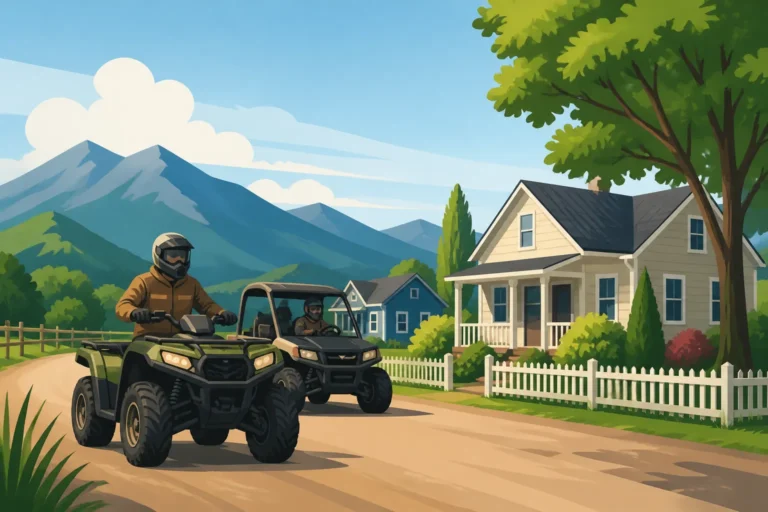
However, it's not a free pass for every situation. This exemption typically applies to machines that are solely operating within the boundaries of a farm or ranch, or crossing a public road to get from one part of the operation to another adjacent piece of land. It acknowledges that sometimes, a farmer simply has no other practical way to move between parcels without briefly traversing a county road. But even in these specific instances, there are often underlying requirements regarding safety, speed, and visibility. Always remember, the spirit of the law is to facilitate necessary work, not to bypass safety or public access rules.
Key Differences from Recreational Use
It’s vital to understand that the agricultural exemption carves out a very specific niche, and it fundamentally differs from how Idaho treats recreational OHV use. For a recreational rider, nearly any use of an OHV on public land or designated trails requires a valid OHV sticker. They need to understand things like [What an Idaho OHV Sticker Costs Each Year] and [Where Idaho Sells OHV Stickers]. For a farmer, the machine is a piece of equipment, much like a tractor or a combine.
The key difference lies in the purpose and location of use. Recreational use is about leisure, exploration, and enjoying Idaho's vast trail systems. Agricultural use is about productivity, maintenance, and the economics of farming or ranching. Because of this distinction, agricultural machines might not need the same level of registration or road-legal equipment as an OHV that's going to be used on county roads for leisure riding, which would typically require an [Idaho's Restricted Vehicle Plate Explained]. Blurring these lines can quickly negate the exemption, turning a routine chore into a potential legal issue.
Specific Scenarios and Limitations
The agricultural exemption isn't a simple "yes" or "no" answer for every situation. The nuances of how and where you're using your ATV or UTV for farm work play a huge role in determining if it's truly exempt. Many a rancher has found themselves scratching their head, wondering if their trip to the next field over counts. It's about drawing clear lines between what's absolutely necessary for the operation and what might stray into general road use or even recreational activity.
When a Sticker Isn't Needed
There are specific instances where Idaho law genuinely exempts an OHV from needing an OHV sticker or a restricted-use plate. Primarily, this applies to machines used solely on private property for agricultural operations. If your ATV never leaves your deeded land, or if it only travels between your own adjacent parcels without ever touching a public road, then an OHV sticker is generally not required. This makes sense; the sticker funds public trail maintenance, which wouldn't apply to private property use.
Another key scenario involves very limited public road crossings. Imagine your ranch is bisected by a county road, and you need to move cattle, equipment, or yourself from one side to the other. Idaho allows for these brief, direct crossings for legitimate agricultural purposes. However, "brief" and "direct" are the operative words. You can't just cruise down the road for a mile to check the mail under this exemption. It's strictly for traversing, not traveling. You might also find this applies to machines used for [Idaho OHV Registration for Farm and Ranch Machines] directly related to those tasks. Always keep your purpose clear and your journey short when using a public road under this exemption.
When a Sticker Is Still Required
Despite the exemptions, there are plenty of situations where an agricultural OHV still needs to play by the standard rules. If you use your farm machine for any recreational riding on public lands, even occasionally, you'll need an OHV sticker. This includes riding designated OHV trails, forest service roads open to OHVs for leisure, or any other public area that isn't directly part of your agricultural operation. Think of it this way: if a deputy sees you out on a mountain trail, they're likely to assume recreational use unless you can definitively prove otherwise.
Furthermore, if your agricultural use involves extensive travel on public roads, or if you're using county roads for purposes beyond simple crossings between adjacent farm parcels, you're probably going to need more than just the exemption. In these cases, your OHV may need an [Idaho's Restricted Vehicle Plate Explained] to be considered street legal for limited road use. This is especially true if you're driving any significant distance or regularly operating on public rights-of-way. The line between "crossing" and "traveling" on a public road can be blurry, and it's always better to err on the side of caution.
Navigating County and State Roads
This is perhaps the trickiest part for many Idaho farmers and ranchers. While brief crossings of county roads are generally allowed for agricultural purposes without an OHV sticker, sustained use or travel on these roads is another matter entirely. Idaho state law differentiates between county roads, which some OHVs with restricted plates can use, and state/federal highways, which are almost universally off-limits to OHVs. Understanding [Which Idaho Roads Are Open to OHVs] is key.
If you anticipate needing to use your OHV for more than just a quick hop across a county road for farm duties, you'll likely need to obtain a restricted-use plate. This plate indicates that your vehicle is compliant with specific road-use requirements, even if those requirements are limited compared to a regular car or truck. For instance, even with an ag exemption, safety equipment like headlights, taillights, brake lights, mirrors, and a horn can become critical if you're mixing with regular traffic. You might even consider aftermarket accessories from a company like SuperATV to ensure your farm machine is clearly visible and equipped for road safety, adding things like a turn signal kit or a louder horn, because even if the law doesn't explicitly require it for a quick agricultural crossing, common sense and safety certainly suggest it. Always check with your local county sheriff's office for specific ordinances that might affect OHV use on county roads in your area, as local rules can sometimes add another layer of complexity.
Beyond the Sticker: Other Considerations for Farm OHVs
While the sticker and plate requirements often grab the most attention, operating an OHV for agricultural purposes in Idaho involves more than just understanding exemptions. Just like any other piece of farm equipment, there are practical, financial, and legal considerations that need to be addressed to protect your investment, ensure safety, and comply with broader regulations. Thinking beyond the sticker can save you significant headaches down the line.
Insurance for Farm/Ranch Machines
Even if your farm machine is exempt from a public land OHV sticker, appropriate insurance is absolutely critical. Imagine an accident occurring while you're moving hay across a county road, or a fire starting in your UTV while you're checking fences. Without proper coverage, you could face immense financial strain. Farm and ranch insurance policies often have specific provisions for equipment, and it's important to ensure your OHVs are included and adequately covered, both for property damage and liability.
This isn't just about protecting your machine; it's about protecting your livelihood. If your OHV causes damage to someone else's property or injures another person while being used for agricultural purposes, liability insurance can be a lifesaver. Don't assume your general farm policy automatically covers all OHV use. Speak directly with your insurance agent to clarify the extent of your coverage, especially for scenarios involving road crossings or any off-farm agricultural duties. You might even inquire about a policy that can cover [Insuring an ATV in Idaho] even if it's primarily for work, just to be safe.
Safety Equipment and Road Rules
Even if your machine technically qualifies for an agricultural exemption and doesn't require a restricted plate for a brief crossing, safety should still be your top priority. Visibility and control are paramount, especially if you're sharing the road with other vehicles, even for a short distance. Consider equipping your farm OHV with the same basic safety features you'd expect on any road-going vehicle: functional headlights, taillights, brake lights, and a horn. Mirrors are invaluable for situational awareness, particularly on a utility-focused machine.
While Idaho law might not mandate turn signals or seatbelts for certain agricultural road uses, having them can greatly reduce risk. Many aftermarket companies, including SuperATV, offer robust accessories like full windshields, roof kits, and even DOT-approved tires that can make your farm OHV safer and more comfortable during daily operations. These additions not only protect you but also make your presence clearer to other drivers, preventing potential accidents. Don't wait for an incident to realize you needed more safety gear; proactive equipping is always the better route.
The Paperwork Trail: Titles and Proof of Ownership
Even if your OHV never gets a sticker or a plate due to agricultural exemption, maintaining clear proof of ownership is non-negotiable. [Idaho Titles Every ATV Over 50cc], and this generally applies whether the machine is for recreation or farm work. You should have a clear title in your name. If you bought the machine used, ensure the title was properly transferred to you. This is crucial for several reasons: proving legal ownership, demonstrating agricultural use if questioned, and for future resale.
Imagine a situation where your machine is stolen from your property. Without a title, proving it's yours and assisting law enforcement in its recovery becomes significantly more complicated. Similarly, if you ever decide to sell the OHV, a clear title is essential for a smooth transaction. Don't let the lack of registration requirements for an exempted machine lead you to neglect proper titling and ownership documentation. Keep a copy of your title and any bills of sale in a safe place, and be ready to present them if ever needed.
Common Misconceptions and Best Practices
It's easy to get caught up in the details of the law, and sometimes, long-held beliefs or assumptions about how things "should" work can lead to misunderstandings. For farmers and ranchers, navigating OHV regulations for agricultural use often involves separating myth from fact, especially when dealing with public roads or changing local rules. A clear understanding and adherence to best practices will save you time, money, and potential legal trouble.
"It's Just My Farm" – Why Public Road Rules Still Apply
One of the most common misconceptions among agricultural OHV users is the idea that because their machine is for "farm work," they are immune to public road rules when crossing or traveling short distances. The phrase "it's just my farm" carries weight in rural communities, but it doesn't always hold up in the eyes of the law, especially when you venture onto a public right-of-way. Even a brief journey across a county road for a legitimate agricultural purpose means you are operating on public infrastructure, and thus, you are subject to traffic laws.
This means exercising caution, adhering to speed limits (even if your OHV can go faster than what's safe or legal on a specific road), and being aware of other traffic. While you might not need an OHV sticker, you still can't drive recklessly, under the influence, or without regard for other drivers. Law enforcement officers have the authority to pull you over for dangerous operation, regardless of your agricultural intent. Always treat public roads, no matter how remote, as shared spaces where basic traffic rules and safety protocols apply.
Keeping Current with Idaho Regulations
Idaho's laws and regulations can, and do, change. What was permissible last year might have a new caveat this year. Relying on outdated information or hearsay from a neighbor can put you at risk. It's a best practice for any OHV owner, especially those using their machines for agricultural purposes, to stay informed. The Idaho Department of Parks and Recreation (IDPR) is the primary state agency responsible for OHV rules and regulations, and their website is a good starting point for official information. You might check for updates on [Idaho OHV Rules That Changed Recently].
Beyond state-level regulations, it's crucial to remember that individual counties and even cities within Idaho can have their own ordinances regarding OHV use on local roads. What's allowed in one county might be restricted in an adjacent one. Making a quick call to your local county sheriff's office or checking their website can clarify any specific local rules that apply to your agricultural operations, particularly if you're frequently crossing county roads. Being proactive in checking these sources means you're always operating within current legal boundaries.
Documentation and Due Diligence
Even with a legitimate agricultural exemption, having your ducks in a row can prevent a lot of hassle if you're ever stopped by law enforcement. While you might not need to carry a sticker, it's wise to have documentation that clearly supports your agricultural purpose. This could include a copy of your farm registration, proof of property ownership, or even a simple letter explaining your specific farming activities. If your machine isn't titled, you should at least have a bill of sale that proves ownership.
Consider what an officer might ask for if they see you on a public road without a sticker or plate. They'll want to know who you are, what you're doing, and why you believe you're exempt. Being able to calmly explain your agricultural purpose and provide supporting documentation can make a world of difference. Furthermore, always have your driver's license (if required for the specific road use) and insurance information readily available. Due diligence in your paperwork and a clear understanding of the rules are your best defenses against misunderstanding and potential fines.
Disclaimer
This article is for general informational purposes only and does not constitute professional advice. Laws, prices and regulations vary by location and change over time. Consult a qualified professional for guidance on your specific situation.