Can a 15-Year-Old Ride an Idaho Trail Alone?
A 15-year-old may be able to operate an ATV or UTV on an Idaho trail, but that does not generally mean riding without an adult nearby. The key question is whether the route is public or private, and whether the young rider is properly supervised and meets applicable safety and equipment rules. Here’s how to think through those requirements before setting out.
Can a 15-Year-Old Ride a Public Idaho Trail Alone?
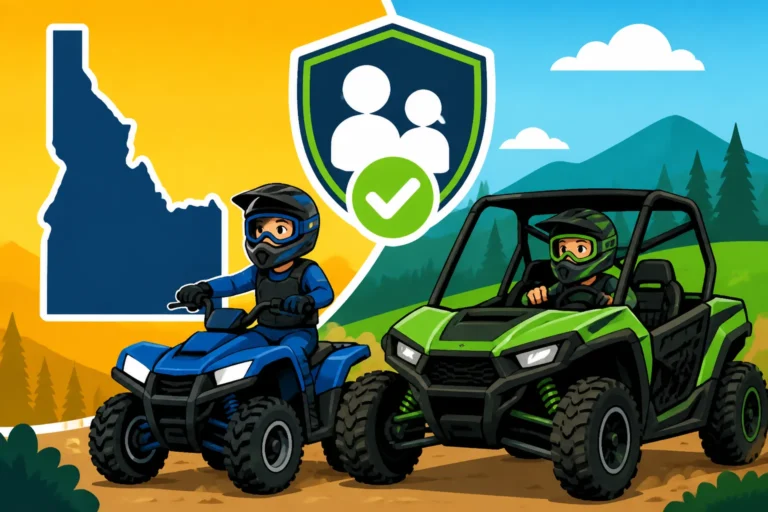
For riding on public land, a 15-year-old should not assume they can ride independently. Idaho’s youth supervision rules generally require riders under 16 to be supervised by an adult who is at least 18 and stays within 300 feet. That means a teen riding ahead of the group is not automatically unsupervised, but an adult left at camp or far behind is not a substitute for nearby supervision.
The 300-foot distance is a limit, not a target. On a winding trail, through trees, or across a steep area, an adult may need to stay much closer to keep the young rider in sight and respond quickly. A supervisor who cannot see or reach the teen when conditions require it may not be providing meaningful supervision, even if the distance appears to be under 300 feet.
“Alone” can mean different things, so use this practical distinction:
| Situation | What to keep in mind |
|---|---|
| Teen rides a public trail without an adult nearby | Don’t treat this as allowed independent riding; youth supervision rules apply. |
| Teen rides ahead while an adult stays within 300 feet | This may meet the general distance rule, but terrain and visibility can call for closer supervision. |
| Teen rides on private property | Public-land requirements may differ, but permission, property rules, and safe adult oversight still matter. |
| Teen rides a county road or other road open to OHVs | Road-use rules apply in addition to youth supervision requirements. |
For a closer look at the age and supervision rules, see Idaho Age Rules for Riders Under 16 and Idaho Supervision Rules and the 300-Foot Rule. The distance itself is explained in The 300-Foot Supervision Distance.
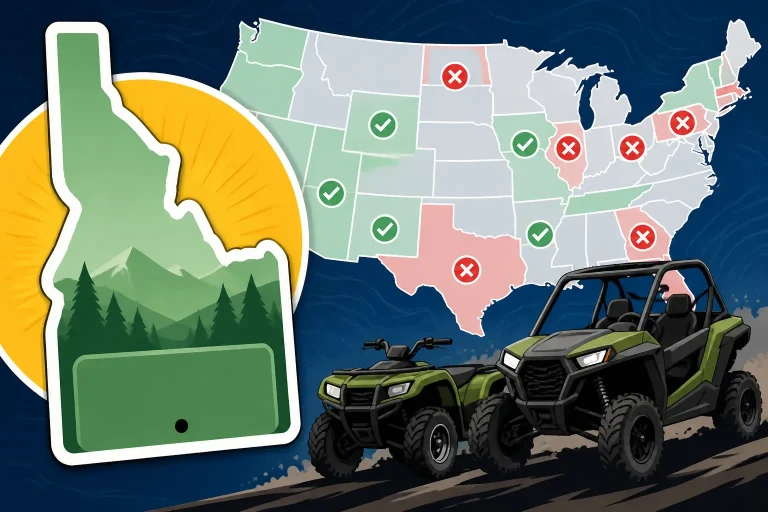
The answer can also depend on what someone means by “trail.” A marked route on public land, a forest road, a county road, a private ranch track, and a route that crosses several types of land may not all be governed by the same set of rules. Before leaving, identify the route and confirm which rules apply to each part.
What Counts as Supervision on the Ride?
An adult within 300 feet should be supervising the young rider, not merely riding somewhere in the same general area. The adult needs to be able to monitor the teen’s choices, notice a problem, and help when the situation calls for it. How close that requires the adult to stay depends on the trail, the machine, and the rider’s skills.
On an open, easy route, an adult may be able to keep an appropriate distance while maintaining effective oversight. On a narrow trail with blind corners, steep drop-offs, loose rocks, water crossings, or heavy traffic, the adult may need to ride directly behind or ahead of the teen. A larger gap can make it harder to communicate or respond before a minor mistake becomes a serious incident.
Supervision also means setting expectations before the machines start moving. Agree on:
- Who leads and who follows.
- Where the teen should stop if the group becomes separated.
- What to do if the machine stalls or tips.
- How to signal a problem when riders cannot hear one another.
- Whether the teen may pass another rider or take an alternate route.
- Which hazards mean the adult should take over or turn the group around.
Do not rely only on phones. Cell service can be limited or absent on Idaho trails, and a phone may not be usable during a ride. If the route is remote, agree on a simple plan for stopping and regrouping, and carry suitable communication and emergency equipment.
A teen who is confident on a familiar trail may still need close supervision when conditions change. Mud, dust, snow, high water, low visibility, fatigue, or a busy holiday weekend can make a route much harder than it looked on a map. A supervisor should be ready to shorten the ride rather than let the teen continue into conditions beyond their ability.
Check the Route, Safety Course, and Machine
Supervision is only one part of a legal and sensible ride. Before a 15-year-old operates an ATV or UTV, confirm the rules for the actual route and machine. A trail can connect to a forest road or county road, and road segments may bring additional requirements, such as rules for equipment, licensing, insurance, or where the vehicle may travel.
The safety-course requirement is a separate issue from the supervision rule. A course certificate does not make a 15-year-old eligible to ride without required adult oversight, and adult supervision does not necessarily replace a course requirement. Requirements can vary with the route and circumstances, so check the applicable guidance before the trip. See Idaho’s OHV Safety Course for Young Riders and Who Must Take the Idaho Safety Course.
Also check whether the machine is appropriate for the rider. The teen should be able to reach and operate the controls comfortably, use the required protective equipment, and handle the machine’s weight and power without relying on strength they do not have. A machine that is too large or too powerful can turn routine obstacles into a loss-of-control risk.
For a UTV, confirm that the rider uses the available restraints and that passengers stay in designated seats. For an ATV, don’t add a passenger unless the machine is designed for one. Follow the manufacturer’s age and capacity guidance, and do not treat an adult’s presence as a fix for an unsuitable machine.
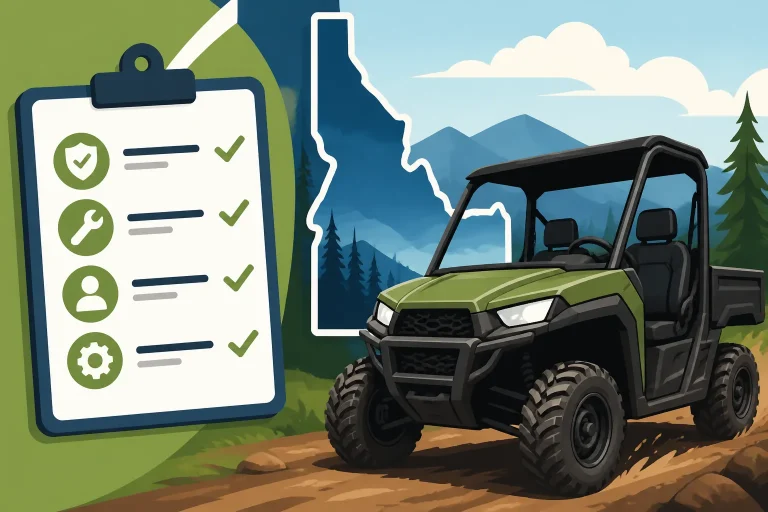
A pre-ride check should include:
- Route access: Confirm the trail is open to the machine’s type and width, and check for closures or seasonal limits.
- Land status: Find out whether the route crosses public land, private land, or a road with separate rules.
- Youth requirements: Verify current supervision and safety-course requirements for the route.
- Machine condition: Check brakes, throttle, tires, lights, fuel, and any required safety equipment.
- Protective gear: Use a properly fitted helmet and eye protection, along with clothing suited to the weather and terrain.
- Ride plan: Set a pace the teen can manage, choose a route within their experience, and agree on where to turn back.
If the route includes a county road, review Idaho Rules for Riders Under 16 on Roads. Road access is not the same as trail access, and a machine that is suitable for an off-road route may not meet the requirements for a road segment.
Registration and stickers are another separate piece of the picture. A sticker or registration does not determine whether a teen can ride unsupervised; it concerns the machine’s authorization for applicable riding. Check the machine’s status and the route’s requirements before departure, particularly if the vehicle belongs to someone else or the group includes out-of-state riders.
Private Property, Planning, and Common Mistakes
A private ranch, family property, or friend’s land is not automatically covered by every rule that applies on public land. But “private property” is not a blanket exemption from safety responsibilities, and the answer may change if the ride uses public roads, public trails, or land where access is controlled by another party. Get permission from the landowner and clarify the boundaries before riding.
The safest approach is to treat a 15-year-old as needing an adult nearby unless you have confirmed that a specific setting has different requirements. This is especially important when a route crosses from private land to a public trail or road. A ride that begins on a ranch can still reach an area with public-use rules.
Common mistakes include:
- Assuming that a teen can ride alone because they have completed a safety course.
- Treating the 300-foot distance as permission for an adult to lose sight of the rider on difficult terrain.
- Assuming a public trail, forest road, and county road have identical rules.
- Letting a young rider use a machine that is too large, powerful, or difficult to control.
- Relying on verbal permission without checking where private property ends.
- Starting a route without checking closures, weather, or the return distance.
For a straightforward outing, choose a short, familiar route with clear access rules. Have the adult stay close enough to supervise effectively, and keep the teen within their demonstrated ability. If the group reaches a road, a difficult obstacle, or a route condition the young rider cannot handle safely, stop and reassess rather than pressing on.
Because rules and access conditions can change, confirm current requirements with the relevant Idaho agency or land manager before the ride. A map, trail sign, or older trip report may not reflect a recent closure or local restriction. When the route crosses more than one jurisdiction, check each segment rather than assuming one rule applies from trailhead to trailhead.
Disclaimer
This article is for general informational purposes only and does not constitute professional advice. Laws, prices and regulations vary by location and change over time. Consult a qualified professional for guidance on your specific situation.