The 300-Foot Supervision Distance
Idaho’s 300-foot supervision distance can sound like a simple measurement, but it does not answer every question about a young rider’s legal requirements. The key is to understand when adult supervision applies, what “within 300 feet” means in practice, and why distance alone may not make a ride safe or lawful.
What the 300-Foot Supervision Distance Means
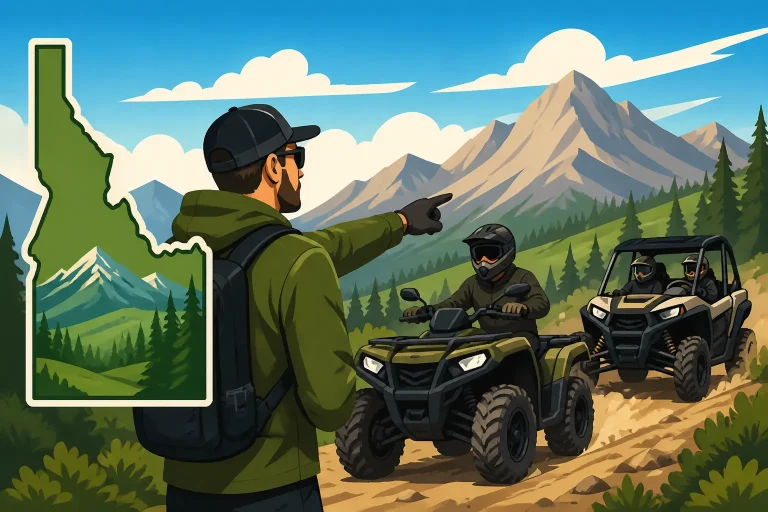
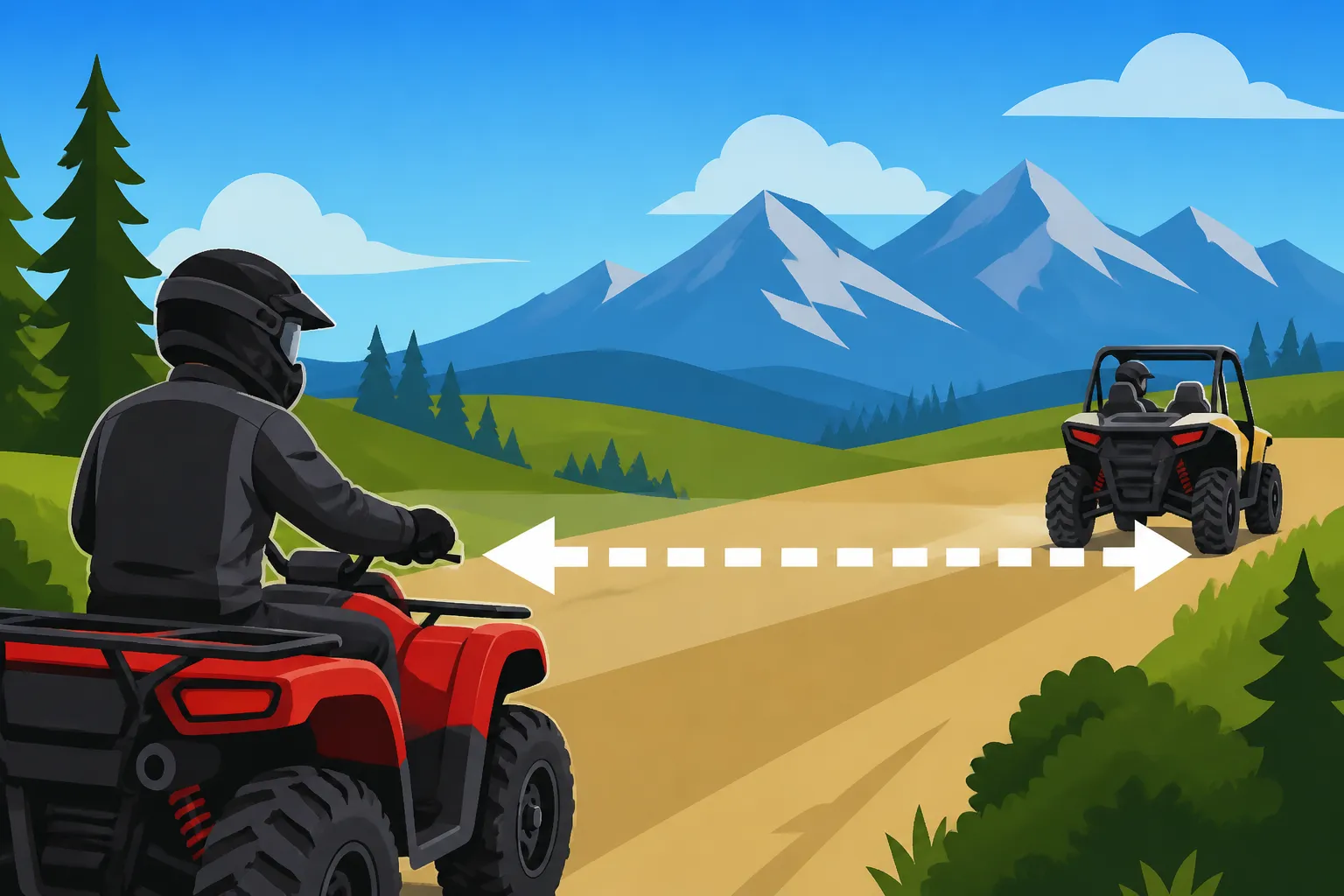
Idaho’s youth OHV rules include supervision requirements for some riders under 16. Where the 300-foot rule applies, the responsible adult must stay close enough to supervise the young rider, with a maximum distance of 300 feet. It is not permission for a child to ride anywhere within a 300-foot radius, and it does not replace other requirements for the machine, route, rider or land.
The distance is best treated as an outer limit, not a target. A parent standing 299 feet away may be within the stated distance but still unable to see what is happening, communicate clearly or respond to a hazard. Terrain, trees, dust, traffic, noise and the machine’s speed all affect whether supervision is meaningful.
That distinction matters because “supervised” is more than “an adult is somewhere nearby.” A young rider may need prompt direction if a route changes, another vehicle appears, or a crossing is unsafe. An adult who cannot see or hear the rider may not be in a position to provide that oversight, even if the straight-line distance seems short.
Distance does not authorize the ride
Meeting a supervision distance does not make an otherwise prohibited ride legal. For example, it does not automatically allow a rider to use a closed road, travel onto private property without permission or ride a machine that is not allowed on a particular route. It also does not replace equipment, training or permit requirements that apply separately.
Before setting out, establish the rules for the specific location. A route open to OHVs may have conditions that differ from those on a county road, a trail on public land or private property. For road riding, review What Idaho Requires to Ride a County Road and Which Idaho Roads Are Open to OHVs. For public-land routes, check the relevant land manager’s current map and restrictions.
Who should treat the rule as relevant
If the rider is under 16, do not assume the rule is irrelevant because the ride is short, the machine is small or the adult is a family member. Check the current Idaho requirements for the rider’s age and the type of location. The details can depend on whether the ride is on a public road or another setting, and other requirements may apply too.
The supervision question is also separate from the safety-course question. A rider may have to meet training requirements in some circumstances, while supervision remains a separate responsibility. See Who Must Take the Idaho Safety Course and Idaho Supervision Rules and the 300-Foot Rule before relying on a general rule of thumb.
How to Apply the Distance on a Real Ride
A tape-measured distance is rarely useful on a trail. The adult and young rider are moving, the route bends, and obstacles can block visibility. Use the 300-foot figure as a maximum boundary where it applies, then choose a closer working distance that lets the adult monitor the ride.
A practical check is to ask whether the adult can see the rider, get the rider’s attention, and respond quickly if something changes. If the answer is no, shorten the gap or stop and regroup. A position that works on an open, level staging area may not work on a wooded trail, a steep hillside or a busy road section.
Keep the rider in view when possible
A clear line of sight makes supervision easier, but it is not a substitute for checking the actual rules. On a winding trail, the adult should not assume that the rider is safe simply because the gap was small a moment earlier. The young rider can disappear around a bend or over a rise quickly.
Agree on simple expectations before moving:
- The adult leads or follows in a position that keeps the rider observable.
- The young rider stops at agreed regroup points and does not continue out of sight.
- Neither rider speeds up to catch the other without permission.
- If the adult loses contact, both stop in a safe place rather than guessing where to go.
- The group avoids splitting up at intersections, trail forks and road crossings.
These are practical safety habits, not a legal substitute for supervision. They help make the adult’s oversight real rather than merely formal.
Measure the route, not just the gap
The shortest distance between two people may not match the distance along a trail. A rider separated by a hill, a stand of trees or a sharp bend might be close in a straight line but effectively out of contact. Conversely, a longer straight section may allow the adult to keep the rider in view and communicate.
Treat visual barriers as a reason to close the distance. On unfamiliar routes, stop before a junction and review the direction together. If dust or engine noise makes conversation difficult, use agreed hand signals or another reliable way to get the rider’s attention. Do not depend on a phone where cell service may be limited.
Choose a conservative distance for the conditions
The right working distance changes with the setting. A slow ride in a wide-open area is different from a narrow trail with blind corners, loose gravel or other traffic. A younger or less experienced rider also needs closer attention than a confident rider who has practiced the same terrain.
Use a shorter gap when there is:
- A steep grade, drop-off or loose surface
- Poor visibility from trees, dust, smoke or weather
- A trail junction or an unfamiliar route
- Traffic, pedestrians, livestock or other trail users
- A road crossing or a section beside a road
- A rider who is tired, upset or having trouble controlling the machine
Do not use the maximum distance as a reason to keep riding when supervision has become difficult. Stop, regroup or choose an easier route.
Supervising From Another Machine or on Foot
An adult does not necessarily have to stand beside the young rider for every supervised ride. The important issues are whether the applicable rule permits the arrangement and whether the adult can actually supervise from that position. A separate machine can make it easier to travel together, but it can also create a gap that grows quickly.
When the adult rides another machine
Riding together can work well when the adult sets a pace the young rider can safely maintain. The adult should avoid leaving the rider behind, even briefly, and should plan where the group will stop. A lead adult can guide the route, but may not be able to see a rider who falls back. A following adult may see the rider but have less ability to warn them about an upcoming obstacle.
Consider the route before choosing who leads. On an unfamiliar trail, the adult may lead slowly and stop before hazards or turns. On a familiar, open section, an adult behind may be able to watch the young rider more closely. Either way, agree on a stop signal and a response if the machines become separated.
Do not assume that being on another machine automatically satisfies every supervision requirement. Check the current Idaho rule for the location and situation. Also remember that the adult’s own ability to operate safely matters: supervising while distracted, trying to manage several riders at once or riding beyond the adult’s skill level is not effective oversight.
When the adult supervises on foot
Supervision on foot may be possible in some situations, but it is not automatically suitable for trail riding. An adult who can watch from a safe staging area may be able to supervise a short practice session. On a long or winding route, the adult may be unable to keep up, remain within the required distance or respond promptly.
Foot supervision also has limits around road sections. The adult should not stand in a dangerous position or encourage a young rider to cross simply because the adult is nearby. Road access, crossing rules and the rider’s eligibility to use the road are separate questions. Review Riding an ATV on the Road in Idaho and Four Things Idaho Riders Must Carry on a Road before including a road section.
If a ride involves a road, do not rely on the 300-foot supervision rule as proof that the road use itself is allowed. Check the local route rules, machine requirements and rider restrictions. An adult’s presence cannot turn a closed road into an open one.
When the rider goes out of sight
If the adult cannot see or communicate with the young rider, stop and restore contact rather than continuing on the assumption that the rider will catch up. This applies even if the rider was within the distance a moment earlier. Routes change, and a small separation can become a safety problem at an intersection or blind corner.
Before a remote ride, establish a simple lost-contact plan. For example, both riders can agree to stop at the next safe turnout and wait rather than taking a different branch. Avoid complicated plans that depend on cell service, especially in areas with known dead zones. For route planning and backcountry safety, see Cell Service in the Idaho Backcountry and What to Carry on a Remote Ride.
Plan the Ride Around the Young Rider
A useful supervision plan starts before the machine is unloaded. Check the rider’s age, experience and machine size, then match the route to the rider rather than expecting the rider to keep up with an adult group. Supervision cannot compensate for a machine that is too large, a route that is too difficult or a pace that exceeds the young rider’s ability.
Confirm the rules before leaving
Rules can vary by location and by the kind of riding involved. Check the current requirements for the exact place you plan to ride, rather than relying on what applied at another trailhead or on private land. Confirm whether the rider needs a safety course or other documentation, whether the route is open, and whether the machine needs a sticker or other registration.
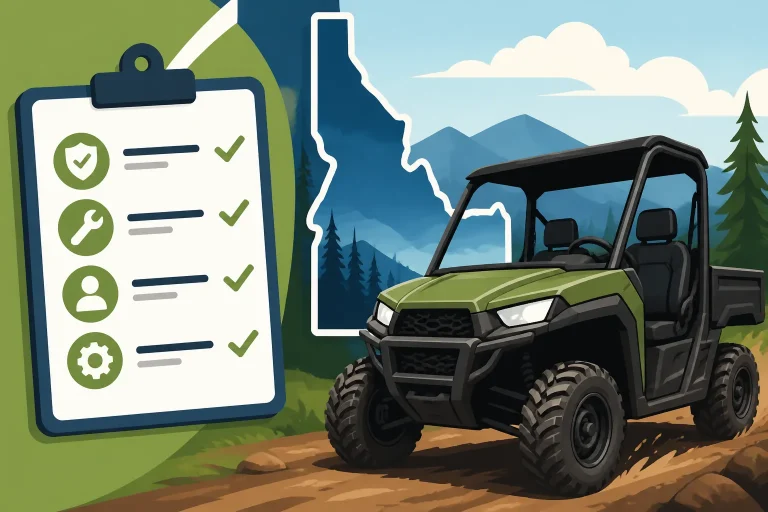
A checklist helps prevent one requirement from being mistaken for another:
| Question | What to check |
|---|---|
| Is the rider under 16? | Identify any age-based supervision, training or equipment requirements. |
| Where will the ride take place? | Confirm whether it is a public road, public land, private property or another regulated area. |
| Is this route open to the machine? | Check current maps, signs, closures and local restrictions. |
| Does the machine need a sticker or registration? | Confirm the requirement for the machine and location; see Idaho Permit Rules on Public Land. |
| Is the adult able to supervise the whole ride? | Plan a pace, position and stopping method that keep the rider in contact. |
| Does the ride include a road section? | Verify road access and rider requirements separately from supervision. |
When information is unclear, ask the relevant land manager or Idaho agency before riding. A general statement about the 300-foot distance cannot resolve a location-specific restriction.
Match the route and machine to the rider
A novice rider should start on terrain that leaves room to practice stopping, turning and controlling speed without pressure from traffic or a group. Do not choose a route solely because an adult can ride it comfortably. The adult may be able to handle steep grades, narrow trails or loose surfaces that are beyond the young rider’s current ability.
The machine should fit the rider’s size and skill. A rider needs to reach the controls, operate them smoothly and maintain a stable position. Review Youth Machine Size Rules Idaho Parents Ask About and Idaho Age Rules for Riders Under 16 when selecting a machine or deciding whether a child is ready for a particular ride.
Explain the route before starting. Point out likely stopping places, road crossings and turnarounds. Keep the first ride short enough that fatigue is unlikely to affect the rider’s attention or control. A young rider who was comfortable at the trailhead may become tired after a long ride, so be ready to shorten the plan.
Set rules the young rider can follow
A supervision plan is more effective when the rider understands what to do. Use short, specific instructions, and make sure the rider can repeat them back. “Stay where I can see you” is more useful when paired with an exact action, such as “stop at each junction and wait for me.”
Agree on:
- The adult’s position and who leads
- Where the group will stop
- What the rider should do if the adult is no longer visible
- Which signals mean stop, slow down or follow
- Whether the rider may pass the adult or another machine
- What to do if the machine stalls or the rider feels unsafe
Do not treat a child’s confidence as proof of readiness. Check that the rider can use the controls, stop reliably and follow instructions before moving to more challenging terrain.
Mistakes That Make the 300-Foot Rule Less Useful
The most common mistake is focusing on the number while overlooking what supervision requires. Being within 300 feet may satisfy a distance limit where that limit applies, but a large gap can still be poor supervision. The adult must be positioned to pay attention and make reasonable decisions as conditions change.
Treating the limit as a goal
The 300-foot figure should not become the group’s standard spacing. A child may need much closer oversight, especially on a new machine or unfamiliar trail. Keep the rider close enough for the adult to notice hesitation, loss of control or a change in the route.
Assuming one adult can supervise everyone equally
A single adult may have difficulty monitoring several young riders, particularly if they are on different machines or have different ability levels. The group can become spread out, and the adult may not know who needs help. Keep the group small enough for the adult to maintain contact, or add another responsible adult where appropriate.
Confusing adult presence with legal permission
An adult’s presence does not cancel age, course, sticker, route or road requirements. It also does not grant access to private property. Get permission where required, check current public-land restrictions and confirm whether the machine is permitted on the chosen route.
Letting a trail junction split the group
A rider who turns the wrong way at a fork can quickly be separated from the supervising adult. Stop as a group before confusing junctions. Have the young rider wait in a safe location if the adult needs to check signs or a map. Do not expect the child to make a route decision alone.
Continuing after conditions change
Dust, smoke, changing light, weather or rising traffic can make a previously manageable distance unsafe. If visibility drops, slow down or stop. A group that cannot maintain contact should not continue at the same pace.
For more on road-specific rules, see Idaho Road Rules for Young Riders and Direct Supervision on Idaho Roads. For broader preparation, What Idaho Riders Need Before They Ride can help you check the requirements that sit alongside supervision.
Frequently Asked Questions
Does the 300-foot rule mean an adult can supervise from anywhere within 300 feet?
No. Where the rule applies, 300 feet is a maximum distance, not a guarantee that supervision is adequate. The adult still needs to be able to monitor the rider and respond to changing conditions. Use a closer distance whenever visibility, terrain or the rider’s skill makes it necessary.
Can an adult supervise a young rider from another OHV?
That arrangement may be practical, but do not assume it automatically meets every requirement. Check the applicable rule for the location, and make sure the adult can keep the young rider in contact and respond promptly. Set a pace and stopping plan before riding.
Does supervision allow an under-16 rider to use any Idaho road?
No. Supervision and road access are separate issues. A road may be closed to OHVs or have other requirements for the rider and machine. Check the route and applicable road rules before including it.
Does the 300-foot distance replace a safety course?
No. Training and supervision are different requirements. Check whether the rider needs a course or certificate for the type of riding planned, and do not treat adult supervision as a substitute.
Disclaimer
This article is for general informational purposes only and does not constitute professional advice. Laws, prices and regulations vary by location and change over time. Consult a qualified professional for guidance on your specific situation.