Blaze Orange on a Fall Trail Ride
Idaho fall rides can put ATV and UTV users on the same public lands as hunters, raising a practical question: do you have to wear blaze orange? The short answer is no for general trail riding, but visibility still matters. Here’s how to choose useful high-visibility gear, check where you can ride, and prepare for a safer trip.
Is Blaze Orange Required for an Idaho Fall Trail Ride?
Blaze orange is not legally required for general OHV riders or other non-hunters on Idaho public trails during fall hunting seasons. Idaho Department of Fish and Game says state law does not mandate hunter orange for general recreationists or most big game hunters. That is a legal minimum, not a guarantee that other people will see you.
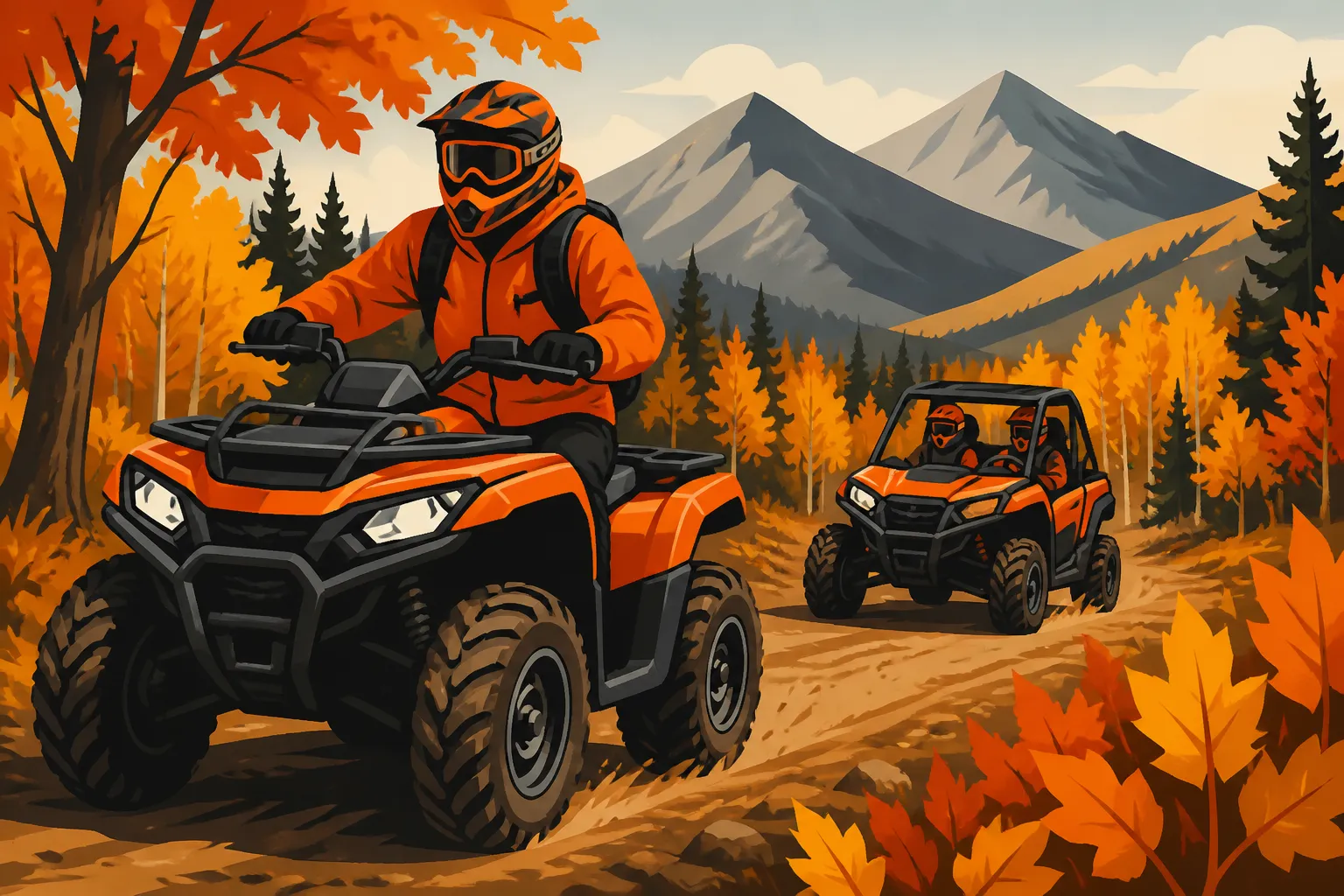
Wearing bright colors is strongly recommended for safety when sharing public lands with hunters, according to the Idaho Department of Fish and Game. You can make yourself easier to notice by wearing a high-visibility vest or jacket, choosing a bright helmet cover if it fits safely, and dressing passengers in noticeable colors too.
Orange is a useful choice, but visibility depends on the setting. Fall leaves, dusty roads, low light, and tree cover can make people and machines harder to pick out. High-visibility yellow or lime may stand out better in some surroundings. Think about the landscape and conditions, and favor gear that contrasts with them.
| Choice | Practical use | What to keep in mind |
|---|---|---|
| Blaze-orange vest or jacket | Makes your upper body easier to notice | Choose a fit that won’t snag or interfere with riding gear |
| Bright helmet or cover | Helps other trail users identify your head and direction | It does not replace a required helmet |
| High-visibility yellow or lime | Can contrast with orange and brown foliage | Check how it looks against the ride environment |
| Bright gear for passengers | Helps make the whole group more noticeable | Passengers need suitable protective gear too |
| Reflective details | May help in dim conditions when light reaches them | Do not rely on reflectors alone |
A vest is often a straightforward layer to add or remove as the day changes. If you shop on Amazon, check the garment’s fit and construction rather than assuming every product advertised as high visibility is suitable for riding. Avoid loose straps, dangling fabric, or anything that could catch on controls or branches.
Keep the distinction between visibility gear and required protective equipment clear. Idaho Department of Parks and Recreation requires a DOT-approved helmet for riders under 18 operating off-highway. Blaze orange does not substitute for that helmet or other safety equipment. For more on the helmet rule, see Idaho Helmet Requirements Under 18.
Make Yourself Noticeable Without Assuming You Have the Trail to Yourself
On a shared road or trail, visibility is only part of the safety picture. A hunter may be focused on terrain, looking through brush, or approaching from a direction you cannot see. Ride at a speed that gives you room to react, especially near bends, trail junctions, camps, and areas where people may be walking.
Use lights when conditions call for them, keep a safe following distance, and avoid crowding other trail users. If you encounter a person on foot, slow down well before reaching them and give them room. Dust can obscure what is ahead, so leave enough space between machines for it to settle rather than riding close behind another vehicle.
A few habits can help your group be easier to spot and less surprising:
- Wear bright outer layers where they will be visible, not hidden under dark jackets.
- Keep passengers and children in noticeable clothing too.
- Agree on a simple regrouping plan before the ride so no one has to rush to catch up.
- Stay on the route and avoid sudden turns into brush or unmarked tracks.
- Reduce speed and use extra caution when visibility is limited by dust, shade, or changing light.
- Stop in a safe, visible place if the group becomes separated.
Bright colors help people identify you, but they do not make an unsafe route safe. Do not assume a hunter has seen your machine, and do not assume that a bright vest makes it appropriate to ride off the trail. Respect posted signs, closures, and private boundaries.
If you are riding during hunting season, check local access conditions before setting out. Idaho Department of Parks and Recreation advises users to obtain permission before entering private land and to check with the appropriate government office for restrictions on public land. Roads and trails inside National Forest boundaries may have motor vehicle restrictions; a Motor Vehicle Use Map and the local Forest Service Office can help clarify motorized access. Idaho Rules During Hunting Season and Idaho Rules on Forest Service Roads offer more detail.
Check Access, Permits, and Trail Conditions Before You Leave
A trail shown on a map is not automatically open to your machine or available under the same rules in every season. Closures, land ownership, machine-width limits, and local restrictions can all affect a route. Idaho Department of Parks and Recreation publishes mapping applications, including a summer trails web-based map that works with PCs, iOS devices, and most Android devices. The department also points riders to alternative mapping options through the Where to Ride section of its ATV/UTV/Motorbike page.
Use a map to plan, then check current conditions and the rules for the land you will cross. Idaho Department of Parks and Recreation specifically cautions that roads and trails within National Forest boundaries may be subject to motor vehicle use restrictions. For route planning, see Where to Ride an ATV in Idaho, Checking Idaho Trail Status Before You Drive, and Reading an Idaho Motor Vehicle Use Map.
Permits are a separate question from blaze orange. Idaho Department of Parks and Recreation says nonresident operators of noncommercial OHVs need an Idaho nonresident OHV recreational permit. A permit does not grant permission to enter private land or override a closure. If you are visiting from another state, review Idaho’s Non-Resident OHV Sticker and confirm what applies to your machine and trip.
Make sure the machine itself is ready as well. Idaho Department of Parks and Recreation says OHVs operating in Idaho must have a muffler and spark arrester, and cannot exceed 96 decibels during sound testing. These equipment rules are separate from clothing choices and land-access restrictions. For a broader checklist, see What Idaho Riders Need Before They Ride.
One more common mix-up: blaze orange on a fall ride is not the same as a safety flag requirement for sand dunes. Idaho Department of Parks and Recreation says sand-dune safety flags must reach a specific height; the riding environment and applicable rule matter. Do not assume a vest, helmet cover, or short whip flag meets a requirement that applies to a different kind of use.
A Simple Pre-Ride Check for Fall
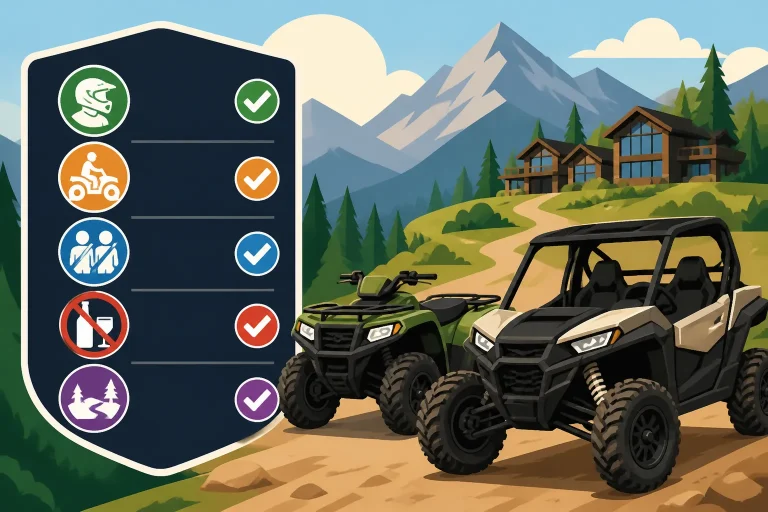
Before loading the machine, think through the trip from the rider’s point of view and from the perspective of someone approaching on foot. The goal is to be visible, predictable, and on an authorized route.
- Choose clothing for the conditions. Wear bright layers that remain visible when you sit, lean, or add a jacket. Keep loose clothing secured.
- Protect every rider. Check helmets and eye protection, and make sure passengers have gear suited to the ride. Riders under 18 must wear a DOT-approved helmet when operating off-highway, according to Idaho Department of Parks and Recreation.
- Check the route and land status. Confirm that the route is open to your machine and that you have permission where needed. Use the appropriate Motor Vehicle Use Map for National Forest access.
- Confirm permit needs. A nonresident riding a noncommercial OHV needs the applicable Idaho recreational permit, according to Idaho Department of Parks and Recreation. Do not treat a permit as permission to cross private property.
- Plan for changing visibility. Dust, shade, weather, and fading daylight can all make it harder to see people ahead. Leave room to slow down or stop.
- Keep the group together safely. Set a meeting point and avoid rushing to close gaps if someone falls behind.
- Respect other users. Slow down near people on foot, give them space, and stay on the authorized route.
The safest approach is straightforward: wear bright clothing even though general trail riders are not legally required to wear blaze orange, ride as if others may not have seen you, and verify that your route is open. A little preparation helps reduce surprises without confusing a visibility recommendation with a legal requirement.
Sources
- Department of Parks and Recreation — Trail Ranger Application | Department of Parks and Recreation (checked November 3, 2026)
- Idaho Department of Parks and Recreation — id_ohm_sm.pdf (checked November 3, 2026)
- Idaho Department of Parks and Recreation — ID_OHV_LE_Guide.pdf (checked November 3, 2026)
- Idaho Department of Parks and Recreation — OHV_BOOKLET.pdf (checked November 3, 2026)
Disclaimer
This article is for general informational purposes only and does not constitute professional advice. Laws, prices and regulations vary by location and change over time. Consult a qualified professional for guidance on your specific situation.