Idaho OHV Safety Course Requirements
Idaho OHV Safety Course Requirements
If a rider under 16 is preparing to use an ATV, UTV or dirt bike in Idaho, it can be hard to tell whether a safety course is required—and whether a certificate replaces adult supervision or other riding rules. The key is to treat training, supervision, machine suitability and permits as separate requirements. Knowing which apply before a ride helps prevent a last-minute stop at the trailhead.
Who Needs an Idaho OHV Safety Course
Idaho’s OHV safety-course requirement is primarily a youth rule. A rider younger than 16 generally needs to complete an approved OHV safety course before operating an OHV on public land. That can include more than a marked recreational trail: a public-land route or road open to OHVs may also be relevant. Do not assume that a road is exempt just because it is wide, graded or used by regular traffic.
The requirement is about the rider, not the machine’s owner. If an adult owns the ATV but a child operates it, the child’s training status still matters. Likewise, a parent’s course completion does not count for the young rider. Each rider who is subject to the rule needs their own qualifying certificate.
A rider who is 16 or older is generally outside the youth course requirement, but that does not mean every other rule disappears. The operator may still need an OHV sticker, appropriate protective equipment, permission to use the route and compliance with any road-access rules. A course is not a substitute for a sticker, a restricted vehicle plate where one is required, or a driver’s license when road use calls for one.
The distinction between course requirements and other youth rules is important. A young rider might have completed the course and still need direct adult supervision. The machine must also be suitable for that rider, and a route open to an OHV does not necessarily make it appropriate for a child. For more on age-related rules, see Idaho Age Rules for Riders Under 16 and Who Needs to Take the Idaho Safety Course.
A practical starting point is to ask four separate questions:
- Is the rider younger than 16?
- Is the planned riding area public land or a route where the youth course rule applies?
- Has the rider completed a course Idaho recognizes?
- Do supervision, machine-size, sticker, equipment or road rules also apply?
If any answer is unclear, verify the details with Idaho Parks and Recreation before riding. A course certificate may address one part of compliance without answering the others.
Public land, private land and mixed routes
The distinction between public and private land can change which requirements apply. A course rule tied to riding public land should not automatically be treated as a requirement for every ride on a family’s private property. But “private” is not just a description of where a machine is parked or who owns it. A private drive may connect to a public road; a ranch may include public access routes; and a trail that crosses different types of land may have different rules along the way.
If a ride begins on private land and then enters a public trail or road, plan for the public portion. A child who rides only on a private area with permission may be in a different situation from a child who continues onto a public route. When the boundary is not obvious, ask the land manager or check the route information rather than relying on a property owner’s general description.
Riders turning 16
A birthday does not change every riding rule at once. The age threshold may affect whether the youth course requirement applies, but supervision, licensing, road access, protective gear and machine suitability are separate questions. If a rider turns 16 during a season, keep the certificate and continue following the rules that still apply to the planned route. Idaho Rules for a Rider Turning 16 can help separate the age transition from other requirements.
What the Course Covers and How to Choose One
A qualifying course should be an OHV safety course recognized for Idaho’s requirement. Before a young rider enrolls, check that the course is approved or accepted for Idaho—not simply that its title includes “ATV safety” or that it is offered online. A general outdoor safety class, a dealer’s orientation or a parent’s instruction may be useful, but do not assume it satisfies the formal course requirement.
The course is intended to prepare riders to operate responsibly, not just to produce a certificate. Training commonly addresses riding decisions and hazards such as terrain, speed, visibility, machine handling, protective equipment and the effect of passengers or cargo. The precise curriculum and delivery options can vary, so check the current Idaho Parks and Recreation course information before choosing a provider.
A useful way to evaluate an option is to check these points:
- Recognition: Does Idaho accept the course for the youth OHV requirement?
- Rider eligibility: Is the course available to the rider’s age group?
- Format: Is it online, in person or a combination?
- Completion steps: Is there a test, practical element or other required step?
- Proof: What certificate or record does the rider receive, and how can it be replaced?
- Timing: Can the rider finish and obtain proof before the planned trip?
Avoid choosing a course based only on convenience. If the provider’s description does not clearly explain whether Idaho recognizes it, confirm with the state before paying or enrolling. A certificate from an unrelated course may show that a child has received some instruction but still leave the statutory requirement unmet.
Online training can be a practical option for families who want to complete the coursework before a trip. In-person instruction may suit riders who benefit from discussion or hands-on learning. Neither format should be treated as automatically better for every rider. The important questions are whether Idaho accepts the course and whether the young operator understands and can apply what it teaches.
Parents can support the learning without substituting for the course. Talk through how the rider will handle a steep slope, a blind corner, dust, changing weather or a machine that feels unstable. Practice should take place in a suitable, permitted area, at a pace the rider can manage, and with the right adult supervision. A certificate establishes completion of a course; it does not prove that a rider is ready for every trail or machine.
For children who are new to riding, course completion is only one part of choosing an appropriate machine. A child’s age, size, coordination and experience matter, as do manufacturer guidance and Idaho’s youth machine rules. The largest available machine is not automatically the safest choice. See Youth Machine Size Rules Idaho Parents Ask About for the separate question of machine suitability.
Certificates, Supervision and What to Carry
A course certificate and adult supervision are not interchangeable. A certificate shows that the rider completed the qualifying training; supervision addresses who is responsible for the rider during a particular ride. A child may need both. Completing a course does not, by itself, authorize a young rider to travel alone or to ride beyond any supervision limit.
Idaho’s youth supervision rules include a 300-foot distance in relevant situations. The details of who must supervise, how close the adult must remain and which riding situations are covered should be checked against current state requirements. Do not assume that watching from a distant trailhead, following in a vehicle or riding somewhere else on the route counts as direct supervision. The rules are addressed in Idaho Supervision Rules and the 300-Foot Rule and The 300-Foot Supervision Distance.
Supervision also has a practical purpose. A supervising adult should be close enough to respond if the rider becomes separated, loses control, encounters a hazard or needs help. On a narrow trail or in rough terrain, staying within the required distance may not be enough if the adult cannot see or reach the young rider when needed.
Keep proof accessible
Carry or store the certificate in a way that makes it available during the ride. A clear paper copy is one option; an accessible electronic copy may also be useful if the device will work where you are riding. Keep a backup at home or in another secure location. Do not assume that an officer, land manager or event organizer can look up a rider’s training record on the spot.
A certificate is different from an OHV sticker or registration document. The certificate belongs to the rider and demonstrates training. A sticker generally relates to the machine and its authorization for use. One cannot replace the other. For the separate question of proof during a ride, see Carrying the Certificate in the Machine.
If the certificate has been lost, ask the course provider or Idaho Parks and Recreation about obtaining a duplicate before the trip. A photo of an old card may be better than having nothing, but confirm what form of proof is accepted rather than assuming an image will meet every requirement.
Out-of-state certificates
Families visiting Idaho or moving from another state should not assume that every out-of-state OHV course transfers automatically. Some credentials may be recognized, while others may not meet Idaho’s requirements. Check that the specific certificate is accepted before relying on it. Relevant details are covered in Out-of-State Certificates Idaho Accepts.
Keep the original certificate or the strongest proof available, along with the rider’s identifying information. If a family has several children or certificates from different states, label copies clearly so it is easy to match the document to the rider. This simple preparation helps avoid confusion at an event, trailhead or enforcement stop.
How the Course Fits With Stickers, Roads and Other Rules
The course is only one part of preparing a young rider for Idaho. Before leaving, match the rider, machine and route to the rules that apply in that place. A route may be open to OHVs but still require a sticker or other documentation. A machine permitted on a trail may not be permitted on a particular road. A completed safety course does not grant permission to ride private property.
| Requirement | What it addresses | What it does not replace |
|---|---|---|
| OHV safety course | Whether a youth has completed recognized safety training | Supervision, machine suitability, route access or a sticker |
| Adult supervision | How a young rider is accompanied during applicable rides | Course completion or permission to use the route |
| OHV sticker or registration | Requirements connected to the machine’s use | The operator’s training or age-related rules |
| Road-use requirements | Whether the machine and operator may use a particular road | Trail access or the safety-course requirement |
| Protective equipment | Safety gear required or appropriate for the ride | Training, supervision or access permission |
Trail rides and forest roads
Do not treat “forest road” as one legal category. A route may be a road managed for public vehicle use, a trail with seasonal restrictions, a private timber road or a road where local rules limit OHV use. The course requirement and the route’s access status are different questions. Check the applicable map and current closures before departure. Idaho’s Forest Road Rule and the Safety Course explains why the road’s designation matters.
For road riding, additional requirements may apply to the machine and operator. A restricted vehicle plate, equipment, insurance or a driver’s license may be relevant depending on the road and circumstances. A course certificate does not make an otherwise closed road legal to use. Review What Idaho Requires Before You Ride a County Road and Idaho’s Restricted Vehicle Plate and Road Use when the route includes public roads.
Stickers and machine paperwork
A safety certificate belongs to the person who took the course; it is not a substitute for the machine’s OHV sticker. Check whether each machine needs a sticker for the planned use, and confirm that it is displayed as required. This matters when a family borrows a machine, swaps riders or brings a visitor along: the rider’s certificate does not travel with the machine, and the machine’s sticker does not certify the rider.
If you are uncertain whether a particular use requires a sticker, review Idaho Permit Rules on Public Land and When an Idaho Rider Needs No Sticker. Rules can depend on the land and the type of riding, so do not rely on what applied at a different trail or on private property.
Protective equipment and machine fit
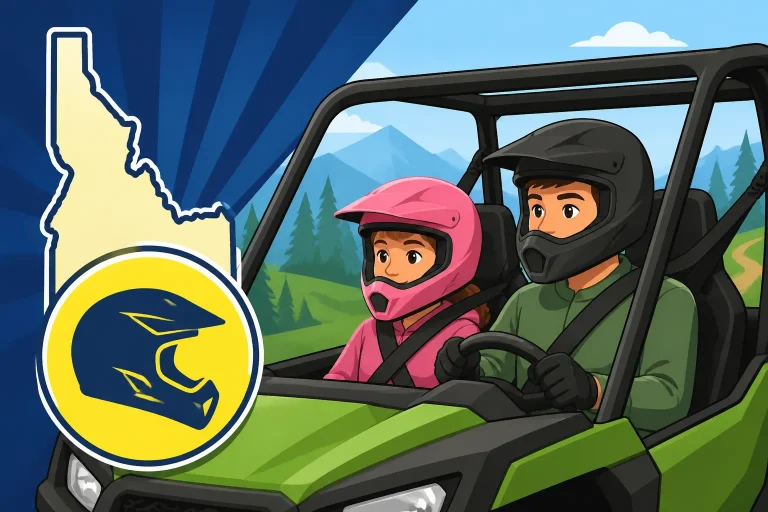
Course completion does not guarantee that a rider has the right gear or is ready for a specific machine. Use equipment suitable for the machine and conditions, and follow applicable helmet and eye-protection rules. Parents should also make sure that a young rider can reach the controls, understand the braking system and handle the machine without being physically overmatched.
A UTV’s seat belts, doors or nets, roll cage, passenger seating and other safety features are not a substitute for a properly trained operator. Do not carry a passenger unless the machine is designed for that use and the passenger rules are met. For helmet details, see Idaho Helmet Requirements Under 18.
A Practical Pre-Ride Checklist for Families
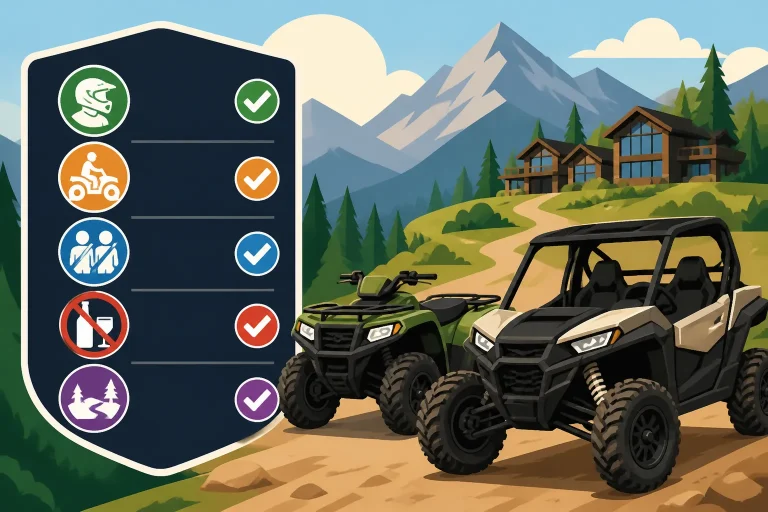
Use this checklist before a trip, especially when a young rider will be going somewhere new. It is not a replacement for checking current rules, but it helps catch the common gaps between course completion and being ready to ride.
- Confirm the route. Identify the land manager, route type and any local road restrictions. Check for seasonal closures and changes in access.
- Check the rider’s age and course status. If the operator is younger than 16, confirm that the required recognized course is complete and that proof is available.
- Confirm supervision. Identify the responsible adult and make sure the planned arrangement complies with the applicable distance and supervision rules.
- Match the machine to the rider. Consider the rider’s ability and size, manufacturer guidance and Idaho youth-machine rules. Do not use a course certificate as proof that any machine is appropriate.
- Check the machine’s sticker and documents. Confirm that the machine is authorized for the intended use and that required documents are accessible.
- Review road access separately. If the trip uses a public road, find out whether the road is open to OHVs and what equipment, plate, insurance or operator requirements apply.
- Inspect safety equipment. Check helmets, eye protection, footwear and clothing, and make sure all required restraints and safety equipment are in working order.
- Set clear ride limits. Agree on speed, spacing, stopping points and what the child should do if separated or uncertain.
- Recheck conditions before departure. Weather, smoke, snow, mud, construction or fire closures can change a route’s suitability or availability.
- Have a backup plan. Keep the certificate available, know where the group can turn around and make sure the adult can respond if a machine or rider has a problem.
A young rider’s first trip after completing the course should be a chance to practice sound decisions, not a test of endurance or speed. Choose a manageable route, allow time for breaks and adjust the plan if the rider is tired or uncomfortable. A short ride on suitable terrain is often more useful than a long route that exceeds the rider’s experience.
Keep the course record for future rides, but check that it remains readable and accessible. If the rider has a new machine, is visiting a different area or is joining an organized ride, review the rules again. Event organizers and land managers may have additional conditions beyond the state’s basic course requirement.
Frequently Asked Questions
Does an Idaho OHV safety certificate expire?
A course certificate is not a seasonal sticker, but families should confirm the status and acceptance of a particular certificate with the course provider or Idaho Parks and Recreation. Keep the certificate accessible and ask about a replacement if it is lost. See Does a Safety Certificate Expire?.
Can a parent’s course certificate cover a child?
No. The course is completed by the individual rider. If a child is subject to the requirement, an adult’s certificate does not serve as the child’s proof of training.
Does finishing the course let a rider under 16 ride without supervision?
No. Training and supervision are separate issues. Check the current youth supervision rules for the planned type of riding, including the applicable 300-foot requirement.
Does the course allow a child to ride any ATV or UTV?
No. Course completion does not override machine-suitability rules, manufacturer guidance, passenger limits or the rider’s ability to operate safely. Choose a machine appropriate to the rider and confirm the applicable youth rules.
Is a safety certificate the same as an Idaho OHV sticker?
No. The certificate concerns the rider’s training; the sticker concerns requirements for the machine’s use. Check both independently, along with route access and any road-use requirements.
Disclaimer
This article is for general informational purposes only and does not constitute professional advice. Laws, prices and regulations vary by location and change over time. Consult a qualified professional for guidance on your specific situation.