Mirrors on a Road-Legal Side-by-Side
It's incredibly frustrating when you want to take your side-by-side from the dusty trail right into town for a burger, but you're not entirely sure if your machine is truly "road-legal" in Idaho. One of the biggest questions that pops up, and one that often causes confusion, centers around what mirrors you actually need. This guide will cut through the uncertainty and explain exactly what Idaho law requires for mirrors on your road-legal side-by-side, helping you confidently transition from dirt to pavement and back again.
Understanding Idaho's Mirror Requirements for OHVs on Roads
Navigating the rules for riding your side-by-side on Idaho's roads can feel like deciphering a secret code, and mirrors are often a point of confusion. Many riders just assume a standard rearview mirror is enough, or they've heard conflicting information. Let's get down to what Idaho actually requires so you can hit the county roads with peace of mind.
Why Mirrors Matter on the Road and Trail
Mirrors aren't just a suggestion; they're a critical safety feature and a legal necessity when you're taking your side-by-side onto public roads. Think about it: when you're merging onto a paved county road after leaving a trail system, you need to see who's coming up behind you or trying to pass. A quick glance in a mirror is much safer than craning your neck around, especially when you're wearing a helmet and dealing with the bumps and vibrations of the road. On the trail, while not legally required for off-road use, mirrors can still be incredibly helpful. Imagine backing up a tight, winding trail to let another group pass, or just trying to keep an eye on a rider following close behind you. Good mirrors provide that crucial awareness. They help prevent accidents, both major ones involving other vehicles on the road and minor bumps with trees or rocks when you're trying to navigate a tricky spot off-road.
Beyond safety, there's the legal side. Idaho has specific requirements for what constitutes a "street-legal" or "restricted use" OHV, and mirrors are definitely on that list. If you're pulled over by a sheriff's deputy on a county road, one of the first things they'll likely check is your machine's equipment, and missing or inadequate mirrors could lead to an unwanted citation. It's not just about avoiding fines; it's about being a responsible rider who contributes to everyone's safety on shared roadways.
Idaho's Specific Mirror Laws for OHVs
Idaho's regulations are pretty clear when it comes to mirrors for off-highway vehicles (OHVs) that are permitted to operate on public roads. For your side-by-side to be considered road-legal, you absolutely need to have mirrors installed. Specifically, Idaho law requires that a restricted use OHV, which includes most side-by-sides, must be equipped with at least one rearview mirror that is securely attached to the vehicle and located to reflect to the driver a view of the highway for a distance of at least 200 feet to the rear of the vehicle.
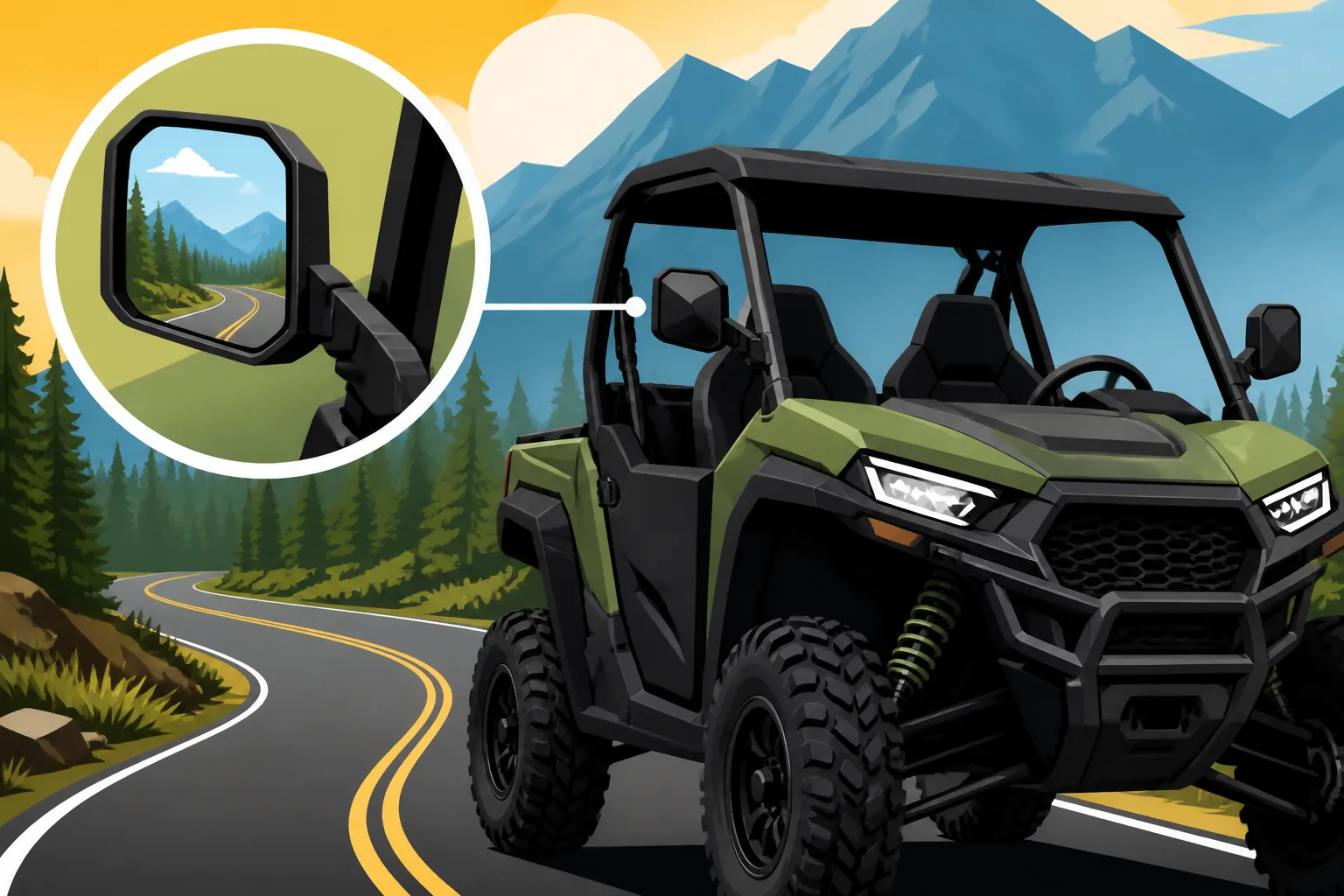
Now, while the law explicitly states "at least one rearview mirror," most experienced riders and powersports dealers will strongly recommend, if not insist on, more. The single rearview mirror is usually a center-mounted mirror, often affixed to the roll cage or windshield frame, giving you a general view of what's directly behind you. However, this single mirror often leaves significant blind spots, especially on a wider side-by-side. To enhance safety and provide a more comprehensive view, many riders opt to add side mirrors to their machines. These mirrors, typically mounted on the left and right sides of the roll cage or doors, greatly reduce blind spots and offer a much better perspective of vehicles approaching from either side. While not a strict legal requirement for all road-legal OHV classifications in Idaho, side mirrors are almost universally considered a best practice for safe road operation and are often necessary to meet the spirit of seeing "a view of the highway" effectively, especially with a large machine. When you apply for [Idaho's Restricted Vehicle Plate Explained], you'll want to ensure your machine meets all these equipment requirements.
Beyond the Letter of the Law: Practical Considerations
Meeting the minimum legal requirement for mirrors is one thing, but truly optimizing your visibility and safety on a side-by-side that sees both trail and road use is another. The legal minimum of "one rearview mirror" often falls short in practical scenarios. For instance, if you're pulling a small utility trailer behind your side-by-side, that single center mirror might be entirely obscured. Similarly, if you have passengers or cargo in the bed of your UTV, they can block a portion of your rear view. In these situations, a pair of well-placed side mirrors becomes indispensable.
Think about the varied terrain you'll encounter in Idaho. One minute you're on a wide-open gravel road, the next you're on a tight, winding single-track. The mirrors you choose need to be robust enough to handle the vibrations and potential impacts of off-road riding, but also provide clear, stable images for road use. Some riders initially install fixed mirrors, only to find them constantly getting snagged on tree branches or knocked out of alignment on narrow trails. This leads many to invest in breakaway or folding side mirrors that can pivot out of the way on impact, reducing the risk of damage. Others prefer wide-angle mirrors, especially for the center rearview, to maximize their field of vision. The downside of wide-angle can be a distorted sense of distance, making objects appear further away than they are. It's a trade-off that each rider needs to consider based on their primary use and comfort level. A comprehensive setup, including a solid center rearview mirror and two adjustable side mirrors, offers the best balance of safety, legality, and practicality for the diverse riding Idaho offers.
Types of Mirrors and How to Choose Them for Your Side-by-Side
Choosing the right mirrors for your side-by-side isn't a one-size-fits-all decision, especially when you're trying to meet Idaho's road-legal requirements while also protecting your investment on the trails. There's a wide variety out there, each with its own advantages and disadvantages. Let's break down the common types and what to consider when making your selection.
Rearview Mirrors: Center-Mounted Options
The center-mounted rearview mirror is the most common and often the first mirror riders consider because it's the one explicitly mentioned in Idaho's road-legal statutes. These mirrors typically attach to the top of your windshield frame, the roll cage crossbar, or even directly to the roof if it has a suitable mounting point. When choosing a rearview mirror, you'll encounter a few variations:
- Standard Flat Mirrors: These offer a true, undistorted reflection of what's behind you. They're great for accurately judging distances, which is crucial when you're sharing the road with cars and trucks. The field of view, however, is generally narrower than curved mirrors.
- Wide-Angle or Convex Mirrors: These mirrors have a slight curve to them, which allows them to capture a much broader field of view behind your side-by-side. This can be fantastic for reducing blind spots and getting a quick overview of traffic. The trade-off, as mentioned before, is that objects in convex mirrors appear smaller and further away than they actually are. This takes some getting used to and requires extra caution when judging distances.
- Panoramic Mirrors: These are essentially extra-wide convex mirrors, sometimes spanning almost the entire width of your roll cage. They offer the widest field of vision possible from a single mirror, often eliminating the need for side mirrors in some situations, though not recommended as a sole solution for optimal road safety.
- Vibration Reduction: A key factor for any center-mounted mirror is its ability to resist vibration. Side-by-sides are notoriously shaky machines, especially on rough trails. A cheap mirror that shakes constantly will be useless. Look for mirrors with robust mounting systems and possibly rubber dampeners to ensure a clear image. Brands like SuperATV offer a range of rearview mirrors designed with vibration reduction in mind, which can make a huge difference in usability. When you're trying to [Riding an ATV on the Road in Idaho] or crossing a highway, a stable view of traffic behind you is non-negotiable.
Side Mirrors: Breakaway, Clamp-On, Folding
While not strictly mandated as the only rearview mirror for road legality in Idaho, side mirrors are almost universally recommended for safety and practical visibility, especially for side-by-sides. These mirrors offer distinct advantages by eliminating crucial blind spots that a single center mirror simply cannot cover.
- Clamp-On Mirrors: These are perhaps the most common type. They attach directly to your side-by-side's roll cage using clamps. Installation is usually straightforward, and many come with adjustable arms for optimal positioning. The main consideration here is durability and the quality of the clamping mechanism to prevent slippage or breakage on rough terrain.
- Breakaway Mirrors: These are a favorite among riders who frequently hit tight trails. Breakaway mirrors are designed to pivot or fold in when they encounter an obstacle like a tree branch or rock. This significantly reduces the chance of the mirror housing or glass breaking. Once the obstruction is cleared, they can often be manually (or sometimes spring-loaded) snapped back into their original position. They're an excellent investment if you want the road-legal visibility without constantly worrying about damaging your mirrors off-road. You'll find many options, including those from SuperATV, that incorporate this breakaway feature.
- Folding Mirrors: Similar to breakaway mirrors, folding mirrors allow you to manually fold them in flat against the machine when you're on a narrow trail or transporting your side-by-side in an enclosed trailer. This protects them from damage and makes tight squeezes easier. They might not offer the immediate "snap-back" of some true breakaway designs, but they provide excellent protection when intentionally folded.
- Door-Mounted Mirrors: Some side-by-side models, especially those with full doors, can accommodate mirrors mounted directly onto the door panel. These often offer a more integrated look and can be very stable, but they typically aren't breakaway unless specifically designed to be.
- Field of View and Adjustability: Regardless of the mounting type, consider the mirror's field of view (flat vs. convex) and its adjustability. You'll want to be able to fine-tune the angle to get the best view of the lanes beside and behind you when driving on the road, as well as being able to adjust for trail conditions or different drivers. For navigating challenging routes like those near [The Magruder Corridor and Idaho Backcountry], a wide field of view and durability are paramount.
Mounting and Durability Considerations
When you're outfitting your side-by-side with mirrors for dual-sport use, how and where they mount, along with their overall durability, is just as important as the mirror glass itself. A flimsy mirror, no matter how clear, won't last long on Idaho's diverse terrain.
The roll cage is the most common mounting point for both rearview and side mirrors on a side-by-side. Look for robust clamps made from durable materials like aluminum or heavy-duty plastic. Metal clamps with rubber inserts are often preferred as they provide a secure grip without scratching the roll cage and help absorb vibrations. The diameter of your roll cage tubing is crucial here, as clamps come in various sizes (e.g., 1.75", 2", 2.25"). Always measure your cage before purchasing. Poorly fitting clamps will either slip, damage your cage, or simply break.
Vibration resistance is absolutely key. Even on smooth pavement, a side-by-side experiences more vibration than a standard car. On gravel roads or trails, it's amplified significantly. Mirrors with built-in vibration dampening, sturdy arms, and secure ball joints for adjustment will provide a much clearer and more consistent image. Cheaper mirrors often shake so much that they become useless, making it impossible to accurately see what's behind you. A wobbly mirror also reflects poorly on your commitment to safety if a deputy pulls you over to check your compliance with [What Idaho Requires Before You Ride a County Road].
Consider the materials of the mirror housing and glass. High-impact ABS plastic or aluminum housings are generally more durable than brittle plastics. The glass itself should be shatter-resistant for safety. Some mirrors even offer scratch-resistant coatings, which is a bonus when they might get brushed by branches or kicked-up debris. When evaluating a mirror, physically try to shake it. If it feels loose or flimsy in your hand, it's likely to perform poorly under real-world conditions. A quality mirror, like those designed by SuperATV, will feel solid and well-constructed, ready to withstand the rigors of Idaho riding.
Installing and Maintaining Your Road-Legal Mirrors
Once you've chosen the perfect set of mirrors for your side-by-side, the next crucial step is proper installation and ongoing maintenance. Even the best mirrors won't serve their purpose if they're not securely mounted or if they're constantly dirty or out of alignment. Getting this right ensures your safety on the road and protects your investment on the trail.
DIY Installation Tips
Installing mirrors on your side-by-side is usually a straightforward process, but taking a little extra care during installation can prevent headaches down the road. Most clamp-on mirrors will come with basic tools, but having a good socket set, Allen wrenches, and a torque wrench can make the job easier and ensure proper fastening.
- Read the Instructions: Yes, really! Every mirror setup is a little different. The manufacturer's instructions will often have specific torque recommendations for clamps or unique mounting steps.
- Measure Your Roll Cage: As mentioned, roll cage diameters vary. Before you even open the box, double-check your cage size. If your mirrors come with shims, use them to ensure a snug fit. A loose clamp will lead to vibration and potential damage.
- Optimal Placement for Rearview: For your center rearview mirror, try sitting in the driver's seat and having someone hold the mirror in various positions. You want a clear, unobstructed view directly behind you. Avoid placing it so low that it blocks your forward vision, or so high that it's difficult to see without excessive head movement.
- Optimal Placement for Side Mirrors: Side mirrors should be positioned so that you can see a good portion of the lane next to you, and ideally, a sliver of your own machine. This helps you judge proximity. Again, sit in the driver's seat and adjust. For road-legal use, these mirrors are invaluable for seeing traffic that might be in your blind spot if you only had a center mirror. Consider the type of riding you do most. If you hit tight trails, try to mount them as close to the machine's profile as possible while still maintaining adequate visibility, or invest in breakaway mirrors.
- Tighten Securely (But Don't Overtighten!): Fasten all bolts and clamps firmly. For roll cage clamps, a good rule of thumb is "snug, then a quarter turn." Overtightening can strip threads, deform your roll cage, or crack plastic components. If you have a torque wrench, use the manufacturer's specified settings.
- Test for Vibration: After installation, take your side-by-side for a short ride on varying terrain (gravel, pavement). Observe how much the mirrors vibrate. If they're excessively shaky, you might need to re-tighten clamps, add rubber shims, or consider a different mounting point. A securely mounted mirror is critical for safety when you need to quickly check behind you, especially if you're riding in an area with varied speed limits like those described in [Idaho Speed Limits for Restricted Vehicles].
Mirror Care and Trail Riding
Your mirrors are going to take a beating on the trails, even if you try to be careful. Dust, mud, branches, and even rocks can all impact their longevity and clarity.
- Regular Cleaning: Dust and mud are the enemies of clear vision. Carry a small microfiber cloth and some water or a non-ammonia-based glass cleaner on longer rides. A quick wipe-down at a rest stop can dramatically improve your visibility. Never dry-wipe heavily caked mud or grit, as it will scratch the mirror surface. Rinse first, then wipe.
- Protection on the Trail: If you don't have breakaway or folding mirrors, be extra mindful on tight trails. Sometimes it's better to manually fold in a non-breakaway mirror or even remove it temporarily if you know you're heading into extremely dense brush. For serious off-roading, some riders even use mirror covers or bags to protect them during transport or on particularly gnarly sections.
- Inspecting for Damage: After every intense trail ride, quickly inspect your mirrors. Check for loose clamps, cracked housings, or scratched glass. Addressing minor issues quickly can prevent them from becoming major problems later. A small crack can quickly propagate, especially with constant vibration. You don't want to discover your mirror is unusable when you're about to transition from a forest road to a busy county highway. When trail riding through areas like [Idaho's Sawtooth National Forest Trails], bumping branches is almost inevitable.
Pre-Ride Checks and Adjustments
Before every ride, whether you're hitting the open road or heading deep into the backcountry, a quick mirror check is just as important as checking your tires or fluid levels.
- Adjustment is Key: Always adjust your mirrors before you start driving. Sit in your normal driving position. Your center rearview mirror should show you a clear view directly behind your machine, with as little of your own side-by-side visible as possible. For side mirrors, adjust them so you can see a small sliver of your machine (this helps you orient yourself) and a good view of the lanes directly beside and behind you. Make sure both side mirrors are adjusted similarly.
- Check for Stability: Give each mirror a gentle nudge. Does it hold its position, or does it flop around? If it's loose, tighten the adjustment screws or ball joints. A mirror that constantly shifts out of position is a hazard, not a help.
- Cleanliness Check: Is the glass clear? Are there any obstructions (like a passenger's backpack) blocking your view? A few seconds spent cleaning or repositioning can save you from a close call.
- Consider Passenger Impact: If you're carrying passengers, especially in the rear seats of a four-seater side-by-side, have them get in before you make your final mirror adjustments. Their presence, or any cargo they bring, can significantly change your rearward visibility. You want to make sure your mirrors are still providing that essential view of [Idaho Roads Open by Default to Restricted Vehicles] or the trail behind you. This consistent habit of checking your mirrors helps ensure you're compliant and safe every time you ride.
Mirror Compliance and Road Riding Safety in Idaho
Understanding the letter of the law for mirrors in Idaho is the first step, but truly embracing road safety with your side-by-side means going beyond the minimum. Idaho is a rider-friendly state, but that friendliness comes with the expectation that OHV operators will be responsible and well-equipped.
The Importance of Adequate Visibility
Idaho's law requiring "at least one rearview mirror" is designed to ensure a basic level of rearward visibility for operators of restricted use OHVs. However, as any experienced driver knows, a single center rearview mirror is simply not enough for comprehensive safety on public roads. This is especially true for side-by-sides, which can be wider than many vehicles, have significant blind spots, and are often operated in diverse conditions, from busy town streets to remote gravel county roads.
Adequate visibility means being able to quickly and accurately assess traffic conditions not just directly behind you, but also in the lanes to your left and right. Without proper side mirrors, changing lanes, turning at intersections, or even just being aware of another vehicle attempting to pass you becomes significantly more dangerous. Imagine you're riding your side-by-side with a restricted plate on a county road near [Riding Through McCall, Stanley and Salmon], transitioning from a slower gravel section to a faster paved road. A single center mirror might show a car approaching far behind, but it won't tell you if a vehicle is already in your blind spot, preparing to overtake you on the left. Side mirrors bridge that critical gap, allowing you to quickly scan your surroundings with minimal head movement, keeping your focus primarily on the road ahead. This enhanced field of vision isn't just a convenience; it's a vital component of collision avoidance, protecting you, your passengers, and other road users.
Combining Mirrors with Other Road-Legal Equipment
Mirrors are just one piece of the puzzle when it comes to making your side-by-side road-legal in Idaho. To truly operate your machine safely and legally on designated public roads, you need a full suite of equipment. This includes:
- Lights: Headlights, taillights, brake lights, and turn signals are all mandatory, especially if you're riding after dusk. [Lighting Rules for Riding After Dark in Idaho] outlines these requirements in detail.
- Horn: A functional horn is essential for alerting other drivers or pedestrians to your presence.
- Windshield: While not explicitly required for all OHVs, a windshield (or at least eye protection) is highly recommended for comfort and safety.
- Fenders/Mudguards: To prevent debris from being thrown up by your tires, which can be a hazard to other vehicles and pedestrians.
- Seatbelts/Restraints: Required for all occupants in side-by-sides, especially when on roads.
- Displaying Your Plate and Sticker: You need to have your [Idaho Plates That Begin With R] properly mounted and your [What an Idaho OHV Sticker Costs Each Year] clearly displayed.
Beyond the physical equipment, you also need to ensure you, as the operator, are compliant with Idaho law. This means having a valid [Driver's License and Insurance on an Idaho Road Ride], and for younger riders, adhering to [Idaho Helmet Rules for Riders Under 18] and [Idaho Road Rules for Young Riders]. All these elements work together. For instance, even with perfect mirrors, if your turn signals aren't working, your intentions might not be clear to other drivers. Or if your machine is not stickered or plated, those mirrors won't save you from a citation when pulled over by a deputy. It's about presenting a complete package of safety and legality every time you ride.
Navigating Different Road Types in Idaho
Idaho's OHV road access can be wonderfully diverse, but it also means understanding where and how your road-legal side-by-side can be operated. Your mirrors are essential tools for navigating these varied environments.
- County Roads: Many Idaho county roads are open to restricted use OHVs, often serving as crucial links between trail systems and towns. On these roads, you'll encounter a mix of traffic, from pickups to logging trucks. Your mirrors become vital for monitoring faster-moving vehicles behind you and safely navigating intersections. Always be prepared for sudden stops or turns, and use your mirrors to ensure you have a clear path before making any maneuvers. When riding on these roads, familiarity with [Which Idaho Roads Are Open to OHVs] is key.
- Forest Service and BLM Roads: These are often gravel or dirt roads, but they are still public roads where you can encounter other vehicles, including passenger cars, trucks, and even logging equipment. While the speeds might be lower, dust can significantly reduce visibility for everyone. In dusty conditions, mirrors become even more critical for keeping track of vehicles behind you, especially if you need to pull over. They also help you monitor other OHVs in your group, ensuring no one gets left behind. Always be aware of [Idaho Rules on Forest Service Roads] and [Idaho Rules on BLM Roads].
- Towns and Communities: Many Idaho communities, particularly those that cater to outdoor recreation, allow OHV access on certain streets to reach services like gas stations, restaurants, or lodging. When riding in town, your mirrors are indispensable for navigating narrower streets, parked cars, and increased pedestrian traffic. You need to be extra vigilant for vehicles pulling out of driveways or parking spots. The ability to quickly check your side mirrors before making a turn or pulling to the curb is critical for safety in these busy environments, helping you abide by local ordinances like [Riding to a Restaurant in Salmon] or [Parking a Side-by-Side on an Idaho Main Street].
Regardless of the road type, continuous awareness of your surroundings, facilitated by properly adjusted mirrors, is paramount. Always anticipate that other drivers might not expect an OHV on the road, and drive defensively. Your mirrors are your extra set of eyes, allowing you to see potential hazards and react accordingly, making every ride safer and more enjoyable.
Disclaimer
This article is for general informational purposes only and does not constitute professional advice. Laws, prices and regulations vary by location and change over time. Consult a qualified professional for guidance on your specific situation.