What Counts as Direct Supervision in Idaho
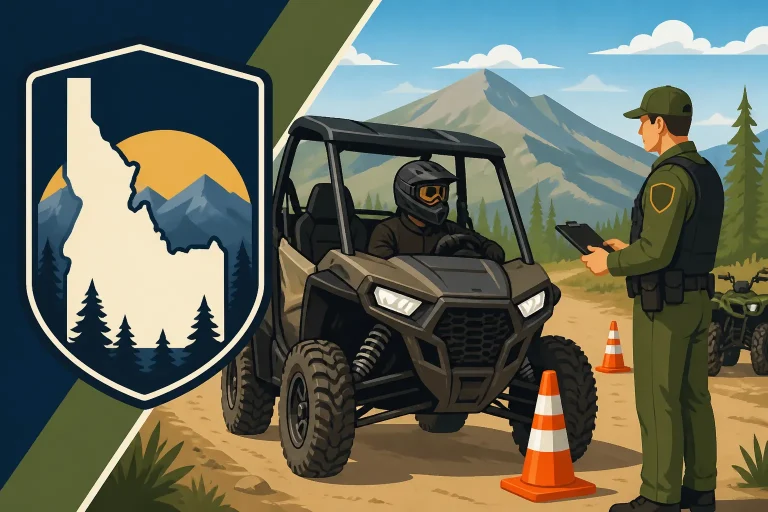
Idaho’s direct-supervision rule can be confusing when a young rider is on a trail, forest road, or another public route. The commonly cited 300-foot boundary is only part of the picture: the rider’s age, the type of land, and any safety-course requirement can matter too. Here’s how to think through supervision before setting out.
What direct supervision means in Idaho
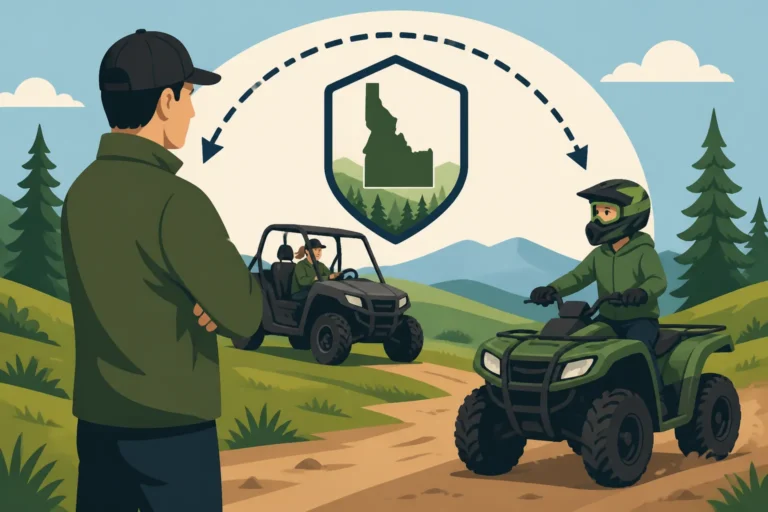
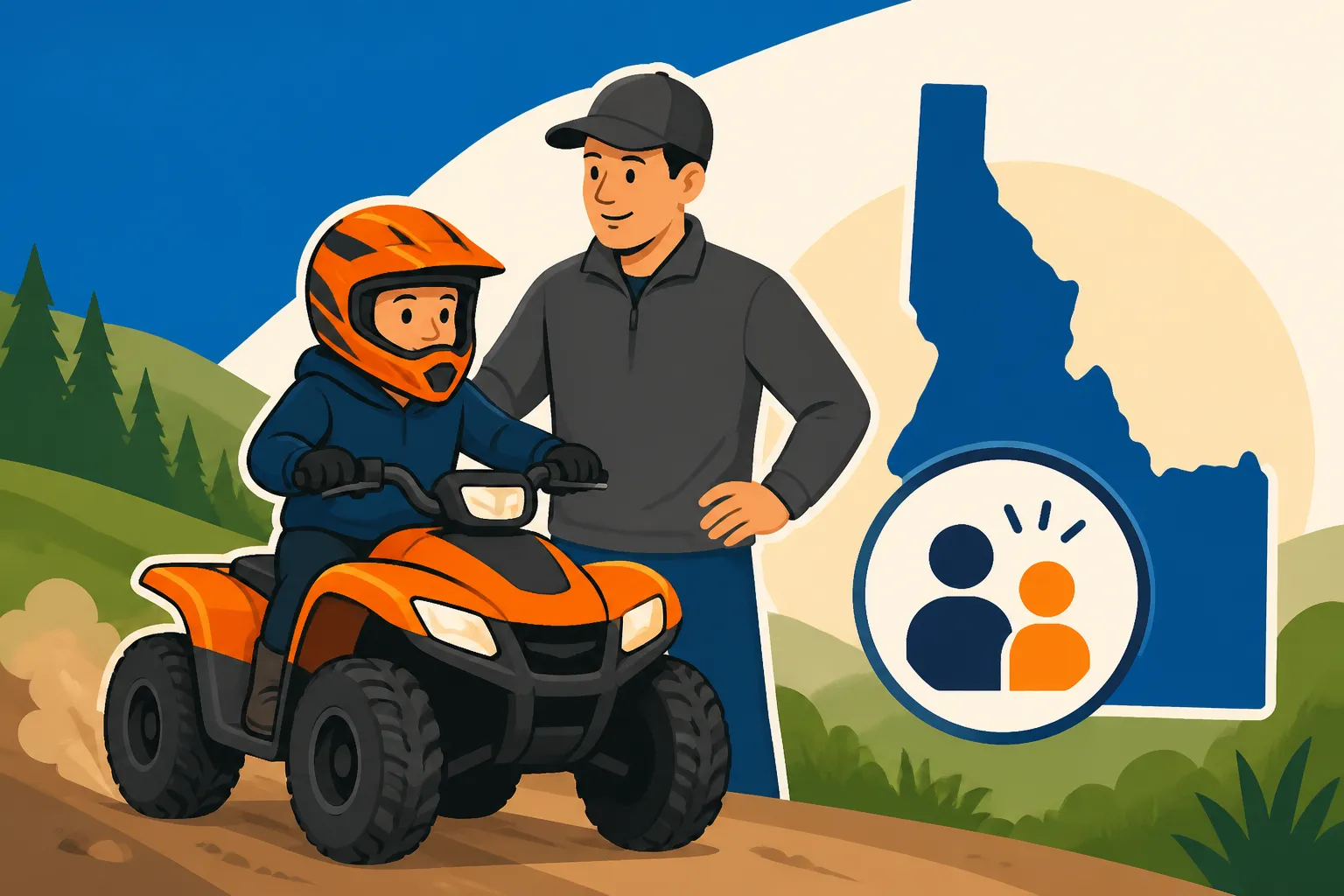
Direct supervision means an adult is actively responsible for a young OHV rider, not merely somewhere nearby. Idaho’s rules commonly refer to an adult staying within 300 feet of a rider who is subject to the supervision requirement. Treat that distance as an outer limit, not a comfortable target. On a winding trail or in heavy dust, an adult 300 feet away may be too far to watch or help effectively.
A parent or other responsible adult should be able to keep track of the rider’s location, notice a problem, and respond promptly. The adult should also know the route and the machine the young person is operating. Simply being at the staging area, following in a separate group, or waiting at the end of a ride may not amount to direct supervision.
The 300-foot figure is not permission to let a child ride out of sight around a bend or over a ridge. Terrain, trees, dust, noise, and traffic can make it hard to supervise even at a shorter distance. Stay close enough to maintain meaningful oversight and adjust the spacing when conditions change.
| Situation | What to do |
|---|---|
| A young rider is on a public route where supervision is required | Keep a qualifying adult close and actively involved; use 300 feet as an outer boundary, not a goal |
| The route bends, climbs, or becomes dusty | Reduce the gap so the adult can keep track of the rider |
| The adult is riding another machine | Stay close enough to observe and respond; riding together does not automatically mean supervision is adequate |
| The group reaches a road crossing or busy area | Pause, regroup, and make sure the young rider understands what to do before proceeding |
| The ride moves onto private property | Check the property owner’s rules and do not assume public-land requirements answer every question |
Age and location matter. Requirements for riders under 16 can differ from expectations for older teens, and public-land rules may not match the rules on private property. A county road, a Forest Service road, a trail, and a family ranch are not interchangeable settings. Before riding, check the rule that applies to the particular rider and route. For a broader overview of age-related requirements, see Idaho Age Rules for Riders Under 16 and Idaho Supervision Rules and the 300-Foot Rule.
When the rule applies and what the adult should check
Do not assume that a youth rider is exempt from supervision because the machine is small, the ride is familiar, or the adult is only a short distance away. Start by identifying the route and land manager. A route may cross different kinds of land or connect a trail to a road, and the rules can change along the way.
Some riders and families also need to check whether a safety course is required. A course and adult supervision are separate questions: completing a course does not necessarily remove a supervision requirement that applies to the rider or route. Likewise, adult supervision should not be treated as a replacement for a required course. Check the current requirements for the rider’s age and intended route before leaving.
Identify the route, not just the destination
A ride described as “on a forest road” may still include a staging area, connecting trail, public road, or section governed by local restrictions. Verify that the route is open to the machine and that youth rules are satisfied for each part. These related resources can help you check the details:
- Idaho’s Forest Road Rule and the Safety Course
- Who Must Take the Idaho Safety Course
- Idaho Rules on Forest Service Roads
A route map can help you plan, but it does not confirm that a road is currently open or that a youth rider meets the rules for it. Check the land manager’s current information and any local restrictions. If the ride includes a county road, review What Idaho Requires to Ride a County Road as well.
Confirm who counts as the supervising adult
Before the ride, check the current rule for the rider and setting rather than relying on assumptions about age, a driver’s license, or family relationship. Where Idaho requires direct supervision, the responsible adult must be close enough to supervise the youth rider directly. The supervising person should be prepared to stay with the child throughout the ride, not just accompany the group for part of it.
If several children are riding, one adult should not assume that a large group can be supervised safely from far away. Consider the children’s experience, machine sizes, route difficulty, and visibility. A setup that works on a wide, slow-moving section may not work on a narrow trail or a road crossing.
How to supervise during a real ride
Good supervision is a riding plan, not a distance check made once at the trailhead. Before starting, explain who is leading, who is following, where the group will stop, and what the young rider should do if separated. Agree on a simple instruction: stop in a safe place and wait rather than trying to catch up alone.
Keep the young rider in a position where the adult can monitor speed, spacing, and decision-making. On a group ride, an adult may lead while another responsible adult follows. If only one adult is present, choose a pace and route that allow that person to keep the youth rider within close, practical supervision. Avoid stretching the group across multiple bends or letting faster riders pull ahead.
Adjust for conditions
The safe supervision distance can shrink quickly when conditions worsen. Dust can block visibility. A steep grade may hide a rider from view. Engine noise can make verbal communication difficult, while traffic or other trail users can require extra attention. Slow down, regroup, or stop when the adult can no longer reliably see what the young rider is doing.
At road crossings, pause before entering the road and make sure the young rider is ready. Do not assume that a child will follow an adult’s line through a crossing without clear instruction. On narrow routes, ride in a controlled order and avoid pressure to keep up with machines that are faster or larger.
A young rider’s ability also matters. Someone who can operate a machine in an open staging area may not yet be ready for a rough, crowded, or unfamiliar trail. Match the route to the rider’s skill and the machine’s size. Idaho’s age and machine rules are a separate issue from supervision; see Engine Size Limits for Idaho Riders Under 16 for another part of the planning process.
If the group separates
If a young rider becomes separated, the adult should not assume the child will find the route or continue to the next stop. Stop the remaining group in a safe place and follow the plan you discussed before riding. Children should know not to take a different trail, follow strangers, or ride faster to catch up. On a remote route, carry a way to communicate and agree on a simple meeting point in advance.
Supervision is especially important when cell service is unreliable. A phone may not connect from a backcountry trail, so do not make it the only plan. Keep the group together, choose clear stopping points, and have an adult stay with the young rider if the route or conditions become confusing.
Common misunderstandings and a pre-ride check
A few assumptions cause trouble because they treat the 300-foot figure as the whole rule. It is better to check the rider, route, and conditions together.
- “The adult is nearby, so supervision is covered.” Nearby is not the same as actively supervising. An adult who cannot see or respond to the rider may not be providing practical direct oversight.
- “The adult can follow behind at any distance.” A long gap, blind corners, and dusty conditions can prevent effective supervision. Keep the spacing short enough to monitor the young rider.
- “A safety certificate means no adult needs to come.” Do not assume a course certificate replaces direct supervision. Verify both requirements for the rider’s age and route.
- “The same rule applies everywhere.” Public land, private property, forest roads, and county roads can involve different rules. Check each part of the planned route.
- “A child who has ridden before can manage any trail.” Familiarity with one machine or route does not establish readiness for a different machine, terrain, or traffic situation.
Use this pre-ride check:
- Confirm the young rider’s age and identify any supervision or course requirements that apply.
- Check the route’s land manager, open status, and restrictions, including any road sections.
- Choose an adult who can remain close and attentive for the entire ride.
- Set a pace and route suited to the rider’s skill and machine.
- Explain what to do at crossings, stops, and if the group becomes separated.
- Reassess if dust, terrain, traffic, or visibility makes it harder to supervise.
When in doubt, pause and verify the current requirement with the relevant Idaho agency or land manager before riding. The safest interpretation is not to stretch the 300-foot boundary or assume that a familiar route is automatically covered by the same rules as another one. For the broader requirements riders need before heading out, see What Idaho Riders Need Before They Ride.
Disclaimer
This article is for general informational purposes only and does not constitute professional advice. Laws, prices and regulations vary by location and change over time. Consult a qualified professional for guidance on your specific situation.