Idaho Rules on a Family Ranch
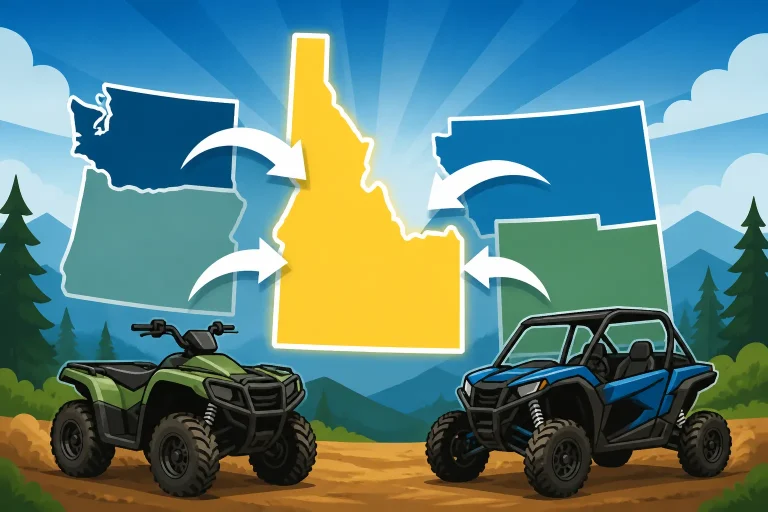
A family ranch can feel like a place where an ATV or UTV can go anywhere, but ownership alone does not settle the rules. What matters is whether the machine stays on private land or enters a public road, trail, or recreation area. This guide explains how to think through ranch riding, stickers, permission, and the points where public-use requirements may begin.
Private ranch land is not the same as public riding land
If you ride only on land that is genuinely private and have the owner’s permission, Idaho’s public-land OHV sticker requirements may not apply to that ride. But “family ranch” is a description, not a special legal status. A family connection does not automatically make every nearby road, trail, or parcel private.
Start by identifying the property and the route you plan to take. A machine may pass from a ranch driveway onto a county road, use a public trail crossing the property, or follow a road that is subject to an easement. Each change can affect which rules apply. A gate, ranch sign, or local understanding does not by itself establish that a route is private or closed to public use.
| Where you ride | What to check before riding |
|---|---|
| Deeded private ground | Confirm the parcel boundary, owner permission, and any rules the owner has set |
| A private ranch road | Check who owns or controls the road and whether an easement or public access applies |
| A county road | Check local OHV access rules, required equipment, and any plate or insurance requirements |
| Public land reached from the ranch | Check sticker, route, age, and other public-land requirements before entering |
| Leased or shared ground | Confirm both your permission to ride and the land’s legal status and access conditions |
For a machine that stays on deeded ground, Do You Need a Sticker on Deeded Idaho Ground? covers the private-land question in more detail. The practical rule is to avoid assuming that a ranch boundary makes an entire route exempt. If the ride crosses onto land managed by another owner or agency, treat that as a separate part of the trip and check its requirements.
A ranch may also include land owned by more than one person, a neighboring parcel used by agreement, or ground operated under a lease. Permission from one relative may not be permission from every landowner whose property the route crosses. When boundaries or access rights are unclear, confirm them before riding rather than relying on a familiar track.
Private land can have its own rules even when a state sticker is not required for the ride. The owner may limit which routes can be used, restrict riding during certain work or hunting periods, or prohibit access for visitors. Those conditions matter for guests and relatives as well as employees. If someone else owns the land, get clear permission and explain the intended route.
Ranch work does not make every ride exempt
Using a machine for ranch work may raise different questions from using it for recreation, but calling a ride “work” does not automatically settle the rules. A trip to move tools between buildings, check livestock, or haul supplies on private ground is different from taking the same machine onto a public route. The purpose of the trip may matter, but so do the land and road where the machine is operated.
Be especially careful with a route that briefly leaves the ranch. A short connection to a public road or public trail can bring additional requirements into play even if the rest of the trip is work on the property. A work machine may also have different equipment or registration considerations from a recreational ATV. Check the circumstances rather than relying on a broad assumption that all farm or ranch use is exempt. Farm and Ranch Exemptions in Idaho and Idaho Rules for Ranch Work Machines address these distinctions.
A useful way to plan is to divide the ride into segments:
- Identify the property line. Mark where private ground ends and where a public road, trail, or neighboring parcel begins.
- Confirm permission for each segment. Ask the owner or manager if the route crosses property you do not control.
- Check the public-use rules. Before entering a public road or recreation area, confirm what applies to the machine and rider there.
- Choose a route that fits the machine. A route that is open to some vehicles may not be open to every ATV or UTV.
- Tell guests where they may ride. Make the allowed route and any off-limits areas clear before handing over the keys.
This approach also helps avoid a common mistake: treating a private driveway and a public road as one continuous ranch route. The boundary may be easy to overlook, especially when the road is gravel and there are no obvious signs. If the route’s status is uncertain, check with the county or land manager instead of guessing.
A farm or ranch exemption, where one applies, should be read narrowly. It may depend on the machine’s use, where it is operated, and the specific provision involved. Do not assume that an exemption for a work-related situation also covers recreational rides, a trip by a family guest, or travel on a public road. When the answer affects regular operations, ask the relevant agency or a qualified local professional to clarify the rule for that use.
Public roads and public land change the checklist
A ranch road may connect directly to a county road, but that does not mean an ATV or UTV can simply continue onto it. County road access can depend on local decisions and the machine’s equipment, registration, and operator. Check the route itself, not just the county name or the fact that other riders use it. What Idaho Requires Before You Ride a County Road is a useful next step for road access.
Some machines may qualify for road use only when they meet the applicable requirements and have the correct plate or other authorization. A restricted-use plate is not a universal permission to ride on every road, and having one does not necessarily replace other requirements. Review Idaho’s Restricted Vehicle Plate and Road Use before planning to use an ATV or UTV on a road outside the ranch.
Public land also has its own rules. A trail, forest road, or recreation area can require a sticker even when a rider arrived from private property. A ride that starts on the ranch and continues onto public land should be planned as a public-land ride for that portion. Check which sticker applies to the machine, whether the route is open, and whether rider age or supervision requirements apply. Residents and visitors may face different sticker rules, so do not assume a permit from another state is accepted in Idaho. Idaho’s Non-Resident OHV Sticker explains the visitor question.
| Trip plan | Questions to resolve |
|---|---|
| Riding only around ranch buildings and fields | Is the ground private, and has the owner allowed this route? |
| Following a ranch road to a county road | Where does the private road end, and is the county road open to this machine? |
| Riding from the ranch onto a public trail | Does the machine need an Idaho sticker, and is that trail open to it? |
| Letting an out-of-state relative ride | Does the visitor need an Idaho non-resident sticker for any public-land portion? |
| Taking a young rider on a public route | Do age, safety-course, helmet, or supervision rules apply to that segment? |
Do not rely on a map app or an old family route as proof that a road is open. Routes can be subject to local restrictions, seasonal closures, or land-management rules. Check current information for the particular road or trail before taking a group out. If a route crosses a county line, verify both sides; local rules can differ.
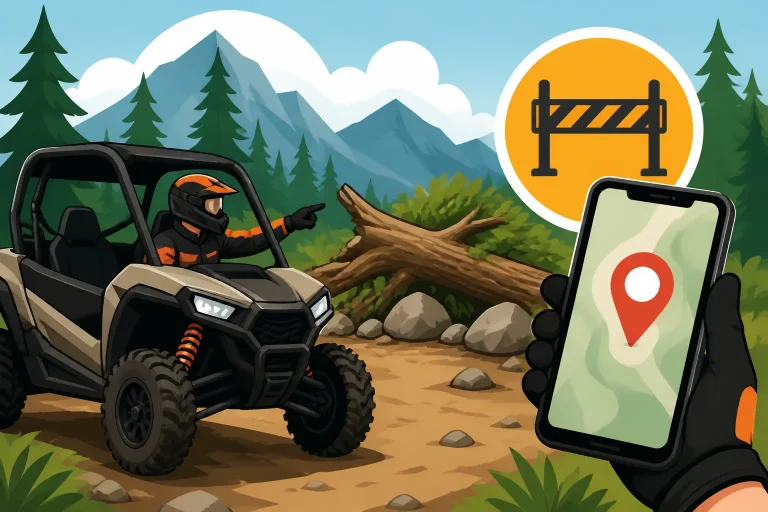
The rider also needs to be prepared for a change in conditions. A planned route may be blocked by a gate, closure sign, washout, or landowner request. Do not go around a barrier or assume that a closed route is open because it was usable on a previous trip. Turn back and find a permitted route. Respecting closures protects access for the family and other riders.
Set clear rules for relatives, guests, and young riders
A family property often has more riders than the owner expects: adult children, cousins, visitors, seasonal workers, or friends staying at the ranch. Clear ground rules reduce confusion and help keep the ride within the permission actually granted. Explain where riders may go, which machines they may use, and what to do if they reach a gate or boundary they do not recognize.
For guests, make permission specific. “You can ride the ranch” may sound broad, even if the owner means only the marked loop. Point out the approved route and identify neighboring parcels, public roads, and public-land access points. If the guest plans to leave the property, pause and check the rules for that part of the trip before setting off.
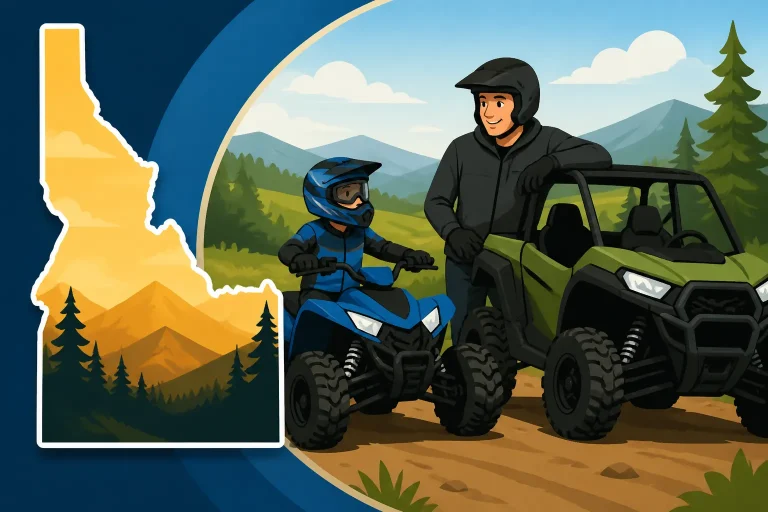
Young riders need particular care. Age-related rules can vary by setting, so do not assume the rules for a private field are the same as those for a public forest road or trail. Check the current requirements for the rider’s age and the location of the ride, including any supervision or safety-course conditions that apply on public routes. Idaho Supervision Rules and the 300-Foot Rule and Idaho OHV Safety Course Requirements can help clarify the public-use questions.
Regardless of whether a particular safety requirement applies on private ground, match the machine to the rider and the terrain. A young or inexperienced rider should not be given a machine that is too powerful or difficult to control. Have riders use protective gear appropriate to the machine and conditions, and make sure they know how to stop, turn, and respond if the machine stalls or tips. A ranch setting can include ditches, livestock, fences, steep ground, and other hazards that are easy to underestimate.
It is also sensible to set practical ranch rules that go beyond the legal minimum. For example, keep riders away from livestock unless the work requires a trained operator, limit speed around buildings and people, and require permission before carrying a passenger. Establish a check-in plan for riders heading to a remote part of the property, especially where cell coverage is unreliable. These measures do not replace legal requirements; they help prevent avoidable mishaps.
Before a group ride, use a short checklist:
- Confirm the boundary and approved route.
- Make sure each rider has permission for every parcel on the route.
- Check whether any segment uses a county road or public land.
- Verify sticker, plate, equipment, age, and supervision requirements for those segments.
- Review gates, closures, livestock areas, and other ranch-specific restrictions.
- Give guests a contact person and a plan for returning if the route is blocked.
When the route stays on private ground, the owner’s permission and property rules are central. Once the machine enters a public road or public recreation area, additional Idaho or local requirements may apply. Treat those as separate parts of the ride, confirm the details before departure, and do not assume that family ownership or ranch work creates a blanket exemption.
Disclaimer
This article is for general informational purposes only and does not constitute professional advice. Laws, prices and regulations vary by location and change over time. Consult a qualified professional for guidance on your specific situation.