Idaho’s Forest Road Rule and the Safety Course
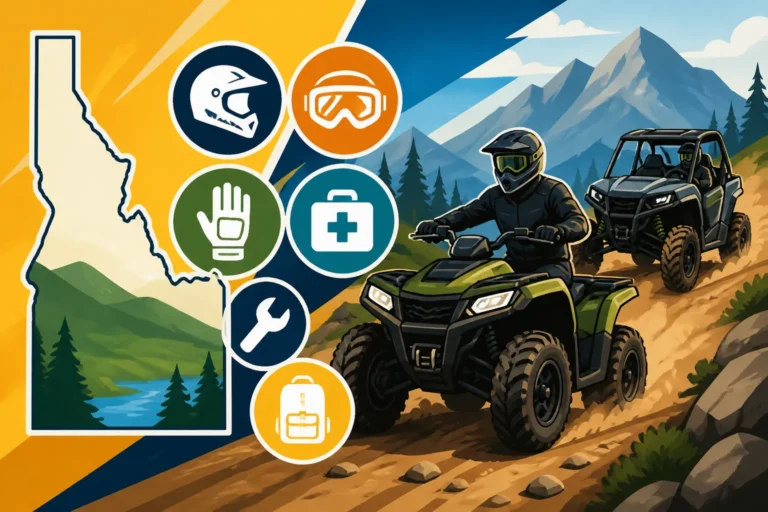
Idaho riders can encounter a safety-course rule even when they are on a forest road rather than a marked trail. The key is to separate rider training from road access: a course certificate does not make a road open, replace required supervision, or take the place of registration and equipment rules. Here’s how to think through those requirements before riding.
What Idaho’s forest road rule means
“Forest road” can describe roads on federal, state, or other public land, but the label alone does not tell you whether an ATV or UTV may use it. A route may be open to motorized travel, open only to certain vehicle types, or closed during a season or for a specific reason. The first task is to confirm that the particular road is open to your machine.
The safety-course question is separate. Idaho’s OHV education requirements focus on young operators riding on public land. Riders under 16 should check the current state requirement and have any required certificate before heading out. Being on a road instead of a trail does not automatically make the course rule irrelevant.
That distinction matters because riders often hear that a particular forest road is open and assume they have everything they need to use it. Route access answers only whether riding is allowed there. It does not, by itself, establish that the operator meets age, supervision, safety-training, registration, or equipment requirements.
| Question | What it helps establish | What it does not establish |
|---|---|---|
| Is this forest road open to OHVs? | Whether your machine may use that route | Whether the rider meets age or training rules |
| Does the rider need an OHV safety course? | Whether the operator meets Idaho’s training requirement | Whether the road is open or the rider may go alone |
| Is the machine registered or stickered as required? | Whether the machine meets applicable registration rules | Whether its equipment is adequate for road use |
| Does the machine meet road-use requirements? | Whether it can be operated on that type of road | Whether the operator has the right to use a closed route |
For practical purposes, treat a forest road as a road with its own access rules, not as a trail with looser requirements. Check the route’s motorized-use designation and any signs or closure notices, then check the rules that apply to the rider and machine. Idaho Rules on Forest Service Roads and Reading an Idaho Motor Vehicle Use Map explain the route-access side of the question.
A road can also pass through different jurisdictions or connect with a county road, highway, or private road. Rules may change as the route changes. A route shown as open on a map is useful planning information, but signs, temporary closures, and local restrictions still matter. If the road leads onto a county road, review What Idaho Requires to Ride a County Road as well.
Who needs the course and what it proves
Idaho’s OHV safety-course requirement is especially important for operators under 16 using public land. A young rider and their parent or supervising adult should confirm whether the rider needs an approved course certificate for the planned ride. Do this before traveling; do not assume that a forest road is exempt simply because it is wide, maintained, or used by trucks.
The course is intended to teach safe operation and responsible use. It is not a general road-driving qualification. A certificate does not automatically give a young rider permission to ride without an adult, override a machine-size restriction, or make an otherwise closed route legal.
That separation is worth keeping clear:
- Training concerns whether the operator has completed required safety education.
- Supervision concerns whether a young operator must ride with an adult and how close that adult must remain.
- Road access concerns whether the specific route is open to the machine.
- Machine compliance concerns registration, required equipment, and any applicable use restrictions.
A certificate addresses only the training requirement. If the rider is subject to supervision rules, completing the course does not necessarily remove those rules. Likewise, having an adult nearby does not necessarily eliminate a separate course requirement. Check both questions rather than treating one as a substitute for the other. The details of supervision, including Idaho’s 300-foot rule, are covered in Idaho Supervision Rules and the 300-Foot Rule.
A parent may also need to consider the machine itself. A rider who has completed a course still needs a machine appropriate to their age, size, and ability. A young operator should be able to reach the controls, maintain a stable position, and use the machine safely on the route’s actual terrain. A forest road can include loose gravel, steep grades, blind corners, washboard, or traffic from full-size vehicles.
If an operator is 16 or older, do not assume that the course is the only rule worth checking. Age can change which requirements apply, but it does not remove road-access restrictions, machine rules, or ordinary safety responsibilities. Review Idaho Age Rules for Riders Under 16 and Who Must Take the Idaho Safety Course when the rider’s age or training status is uncertain.
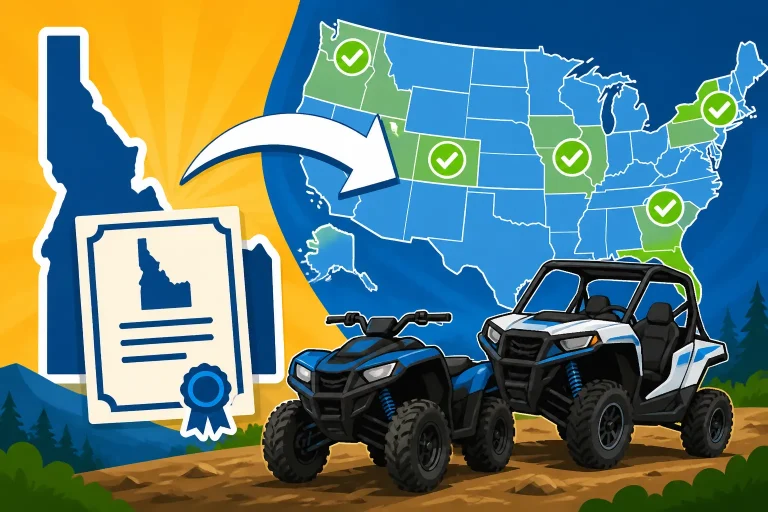
A certificate from another state may or may not meet Idaho’s requirement. Visitors should verify acceptance with the relevant Idaho agency before relying on an out-of-state card or online course record. Out-of-State Certificates Idaho Accepts is useful for that specific check. Keep the certificate or proof of completion accessible during the ride, especially when traveling with a young operator.
How to handle the course before a ride
The safest approach is to check the course requirement while planning, not at the trailhead. If a young rider needs a certificate, allow time to complete an approved course and save proof of completion. Course options and procedures can change, so use current information from Idaho Parks and Recreation or another official course provider rather than relying on an old printout or a friend’s recollection.
A practical preparation sequence looks like this:
- Identify the operator’s age and course status. Confirm whether the rider is covered by Idaho’s current training requirement and whether a previously earned certificate is accepted.
- Use an approved course. Do not assume that any ATV safety video, dealership briefing, or online quiz counts as the required course.
- Keep proof available. Save the completion record in a form you can access away from home. A phone image can be a useful backup, but follow the agency’s current instructions about acceptable proof.
- Check supervision separately. Confirm whether an adult must accompany the rider and what “direct supervision” requires for the planned setting.
- Confirm the route. Check the map, land manager’s current notices, and on-the-ground signs for the specific road.
- Check the machine. Make sure the OHV has the required registration or sticker and equipment for the type of riding planned.
The course does not need to become a last-minute obstacle. Families can complete it before a trip and make sure the young rider understands more than the test answers. Discuss how to slow on loose surfaces, stop safely, handle approaching traffic, avoid blind corners, and respond when a route is closed or blocked.
If a rider has taken a course in another state, look up Idaho’s acceptance rules before departure. Course names and certificates are not always interchangeable across state lines. A general driver’s license is also not automatically proof that an OHV-specific training requirement has been met. See Riders With a Driver’s License and the Course for the difference.
Registration is another separate planning task. Idaho’s sticker and registration rules depend on the machine and the rider’s situation. A visitor should not assume that a home-state sticker is accepted in Idaho; check the applicable nonresident requirement and any exceptions. Idaho’s Non-Resident OHV Sticker explains the visitor side, while When an Idaho Rider Needs No Sticker covers situations where an exemption may apply.
Keep a simple ride packet with the machine’s relevant paperwork, course proof if needed, and route information. That does not mean carrying the title on a trail ride; it means being prepared to show the documents that apply to the ride. Keeping Paperwork on the Machine and What an Idaho Deputy Asks a Rider For offer more detail on what to have available.
What the course does not let you do
The most common misunderstanding is treating the safety certificate as a permission slip. It is not. Completing the course does not open a closed forest road, grant access to private land, authorize highway travel, or waive equipment requirements. It helps meet a training obligation; the rest of the rules still apply.
For instance, a road may be closed to OHVs even though passenger vehicles use it. A land manager may restrict use by season, machine type, or route designation. A route can also be temporarily closed because of fire danger, maintenance, weather, wildlife concerns, or damage. Check for current notices and obey signs at the road, even if an older map or online route track suggests access.
Nor does the course make every machine suitable for every road. Some routes have width limits or conditions that make a full-size side-by-side inappropriate. Others may be too rough, narrow, or exposed for a particular rider’s ability. A machine’s ability to fit on the road is not the only consideration: the operator must be able to control it safely and yield appropriately to other traffic.
The course also does not replace road-use equipment rules. Depending on where the ride takes place, requirements may cover such things as lighting, brakes, mirrors, or other equipment. A road that is open to an OHV may still require the machine to meet specific standards. Idaho’s Restricted Vehicle Plate and Road Use and Driver’s License and Insurance on an Idaho Road Ride help explain separate road-use obligations.
Do not assume that a safety certificate permits an underage rider to operate on a road without supervision. Likewise, do not assume that an adult’s presence automatically satisfies all requirements. The rules can depend on the rider’s age, the location, the machine, and whether the road is a public roadway or a route on public land. If any of those details are unclear, confirm them before the trip rather than trying to settle the question at a roadside stop.
Finally, a course certificate does not establish that a nonresident’s machine meets Idaho’s sticker requirements. Visitors should check the sticker rule for their particular machine and trip. Reciprocity between states can be limited or unavailable, so verify rather than relying on what applied on a previous visit. Why Idaho Ended OHV Reciprocity gives more context.
A simple pre-ride check for families and visitors
A useful pre-ride check is to ask four questions in order: who is operating, where the machine will go, what the machine needs, and what proof the operator should carry. That order helps prevent one correct answer from hiding another problem.
Start with the rider. Confirm age, training status, and supervision needs. If the rider is under 16, do not let the word “forest road” stand in for a check of Idaho’s course and youth rules. A parent or guardian should also decide whether the rider has the judgment and control needed for the route’s traffic, surface, and visibility.
Then check the route. Identify the actual road, not merely the general forest or trail system. Look at current motor vehicle use information and closure notices. Check both ends of a route if it connects to another road system, and pay attention to signs encountered during the ride. For a cross-jurisdiction trip, confirm that access remains legal at each transition.
Check the machine and paperwork. Confirm the machine’s sticker or registration status, required equipment, and any route-specific limits. For visitors, confirm whether an Idaho nonresident sticker is needed and whether an out-of-state safety certificate is accepted. Keep course proof easy to retrieve if the operator is required to have it.
Make a backup plan. Forest roads can change quickly due to weather, fire, maintenance, or other closures. Have an alternate route and enough fuel for a longer return. Do not ride around a gate or closure sign because a detour is inconvenient. If the only available route is closed, turn around and choose an authorized option.
A short family briefing can make the rules practical rather than abstract. Before moving, agree on where the young rider will stay in relation to the adult, how the group will stop, and what to do if the rider becomes separated. Review hand signals or another reliable way to communicate when engines are running. On roads with vehicle traffic, ride predictably and leave room for other users.
For a visitor renting an OHV, ask the rental provider what route restrictions and paperwork apply, but still verify the public-land rules for the ride. A rental briefing can cover the machine and local route suggestions; it should not be treated as a substitute for checking Idaho’s legal requirements. A rental machine may already have some paperwork handled, but the renter remains responsible for following route closures and operator rules.
If a trip crosses from a forest road onto a county road, pause and confirm the change in rules. A course that satisfies a training requirement does not automatically satisfy requirements for operating on a public road. Road access, license rules, insurance, and equipment can differ. Read What Idaho Requires to Ride a County Road before planning a route that uses county roads to connect trails or reach a town.
When in doubt, ask the land manager about the road and Idaho Parks and Recreation about the state OHV course requirement. Keep the questions specific: name the rider’s age, whether the course was completed in Idaho or elsewhere, the machine type, and the road or public-land setting. Clear details make it easier to get a useful answer.
Frequently Asked Questions
Does a forest road count as public land for the OHV course rule?
A forest road may be on public land, but the road’s name alone does not decide the applicable rule. Confirm the rider’s course requirement and the road’s ownership and access status separately.
Does completing the course let a rider under 16 ride alone?
Not necessarily. Training and supervision are separate requirements. Check Idaho’s current youth supervision rules for the rider’s age and riding location.
Does the course make a closed road legal to ride?
No. A course certificate does not override a closure or grant access to a route that is not open to OHVs. Follow current maps, notices, and signs.
Will another state’s OHV safety certificate count in Idaho?
It may depend on whether Idaho accepts that course or certificate. Verify acceptance before relying on it, and keep proof of completion available.
Disclaimer
This article is for general informational purposes only and does not constitute professional advice. Laws, prices and regulations vary by location and change over time. Consult a qualified professional for guidance on your specific situation.