Titling a Washington Quad After Moving to Idaho
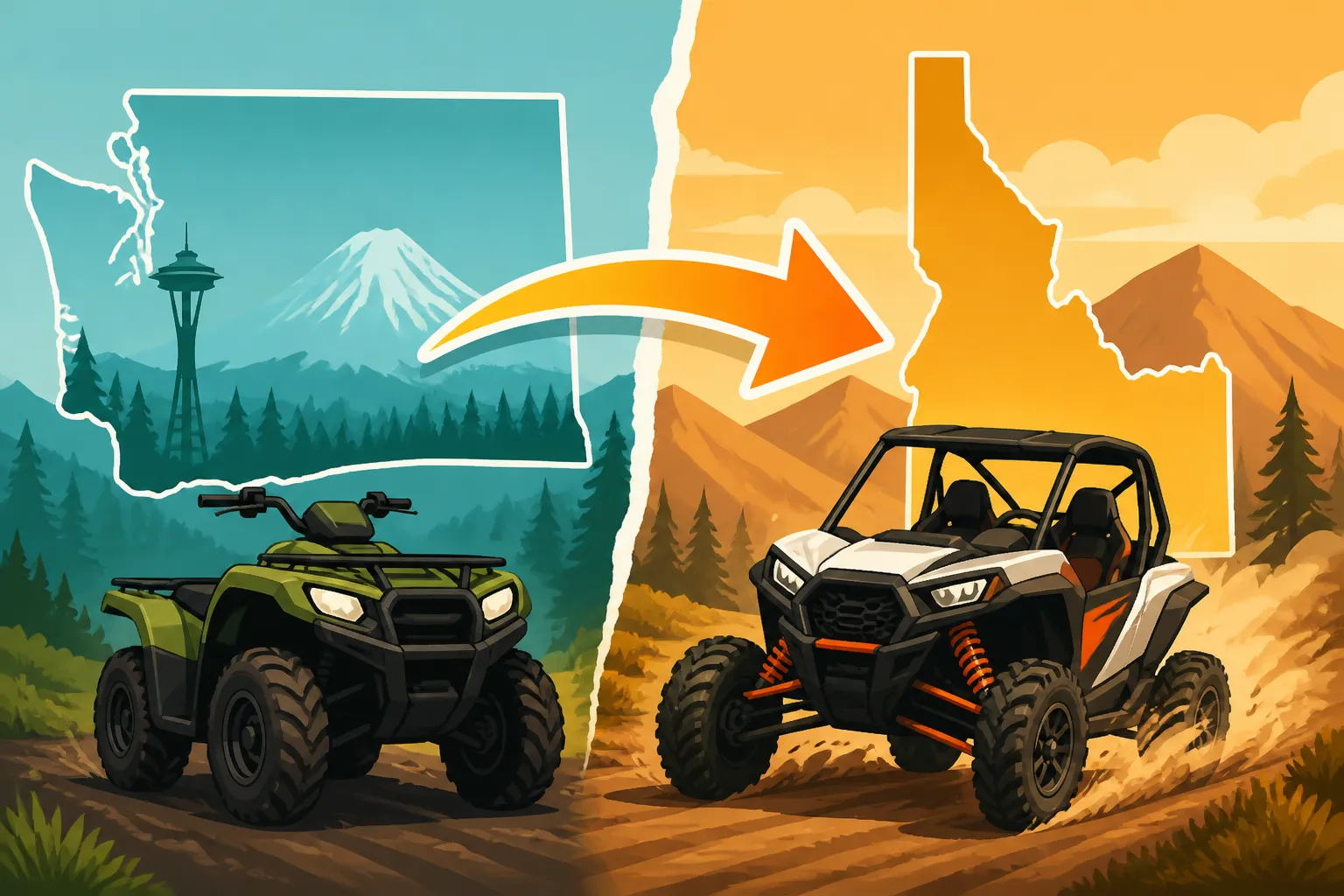
Moving your life to a new state is full of exciting changes, but it can also bring a heap of bureaucratic headaches, especially when it comes to bringing your recreational vehicles along. If you've just moved to our beautiful state with a quad or side-by-side that was previously titled in Washington, you might be scratching your head trying to figure out how to get it properly registered and titled here in Idaho. This guide is designed to walk you through every step of that process, ensuring your Washington quad gets a proper Idaho title so you can hit our amazing trails with peace of mind.
Understanding Idaho's Titling Requirements for Out-of-State Machines
It’s easy to assume that if your ATV or UTV had a title in Washington, that title would simply carry over to Idaho. Unfortunately, while that Washington title is incredibly important, Idaho operates on its own set of rules and needs to issue its own title for your machine. This isn't just about collecting fees; it's about establishing clear ownership within our state's system and ensuring everything is above board.
Why Idaho Needs a New Title
Think of it this way: every state has its own system for tracking vehicle ownership, and that includes off-highway vehicles (OHVs). Just like you'd get a new Idaho driver's license, your Washington-titled quad needs an Idaho title to be legally recognized here. Even if Washington had a title for your machine, that document primarily serves as proof of ownership within Washington's jurisdiction. When you bring it to Idaho, you're essentially importing it into our system. Idaho uses its titles for several key purposes: establishing a verifiable chain of ownership, ensuring proper sales or use tax has been accounted for, and providing a clear record in case of theft or sale. This process helps protect buyers and sellers alike and keeps our records accurate. Washington's titling requirements, especially for older ATVs, might have been different, perhaps less stringent or even non-existent for certain smaller or older machines, which means Idaho needs to establish a fresh record based on its own criteria.
What Machines Idaho Requires a Title For
One of the first things you need to understand is what Idaho considers a titlable machine. It's pretty straightforward: if your OHV has an engine size over 50cc, Idaho requires it to have a title. This rule applies across the board to ATVs, UTVs, dirt bikes, and even snowmobiles. So, whether you're bringing a roaring Polaris RZR or a nimble Honda Recon, if it's got more than 50cc under the hood, you'll be going through the titling process. This also means if your machine was one of those older Washington quads that perhaps didn't require a title there because of its age or engine size (though this is less common for machines over 50cc), Idaho will still insist on issuing a new title. For a deeper dive into the specifics, you can check out [Idaho Titles Every ATV Over 50cc] and [Machines Idaho Requires a Title For]. There are a few rare exemptions, like certain farm-use machines, but for the vast majority of recreational quads, a title is a must.
Gathering Your Washington Paperwork for the Idaho Transfer
This is often where the real hunt begins! Moving from Washington to Idaho with your quad means you need to pull together all the documents from its previous life. Having the right paperwork from Washington makes the Idaho titling process much smoother. Without these foundational documents, you could face delays or additional hurdles, so it's worth taking the time to ensure you have everything organized.
Essential Documents from Your Washington Purchase
When you head to your local county assessor's office in Idaho, they're going to want to see a clear paper trail from your Washington quad. The absolute gold standard here is the original Washington title. This document should be signed over to you by the previous owner, indicating the transfer of ownership. If you purchased it new from a dealer in Washington, you might have a manufacturer's statement of origin (MSO) instead, which is equally acceptable.
However, sometimes the Washington title isn't perfectly clear, or perhaps the machine was old enough that Washington didn't require a title at the time you acquired it. In such cases, a detailed bill of sale becomes paramount. This document should clearly identify the buyer and seller, the date of sale, the purchase price, and most importantly, the vehicle identification number (VIN) of your quad. I always recommend using a robust template for your bill of sale, something like what you can generate through a service like LawDepot, to ensure all necessary information is included and legally sound. Even if you have the title, a comprehensive bill of sale is an excellent backup. You’ll also want any proof of sales tax you paid in Washington, as this can affect the use tax you owe in Idaho. Finally, don't forget your personal identification (like your driver's license) and proof of your new Idaho residency, such as a utility bill or rental agreement. For tips on what makes a good bill of sale, see [ATV Bill of Sale Wording Buyers Should Insist On].
Addressing Missing or Incomplete Washington Paperwork
Let's be realistic: not everyone keeps meticulous records for years, and sometimes life happens. What if you bought your quad years ago in Washington, loved it fiercely, and then somehow, somewhere, that original title vanished into thin air? Or maybe you bought it from a private seller who wasn't as diligent about paperwork, and the bill of sale is just a crumpled note. This is a common frustration, and I totally get it.
Don't panic! You do have options, although they might require a bit more legwork. Your first step should be to contact the Washington State Department of Licensing (DOL) to inquire about obtaining a duplicate title. If you were the registered owner in Washington, this should be a relatively straightforward process. They can issue you a replacement, which you can then use for your Idaho application. If that's not an option – perhaps you were never the official owner on record in Washington – then you might need to pursue a bonded title here in Idaho. This is generally considered a last resort and involves purchasing a surety bond to protect the state and future owners if someone else claims legitimate ownership. It's a more involved and sometimes costly process, but it's there for truly difficult situations. Before you go down that road, ensure you've made every effort to track down the original owner or past records. Remember, throughout this entire process, having the VIN clearly visible and matching any paperwork is absolutely critical. You might find some helpful advice on navigating this process in [Bonded Title for an ATV in Idaho].
The Idaho Titling Process Step-by-Step
Once you've got all your Washington paperwork in order, you're ready to tackle the Idaho titling process. It’s a pretty structured journey, and knowing the steps beforehand can save you time and multiple trips to various offices. Idaho wants to ensure proper ownership and tax collection, so these steps are in place to achieve that.
Visiting Your County Assessor's Office
The journey to an Idaho title for your Washington quad officially begins at your local county assessor's office. This is the primary hub for vehicle titling in Idaho, not the DMV or a licensing agency, which can sometimes confuse new residents. You, as the owner (or all owners if the title will be in multiple names), will need to visit the office in person.
When you go, make sure you bring everything we discussed: your Washington title (properly signed over to you), your detailed bill of sale (consider a template from LawDepot if you need to create a new one or fill in missing details from your original transaction), your current driver's license or state ID, and proof of your new Idaho residency. An important step for out-of-state machines is the VIN inspection, which sometimes can be done at the assessor's office, but often requires a separate visit from law enforcement. Be prepared to pay the titling fee, and also be aware that the assessor’s office will handle the collection of Idaho's use tax at this point. For a comprehensive list of what to bring, check out [Documents to Bring to an Idaho Assessor's Office].
The VIN Inspection and What It Entails
For any vehicle coming into Idaho from out of state, especially an OHV, a Vehicle Identification Number (VIN) inspection is a mandatory step. This isn't just a formality; it's a critical measure to verify that the machine's identity matches its paperwork and, more importantly, that it hasn't been reported stolen. Believe me, you do not want to find out after the fact that the quad you lovingly hauled across state lines is actually hot. For more on this, see [Checking a Used Machine for Theft].
Typically, a VIN inspection for an OHV is performed by a sheriff's deputy or Idaho State Police officer. Sometimes, if the county assessor's office has authorized personnel, they might be able to do it on site, but don't count on it – always call ahead. The officer will physically examine your quad to locate the VIN, which is usually stamped on the frame (often near the front suspension, on the steering head, or on a crossmember). They’ll compare this number to the VIN on your Washington title and bill of sale. It's a quick process if everything matches up. Before you go, make sure the VIN plate or stamping is clean and clearly visible. Knowing [Where the VIN Sits on a Side-by-Side Frame] can save you a lot of time searching when the officer is present.
Paying Fees and Receiving Your New Idaho Title
After successfully navigating the paperwork and the VIN inspection, you're on the home stretch! Back at the county assessor's office, you'll finalize the payment for the necessary fees. The primary cost will be the Idaho titling fee, which is typically a set amount. However, the other significant financial consideration is Idaho's use tax.
Idaho imposes a use tax on vehicles brought into the state if sales tax wasn't paid at a rate equivalent to Idaho's sales tax rate in the previous state. So, if you paid sales tax on your quad in Washington, you'll need to show proof. If the Washington sales tax rate was lower than Idaho's, or if you didn't pay any sales tax (e.g., if you inherited it or received it as a gift, or bought it in a private sale with no tax collected), you'll likely owe the difference or the full Idaho use tax amount. This is calculated based on the purchase price listed on your bill of sale or the machine's assessed value. For a detailed explanation of this, refer to [Use Tax When a Machine Comes Into Idaho] and [Idaho Sales Tax on an ATV Purchase]. Once all fees are paid, the assessor's office will process your application. You'll typically walk out with a temporary registration or receipt, and your official Idaho title will then be mailed to you within a few weeks. It's usually a pretty efficient process, but you can get an idea of the timeline by reading [How Long an Idaho OHV Title Takes].
Getting Your Washington Quad Ready for Idaho Trails
Getting your quad titled in Idaho is a huge step, but it’s not the only piece of the puzzle if you plan on actually riding our incredible trails. Idaho has a few other requirements that ensure your machine is trail-ready and legal for use on public lands and, in some cases, designated county roads.
The Idaho OHV Sticker and Where to Get It
With your shiny new Idaho title in hand, your Washington quad is now formally recognized as yours within the state. However, to actually ride on public land in Idaho, you'll need to purchase an Idaho OHV sticker. This sticker isn't just another fee; it's vital. The funds generated from these stickers go directly into maintaining and improving our extensive network of trails, providing search and rescue services, and supporting OHV education programs.
The sticker proves your machine is registered for use on Idaho's public lands, including designated trails, forest roads, and Bureau of Land Management (BLM) areas. You can purchase your OHV sticker from a variety of vendors, including many county assessor's offices, some powersports dealerships, sporting goods stores, or even online through the Idaho Department of Parks and Recreation (IDPR) website. The sticker needs to be prominently displayed on your machine – typically on the left rear fender for ATVs, or near the license plate on a side-by-side. Make sure you understand [What an Idaho OHV Sticker Costs Each Year] before you head out. For information on where to find one, you can check [Where Idaho Sells OHV Stickers].
Considering a Restricted Vehicle Plate for Road Use
Idaho offers unique opportunities for OHV enthusiasts to connect trails via county roads. If you envision riding your newly titled quad on certain designated county roads to get from a trailhead to town, or to connect two different riding areas, you'll need to apply for an Idaho Restricted Vehicle Plate, often simply called an "R-plate." This is separate from your OHV sticker and title.
This special plate signifies that your machine is compliant with specific Idaho road-use requirements, which include things like headlights, taillights, brake lights, a horn, mirrors, and sometimes turn signals. Not all county roads are open to OHVs, so it's crucial to understand the local ordinances. Applying for the R-plate usually happens at the same county assessor's office where you titled your machine, but only after you have an Idaho title. It’s an extra step, but it unlocks a lot more riding possibilities. To learn more about what this plate covers, read [Idaho's Restricted Vehicle Plate Explained], and for the application process, see [Ordering an Idaho Restricted Plate].
Insurance and Other Idaho Riding Requirements
Beyond titling and stickers, there are a few other considerations to keep your riding legal and safe in Idaho. While Idaho doesn't generally mandate liability insurance for OHV trail use, if you plan on operating your quad on any public road, including those designated county roads with a restricted plate, you absolutely must carry liability insurance. This is the same requirement as for any other motor vehicle on Idaho roads. It's a smart idea to have insurance anyway, even for trail-only riding, to protect yourself and your investment in case of an accident or theft. You can find more information about coverage in [Insuring an ATV in Idaho].
Additionally, Idaho has a mandatory helmet law for all OHV riders and passengers under the age of 18. Even if you're over 18, wearing a helmet is always recommended for your safety. Always carry your valid driver's license (if you're riding on roads), proof of insurance, and your OHV sticker registration with you when you ride. You never know when a conservation officer or sheriff's deputy might perform a compliance check, and being prepared means a smooth interaction. It's good practice to understand [What an Idaho Deputy Asks a Rider For] so you're never caught off guard.
Transferring Your Washington Quad: A Checklist
To help you keep track, here's a quick rundown of the essential steps and documents when bringing your Washington quad to Idaho. This isn't just about avoiding fines; it's about being a responsible, legal rider and contributing to the upkeep of the amazing trails we all enjoy.
| Step | Key Action | Required Documents | Where to Go / Who to See |
|---|---|---|---|
| 1. Gather Washington Paperwork | Locate original Washington title and detailed bill of sale. | Washington Title (signed over), Bill of Sale (LawDepot template recommended for clarity) | Your personal files / Washington DOL (if duplicate needed) |
| 2. Prepare Personal Documents | Have valid ID and proof of Idaho residency ready. | Driver's License/State ID, Utility Bill/Lease Agreement | Your personal files |
| 3. VIN Inspection | Get VIN verified by authorized personnel. | Quad with accessible VIN, all Washington paperwork | Sheriff's Dept. / ID State Police (call ahead) |
| 4. Visit County Assessor | Submit all paperwork, pay fees, and apply for Idaho title. | All documents from steps 1-3, cash/card for fees (title fee, use tax) | Your County Assessor's Office |
| 5. Purchase OHV Sticker | Obtain annual sticker for trail use. | Proof of Idaho Title (or application receipt) | IDPR Vendor, Online, Assessor's Office |
| 6. Consider Restricted Plate | If planning road use, apply for R-plate and ensure machine compliance. | Idaho Title, proof of insurance, machine inspection for road-legal components | Your County Assessor's Office |
| 7. Obtain Insurance | Secure liability insurance, especially for road riding. | N/A (contact insurance provider) | Insurance Provider |
This might seem like a lot, but tackling it one step at a time makes it much more manageable. Soon enough, you'll have your Washington quad officially an Idaho resident, ready to explore our magnificent backcountry!
Disclaimer
This article is for general informational purposes only and does not constitute professional advice. Laws, prices and regulations vary by location and change over time. Consult a qualified professional for guidance on your specific situation.