Crossing an Idaho Highway on an OHV
Oh, the classic Idaho OHV dilemma! You've had an incredible morning on the trails, the sun is shining, and you see another incredible riding area just across that pesky paved highway. It feels like such a tease, doesn't it? That strip of pavement, while seemingly short, often represents a huge legal and safety barrier for us off-road enthusiasts. This guide is going to dive deep into Idaho's specific rules about crossing state and federal highways on your ATV or UTV, helping you understand what's allowed, what's definitely not, and how to stay safe and legal when those moments arise.
Understanding Idaho's Highway Rules for OHVs
Let's get this out of the way upfront: riding your OHV on an Idaho highway, especially for any significant distance, is generally a big no-go. It's a source of constant frustration for many of us who just want to link up trails or get from one side of a small town to another. The state has very specific reasons for these rules, primarily centered around safety for both OHV operators and other motorists. When you're dealing with vehicles that might weigh thousands of pounds and can hit speeds far exceeding what your OHV is designed for or legally allowed to do on pavement, the risks become incredibly high.
Imagine a situation where you're trying to merge onto a highway on your UTV, and a semi-truck traveling at 70 mph comes up behind you. The speed differential is immense, and your machine simply isn't built to accelerate, stop, or handle like a passenger car in that environment. This fundamental difference is why Idaho, like many other states, draws a clear line between designated OHV routes (like county roads or trails) and major paved highways. It's not about making our lives harder; it's about preventing tragic accidents that could be avoided by understanding and respecting these boundaries.
The General Prohibition: Why Highways Are Off-Limits
The core principle here is straightforward: state and federal highways are generally not open to regular OHV travel in Idaho. This means you cannot just jump on Highway 55 or US-95 and cruise for miles, even if you have a street-legal kit installed. The speeds, the volume of traffic, and the design of these roads are all geared toward vehicles capable of higher speeds and greater stability on paved surfaces. Your ATV or UTV, no matter how much you love it, simply doesn't fit that bill for extended highway use.
This prohibition is less about the type of machine you're on and more about the class of roadway. These highways are built for rapid transit of plated, road-licensed vehicles. Our beloved quads and side-by-sides are fantastic for dirt, gravel, and rough terrain, but they handle very differently on smooth pavement, especially at speed. They have a higher center of gravity, narrower wheelbases (for ATVs), and often knobby tires not designed for optimal grip on asphalt. It's a recipe for disaster if you try to treat a highway like another trail, and law enforcement takes this very seriously. You really need to understand [Can You Ride an OHV on an Idaho State Highway?] before you plan any routes that involve these major arteries.
What Constitutes a "Highway" in Idaho?
It’s crucial to understand what Idaho considers a "highway" in the context of OHV laws, because not all paved roads are created equal. When we talk about highways that are typically off-limits, we're primarily referring to State Highways (like Idaho State Highway 21, 55, or 75) and Federal Highways (like US-95, US-12, or US-20). These are the major arteries that connect towns and regions, often with higher speed limits, multiple lanes, and significant traffic volumes.
Then there are the Interstate Highways (I-15, I-84, I-90). These are the absolute top tier of restricted roadways for OHVs. Under no circumstances should an OHV ever be ridden on an Interstate Highway, not even for a quick crossing. The speeds, the limited access points, and the sheer volume of high-speed traffic make any OHV presence incredibly dangerous and illegal. It's a completely different class of road from the county gravel roads we often enjoy. Knowing the difference between these types of roads and a typical "county road" or "forest road" is your first line of defense against accidentally breaking the law or, worse, putting yourself in harm's way.
Navigating Legal Highway Crossings
While extended travel on highways is generally prohibited, Idaho law does make allowances for brief, direct crossings. This is often the saving grace when you've got an amazing trail network on one side of a highway and another fantastic area on the other. However, these crossings come with very strict rules and requirements, designed to minimize the time you're on the highway and maximize safety. You can't just meander across; it needs to be a planned, executed maneuver with your full attention.
The key is that a crossing is not travel. It's a quick, perpendicular movement from one legal OHV route to another. This distinction is paramount. It allows us to connect those vital trail systems without having to load up the machine onto a trailer for a short hop. But don't mistake this allowance for an invitation to push the limits. The goal is to get from point A to point B on the shortest, safest path, and then immediately back onto an authorized OHV route.
The "Direct Crossing" Rule
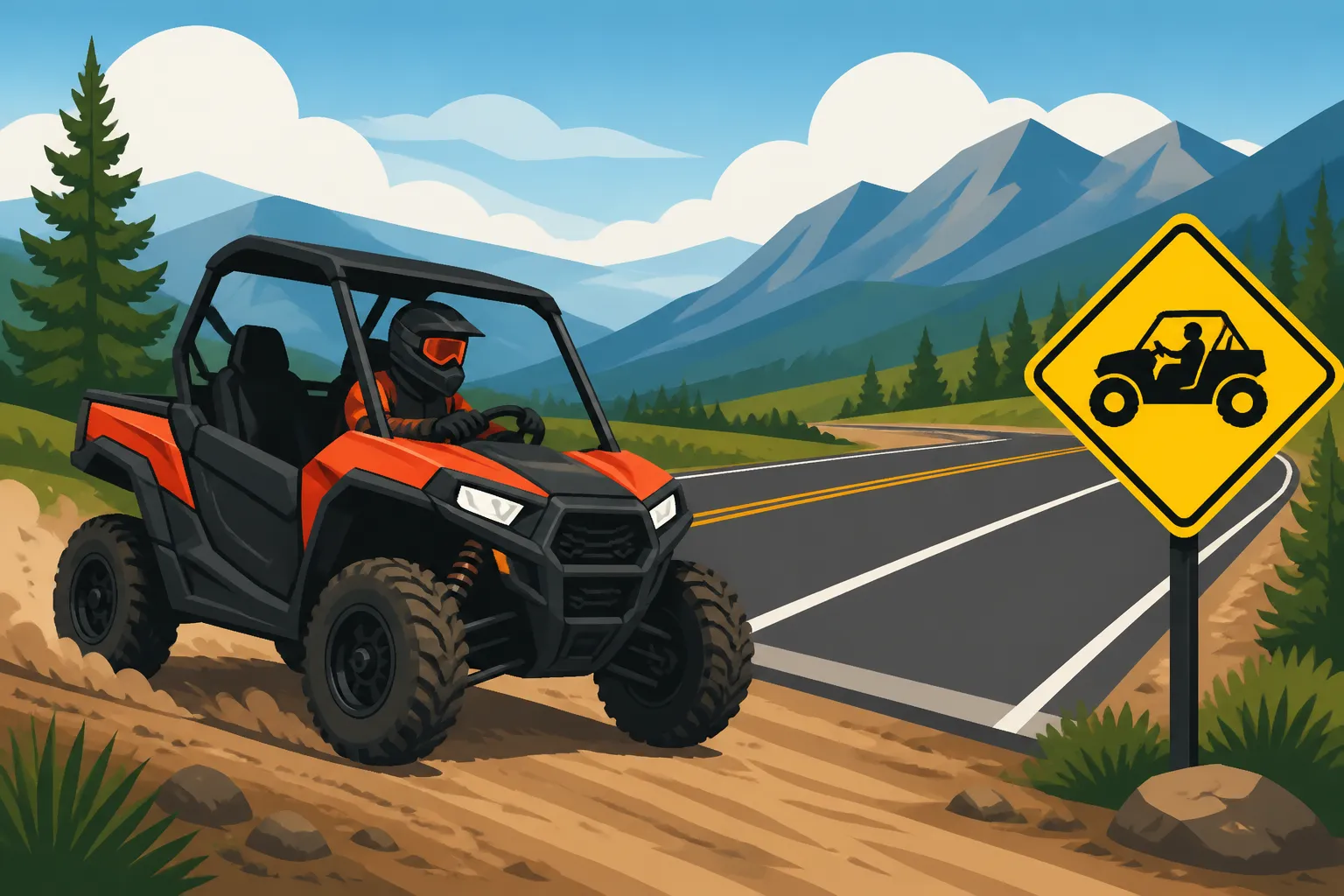
Idaho law typically permits a direct crossing of a highway, provided it's done safely and at approximately a 90-degree angle to the roadway. Think of it as crossing a street on foot; you don't walk down the sidewalk for a block, you go straight across. This means you cannot ride along the shoulder for any distance, nor can you make a diagonal cut across lanes. The intent is to minimize the time your OHV is in the path of highway traffic.
For example, if you're on a county road that meets a state highway and continues as another county road on the other side, that intersection is a prime candidate for a direct crossing. You'd approach the highway, stop, check for traffic in both directions, and then proceed directly across to the opposite side, getting back onto the authorized OHV route as quickly and safely as possible. It's about being expedient and predictable to other drivers. This direct crossing provision is a critical piece of the puzzle for many trail riders who need to access land that might be segmented by these major roads.
Preparing Your OHV for a Highway Crossing
Even for a brief, direct crossing, your OHV needs to meet certain requirements to be considered road-legal enough for the task. This isn't about making your machine fully street-legal for daily driving, but rather ensuring you have the basic safety equipment to be seen and understood by other motorists during that critical moment of crossing. Think about it: you want to be as visible and predictable as possible when you're in traffic.
Mandatory equipment often includes:
- Headlights and Taillights: Essential for visibility, especially in low light or adverse weather.
- Brake Lights: So drivers behind you know when you're slowing or stopping.
- Mirrors: At least one rear-view mirror is usually required to see approaching traffic. You can find robust, trail-ready mirrors from brands like SuperATV that stand up to rough terrain but are still perfect for a quick check before a crossing.
- Horn: To alert other drivers if necessary.
- Proof of Liability Insurance: In case of an incident. Many riders overlook this, but it's a critical safety net. You'll want to ensure you have [Driver's License and Insurance on an Idaho Road Ride] if you plan to operate on any public road, even for a crossing.
- Appropriate Safety Gear: A helmet (if under 18 or as required by specific local ordinances for adults) and eye protection are always wise. See [Idaho Helmet Rules for Riders Under 18] for specifics.
Always double-check the current Idaho OHV statutes or consult with local law enforcement or the Idaho Department of Parks and Recreation for the most up-to-date and precise requirements. The more prepared you are, the safer that crossing will be.
Practicalities of Highway Crossings in Idaho
Executing a legal highway crossing is more than just having the right equipment; it's about situational awareness and smart decision-making. You're entering a high-speed environment, even if for just a few seconds, and you need to be hyper-vigilant. Choosing where you cross and how you execute that crossing can make all the difference between a smooth, safe maneuver and a potential hazard.
Think about it like this: you wouldn't cross a busy street with your kids without holding their hands and looking both ways multiple times. The same level of caution, if not more, applies when you're on a machine that's slower and less visible than typical highway traffic. There are specific strategies and safety protocols that, when followed, greatly reduce the inherent risks of these brief encounters with busy roads.
Choosing Safe Crossing Points
Not all intersections are created equal when it comes to OHV highway crossings. The ideal crossing point offers the best possible visibility for both you and approaching highway traffic. Look for intersections that are:
- Well-signed and Marked: Clear signage helps other drivers anticipate a potential crossing.
- At a Stoplight or Four-Way Stop: These provide controlled intervals where highway traffic is stopped, offering you a safer window to cross. This is by far the safest option if available.
- On a Straight Stretch of Road: Avoid crossing on curves, over hills, or in any area where your line of sight, or that of oncoming drivers, is limited. You want to see traffic coming from a long distance, and you want them to see you.
- Away from Heavy Commercial Zones: While sometimes unavoidable, areas with high truck traffic or complex merging lanes can add layers of difficulty.
If you arrive at an intersection that feels unsafe—perhaps due to blind spots, excessive traffic, or lack of clear sightlines—it's always better to find an alternative route, even if it means a longer detour. Your safety and the safety of others are paramount. Sometimes, the frustration of a detour is far less than the consequences of a risky crossing.
Safety Protocols During the Crossing
Once you've identified a safe crossing point, the actual execution demands extreme caution and adherence to a few critical protocols:
- Stop Completely: Come to a full stop at the edge of the highway. Do not roll into the intersection.
- Look Twice (or Thrice!): Thoroughly check for traffic in both directions. Remember that highway speeds mean vehicles cover ground quickly. A car that looks far away might be on you faster than you expect. Your SuperATV mirrors should give you a good view of what's behind, but always turn your head to confirm.
- Signal Your Intent (if equipped): If your OHV has turn signals (many street-legal kits do), use them to indicate your direction of travel.
- Wait for a Clear Gap: Only proceed when there is a sufficiently large gap in traffic to allow you to cross safely and without rushing. Don't try to "beat" traffic. Err on the side of caution.
- Cross Directly and Decisively: Once you commit, cross the highway in as straight a line as possible, maintaining a steady, appropriate speed for the conditions. Do not hesitate or change direction mid-crossing.
- Stay Aware: Even as you cross, keep an eye on traffic. Sometimes, drivers don't see OHVs easily.
- Group Dynamics: If you're riding in a group, decide beforehand how you'll handle the crossing. It's often safer for the entire group to cross together if the gap is large enough, or for each machine to cross individually, one at a time, ensuring everyone has a safe window. Never split a group crossing across traffic.
Remember, the goal is to be off the highway as quickly and safely as possible. Any delay or misjudgment greatly increases your risk.
Common Misconceptions and Legal Pitfalls
It's easy to misunderstand some of Idaho's OHV laws, especially when it comes to road use. There are a few common beliefs out there that can actually land you in hot water if you're not careful. The "restricted vehicle plate" is one such area that often causes confusion, leading some riders to assume they have more freedom on paved roads than they actually do. Clarifying these points is vital for every responsible OHV owner.
Many of these misconceptions arise because laws can be nuanced, and what applies to one type of road doesn't necessarily apply to another. It's not about being intentionally misleading; it's just that the landscape of OHV regulations is complex, aiming to balance access with safety. Taking the time to truly understand these distinctions will save you headaches, fines, and potential danger.
The Restricted Vehicle Plate and Highway Crossings
Ah, the Idaho Restricted Vehicle Plate, often affectionately called the "R-plate." This little plate allows us some fantastic privileges, primarily opening up many miles of county roads that might otherwise be off-limits to OHVs. You might think, "Well, if I have an R-plate, I can pretty much go anywhere, right?" Unfortunately, that's a common misconception, especially regarding highways. The R-plate is amazing, but it's not a magic bullet for highway travel.
An R-plate does not authorize extended travel on state or federal highways. Period. What it does allow, when combined with proper lighting, mirrors, and insurance, is access to most county roads and, crucially, the ability to make those direct, perpendicular crossings of state and federal highways to connect legal OHV routes. So, while having one is essential for expanding your riding opportunities on county roads, it won't let you bypass the general prohibition on highway travel. For a full breakdown of what this plate covers, check out [Idaho's Restricted Vehicle Plate Explained]. If you're caught riding down a highway with just your R-plate, you could still face significant penalties, because you're operating outside the plate's intended scope.
Penalties for Illegal Highway Operation
Operating your OHV illegally on an Idaho highway can carry some pretty stiff penalties, and for good reason. The danger is real, and law enforcement isn't going to look kindly on someone putting themselves and others at risk. Penalties can range from fines to more severe consequences, depending on the nature of the violation and whether it's a repeat offense.
You could face:
- Fines: These can vary widely but can easily run into hundreds of dollars. The specific fine will depend on the exact violation (e.g., unauthorized operation, lack of required equipment). You can find more details on [Idaho Fines for Illegal Road Riding].
- Machine Impoundment: In some cases, especially if you're a repeat offender or operating recklessly, your OHV could be impounded, leading to additional towing and storage fees before you can get it back.
- Loss of Riding Privileges: Depending on the severity, you might even face a temporary suspension of your ability to operate an OHV.
- Criminal Charges: If your illegal operation leads to an accident, injury, or significant property damage, you could face criminal charges beyond just a traffic citation.
Beyond the legal ramifications, there's the much more serious consequence of personal injury or even fatality. Highways are fast-moving environments, and an OHV is simply no match for a car or truck in a collision at speed. It's a risk that's absolutely not worth taking. Staying informed about [Idaho Penalties for a Missing Restricted Plate] is also a good idea, as equipment violations often stack up during a stop.
Alternative Strategies to Connect Trail Systems
Given the strict rules and inherent dangers of highways, it's always wise to explore alternative strategies for connecting different trail systems. Sometimes, the most efficient path isn't the one that appears shortest on a map. Planning ahead and being willing to adapt your route can save you a lot of grief, expense, and potential danger. Idaho offers a vast network of alternative routes that are much more OHV-friendly.
It's about embracing the spirit of off-road adventure while respecting the rules of the road. We all want to maximize our time on the trails, and by understanding how to legally and safely navigate around or across these barriers, we ensure that we can keep doing what we love for years to come. Sometimes the best solution is the one that requires a little extra effort but guarantees peace of mind.
Utilizing County Roads as Connectors
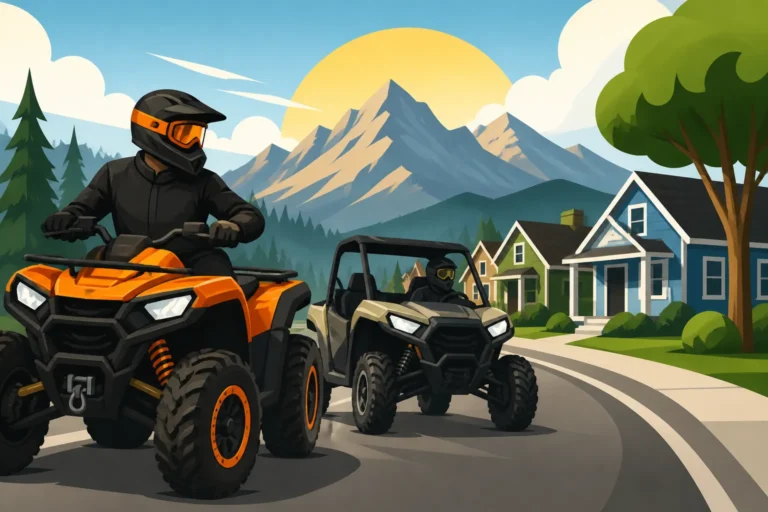
This is often your best friend when trying to link up trails without touching a major highway. Idaho has an incredible network of county roads, many of which are gravel, dirt, or lightly paved, and are legally open to OHV use, especially if you have an R-plate and meet the other equipment requirements. These roads are designed for lower speeds and often have less traffic, making them much safer for OHV travel.
Before heading out, spend some time with a good map (digital or paper!) or apps like onX Offroad to identify these county roads. Many of them directly connect different forest service or BLM trail systems, essentially acting as low-speed bridges between prime riding areas. However, remember that county roads can still have specific local ordinances. Some counties might have additional restrictions or designated OHV routes, so it’s always a good idea to check with the local county sheriff's office or Idaho Department of Parks and Recreation for any area-specific rules. For more guidance on this, make sure you know [What Idaho Requires to Ride a County Road]. Sometimes, a little extra distance on a county road is a small price to pay for safety and legality.
Trailer Up and Relocate
When a direct highway crossing isn't an option, or the crossing point feels too risky, the safest and most sensible solution is often to trailer your machine to the next accessible staging area. Yes, it can be a bit of a hassle to load up, drive a few miles, and unload, but it completely eliminates the risks associated with highway operation. Plus, it ensures you stay 100% legal.
This strategy is especially important for longer distances, or if you're trying to cross an Interstate Highway (which, as we discussed, is never legal for an OHV). Many experienced riders simply build this into their trip planning. They'll ride one section of trails, load up for a short highway transit, and then unload to hit another section. It's a small logistical step that buys you huge peace of mind. Investing in a good trailer and secure tie-downs makes this process much smoother. Think about it as a pit stop to ensure you get to enjoy the next segment of your adventure without worry.
When you're planning those epic Idaho trips, always remember that safety and legality are not just good ideas—they're essential. While the desire to effortlessly connect every trail is strong, the realities of highway traffic demand our respect and caution. By understanding Idaho's direct crossing rules, preparing your machine with necessary equipment (maybe some robust mirrors or signals from SuperATV!), and wisely utilizing county roads or trailering when needed, you can enjoy all that Idaho's incredible OHV landscape has to offer, safely and responsibly.
Disclaimer
This article is for general informational purposes only and does not constitute professional advice. Laws, prices and regulations vary by location and change over time. Consult a qualified professional for guidance on your specific situation.