Does Auto Insurance Cover an Idaho OHV?
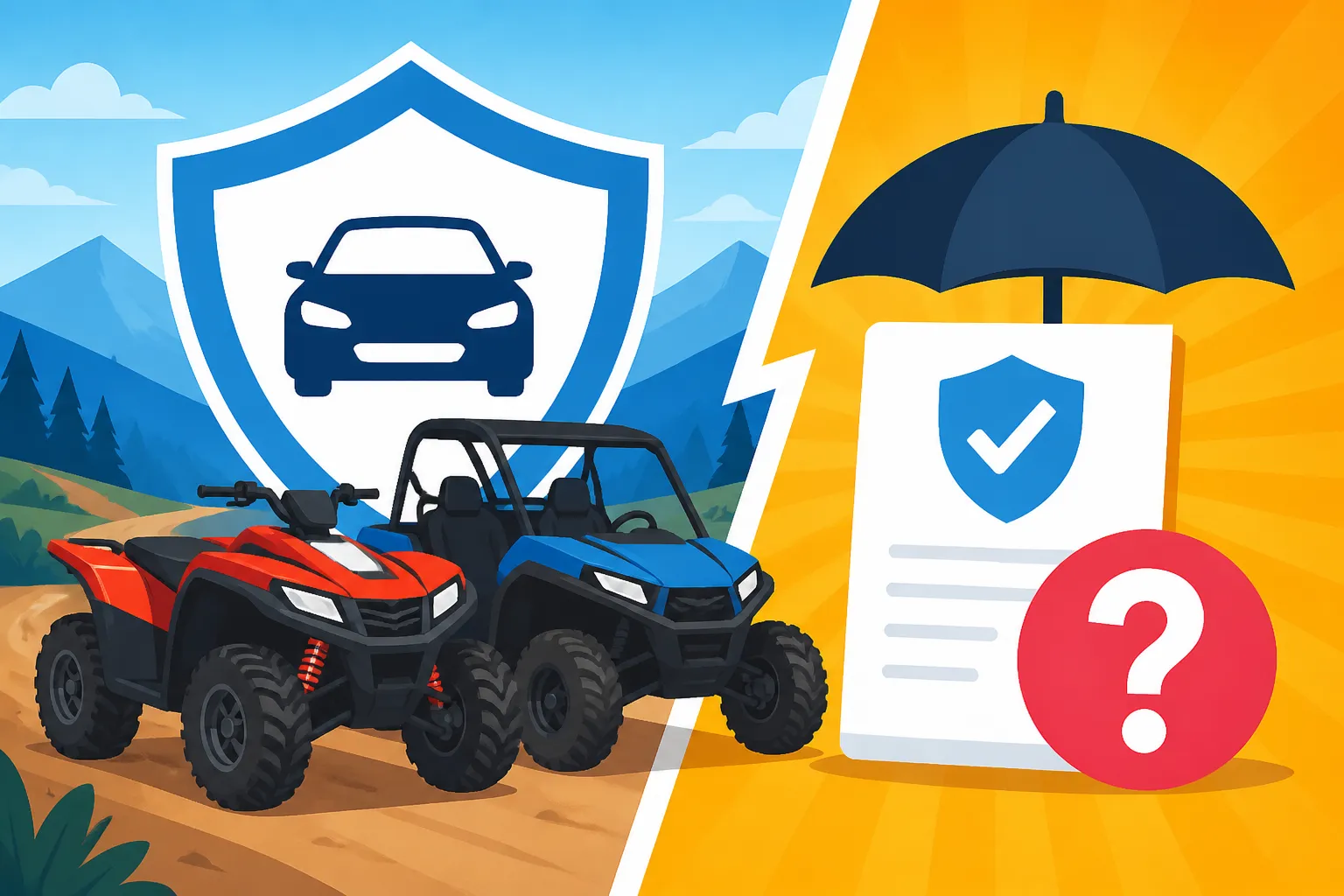
It's a common misconception, one that many folks in Idaho's OHV community share: you buy a new side-by-side or a trusty used ATV, and you just assume your existing auto insurance policy will automatically cover it. You might think, "I have 'full coverage' on my truck, so surely that extends to my quad, right?" Unfortunately, that's almost never the case. This guide will dive deep into why your standard auto policy is unlikely to provide adequate protection for your Idaho OHV and what you need to do to truly safeguard your investment and your peace of mind.
Why Your Auto Policy Likely Won't Cover Your OHV (or Covers Very Little)
Let's be brutally honest: auto insurance companies design their policies with specific risks in mind. A car or truck operates on paved roads, follows traffic laws, and faces a predictable set of hazards. An OHV, whether it's an ATV, UTV, or dirt bike, lives in a completely different world. It navigates rugged trails, crosses streams, climbs steep inclines, and often operates far from immediate emergency services. These are fundamentally different risk profiles, and standard auto policies simply aren't built to accommodate them.
The "Vehicle Type" Exclusion: Cars vs. Off-Road Machines
One of the primary reasons your auto policy won't cover your OHV is right there in the fine print: the definition of a "covered vehicle." Auto policies explicitly define what they insure, and off-highway vehicles generally don't fit that description. They're designed for street-legal vehicles that meet specific safety and registration standards for public roads.
Think about it this way: your car insurance covers you when you're driving to the grocery store or commuting to work. It's not expecting you to be navigating boulder fields in the Danskin Mountains. If you were to roll your prized Polaris RZR on a rough trail near Idaho City, your auto policy would likely deny the claim outright, stating that the vehicle type and the incident's location fall outside its scope. The only exception might be if your OHV is being transported on a trailer and the trailer itself is involved in an accident, but even then, the coverage for the OHV itself might be limited to what's covered under your personal property or homeowners policy, which is another can of worms we'll get into.
Limited Liability Coverage on Private Property
Some auto policies might offer a sliver of liability coverage, but it's often so minimal and situation-specific that it's practically useless for most OHV owners. For instance, your auto policy might provide some third-party liability if your UTV is involved in an accident on your own private property. Maybe you're driving it across your pasture to fix a fence, and you accidentally clip a visiting friend's car. In this highly specific scenario, there's a slim chance your auto policy's liability might kick in, though often it would be your homeowners policy providing coverage, if any.
However, the moment you leave your private land and venture onto public trails, Forest Service roads, or even cross a designated county road (even if you have an [Idaho Restricted Vehicle Plate Explained]), any potential auto policy coverage almost certainly vanishes. The risks associated with riding on public lands, where you could injure another rider, damage someone else's property, or even hit a parked vehicle, are simply not what an auto policy is designed to cover. Relying on this thin thread of potential private property coverage is a gamble you really don't want to take.
The Myth of "Full Coverage" Auto Extending to Everything
It's a common phrase: "I have full coverage." For many, this implies an impenetrable shield of insurance protection. However, "full coverage" on your auto policy simply means you have collision and comprehensive coverage for the specific vehicle listed on that policy, in addition to your state-mandated liability. It does not mean your insurance company will cover every single vehicle you own, regardless of type or use.
When you insured your truck or car, the insurance company assessed its value, its use (personal, commute, etc.), and the risks associated with it. Your side-by-side or ATV has a completely different risk profile – higher likelihood of single-vehicle accidents, rollovers, theft from remote locations, and specialized repairs. If you haven't explicitly added your OHV to a policy, or purchased a separate, dedicated policy for it, then "full coverage" on your sedan offers precisely zero protection for your ATV when it's out on the trails. This is why understanding the nuances of insurance is so vital, especially in a state like Idaho where off-roading is such a big part of the lifestyle.
Understanding the Specifics: What Different Coverages Mean for Your OHV
Since your auto policy is largely out of the picture, let's talk about what actual OHV insurance offers. These are the coverages you need to understand to protect yourself, your machine, and your finances.
Liability Coverage: The Absolute Must-Have
Just like with your car, liability coverage is the foundational element of any responsible OHV insurance policy. This coverage protects you financially if you're at fault for an accident that causes bodily injury to another person or damage to someone else's property.
Imagine you're cruising a gravel road near Cascade, enjoying the scenery, and you accidentally misjudge a turn, hitting another rider's machine or even worse, causing them injury. Without liability insurance, you would be personally responsible for all those costs, which could easily run into tens or even hundreds of thousands of dollars. In Idaho, if you plan on riding your OHV on any public roads that are open to off-highway vehicles, liability insurance often becomes a legal requirement, much like with a car. [Liability Insurance Idaho Road Riding Requires] discusses this in more detail. Even if it's not legally required on every single trail, it's an ethical and financial safeguard you should never skimp on.
Collision and Comprehensive: Protecting Your Investment
These two coverages are what most people refer to when they say "full coverage" on an auto policy, but for an OHV, they are separate and equally critical.
- Collision Coverage: This pays for damages to your own OHV if it collides with another vehicle, an object (like a tree or a rock), or rolls over. Given the nature of off-road riding, collision coverage is incredibly important. A single mistake on a challenging trail can result in significant damage to your machine. Modern side-by-sides, especially high-performance models, are expensive to repair. Parts for the suspension, frame, or engine can add up quickly.
- Comprehensive Coverage: This protects your OHV from damages that aren't collision-related. This includes theft, vandalism, fire, natural disasters (like floods or falling trees), and even hitting an animal. OHV theft is a real concern, especially if you store your machine at a remote cabin or a public staging area. [Checking a Used Machine for Theft] highlights the importance of knowing a machine's history, but comprehensive coverage protects you after you own it. If your side-by-side is stolen from your garage or vandalized while parked at a trailhead, comprehensive coverage will help you replace it or cover the repair costs. Many riders invest heavily in aftermarket upgrades from companies like SuperATV – new lift kits, bigger tires, winches, or protection bars. A good comprehensive policy can often be endorsed to cover these valuable additions, ensuring your investment is truly protected.
Uninsured/Underinsured Motorist and Medical Payments
These coverages might seem like extras, but they can be lifesavers in specific situations.
- Uninsured/Underinsured Motorist (UM/UIM): This protects you if you're involved in an accident with another OHV rider who doesn't have insurance or doesn't have enough insurance to cover your damages and medical bills. While not as commonly encountered on trails as on public roads, accidents can and do happen. If an uninsured rider hits you and you're injured or your machine is wrecked, UM/UIM can step in to cover your costs.
- Medical Payments (MedPay): This coverage pays for reasonable and necessary medical expenses for you and your passengers if you're injured in an OHV accident, regardless of who was at fault. This can cover ambulance fees, hospital stays, and follow-up care. Considering the potential for injury in off-road riding, having this safety net can significantly ease the financial burden of an unexpected medical emergency. It's an important part of personal protection when you're out exploring [Where to Ride an ATV in Idaho].
The Importance of Dedicated OHV Insurance in Idaho
Given the limitations of auto insurance and the unique risks associated with off-road riding, dedicated OHV insurance isn't just a suggestion in Idaho; it's often a necessity for true protection and compliance.
Tailored Protection for Off-Road Risks
Dedicated OHV insurance policies are specifically designed to understand and cover the unique hazards that ATVs, UTVs, and dirt bikes face. Insurers offering these policies employ adjusters and underwriters who are familiar with off-road scenarios, machine types, and typical damage. They know that a rollover on a steep incline or water damage from an unexpected stream crossing is a common occurrence, not an anomaly.
These policies can also be customized with specific endorsements that regular auto policies simply don't offer. For example, you can often add coverage for custom parts and accessories, which is crucial if you've invested heavily in aftermarket upgrades from a brand like SuperATV, like a heavy-duty bumper or an upgraded suspension system. Without this specialized coverage, an accident could leave you replacing expensive aftermarket parts out of your own pocket.
Meeting Idaho's Requirements for Road and Public Land Use
Idaho has specific rules about where and how you can ride your OHV, and these often involve insurance. While a sticker is usually enough for most trails on federal lands, if you plan to [Ride an ATV on the Road in Idaho] or use certain county roads to get from a staging area to a trailhead, you will almost certainly need proof of liability insurance. [What Idaho Requires to Ride a County Road] details these specific requirements, which often mirror those for street-legal vehicles.
Even on trails where insurance isn't legally mandated, many public lands agencies and riding areas strongly recommend it. It protects you and others, ensuring that if something goes wrong, you're not left with crippling financial repercussions. This isn't about avoiding a ticket; it's about being a responsible rider in a state that offers incredible access to its backcountry.
Peace of Mind for Idaho Riders
Ultimately, dedicated OHV insurance offers something priceless: peace of mind. Idaho offers an incredible playground for OHV enthusiasts, from the high country trails of the Sawtooth National Forest to the open desert riding in the Owyhee region. Knowing that you and your machine are adequately covered allows you to truly enjoy these experiences without constantly worrying about "what if."
Whether you're exploring the Lolo Motorway, riding near Coeur d'Alene, or just taking a leisurely cruise through the foothills near Boise, having the right insurance means you can focus on the trail, the scenery, and the camaraderie of your riding group. It means that if you have an unfortunate incident, whether it's a minor fender-bender with another machine, a broken axle from hitting a hidden rock, or even the theft of your prized UTV, you have a clear path to recovery without draining your savings.
Navigating the Gray Areas and What to Ask Your Agent
It's easy to get confused by insurance jargon and overlapping policies. Let's clarify some common questions and guide you on how to talk to your insurance agent to ensure you have the best coverage.
Your Homeowners Policy and Your OHV: A Very Limited Safety Net
Another common question is whether your homeowners insurance will cover your OHV. The short answer, like with auto insurance, is usually "no" for anything beyond very specific, limited scenarios.
Your homeowners policy is designed to cover your dwelling and personal property within it, and liability for incidents that occur on your property. It might offer a tiny sliver of liability coverage if your OHV is involved in an incident on your property (e.g., a guest trips over it in the garage, or you accidentally damage a neighbor's fence while driving it in your yard). However, homeowners policies almost universally exclude coverage for motorized vehicles, especially when they are being operated away from your home. If your ATV is stolen from a trailhead or damaged in an accident miles from your house, your homeowners policy will offer no recourse. [Does Homeowners Insurance Cover an Idaho ATV?] dives deeper into this topic, explaining just how thin this safety net truly is.
The Crucial Conversation: Talking to Your Insurance Agent
The single most important step you can take is to have a direct, honest conversation with your insurance agent. Don't assume anything. Don't rely on vague assurances. Be specific about your OHV, how you use it, and where you ride it.
Here are some critical questions to ask your agent:
- "Does my current auto policy cover my [year, make, model of OHV] for physical damage or liability if I'm riding it on public lands, Forest Service roads, or county roads in Idaho?" (The answer will almost certainly be no, but it's important to confirm.)
- "What dedicated OHV insurance options do you offer for my ATV/UTV?"
- "What are the minimum liability coverage requirements for OHVs in Idaho, especially when riding on designated roads?"
- "If I modify my machine with aftermarket parts (e.g., from SuperATV), can these upgrades be covered by the policy, and what documentation do I need?"
- "What is covered if my OHV is stolen from my home, a remote campsite, or a public staging area?"
- "What are the deductibles for collision and comprehensive coverage, and how do they work?"
- "Are there any discounts available, such as for completing an [Idaho's OHV Safety Course for Young Riders] or for bundling with my other policies?"
- "What exactly does medical payments coverage include, and what are the limits?"
- "If I regularly haul my OHV on a trailer, what coverage applies to the machine while in transit?"
Be prepared to provide details about your machine, its value, and your typical riding habits. The more information you give your agent, the better they can tailor a policy to your needs.
What to Look for in an OHV Insurance Policy
When comparing dedicated OHV insurance policies, don't just look at the premium. Dig into the details to ensure you're getting comprehensive coverage that truly meets your needs as an Idaho rider.
| Feature | Auto Policy for OHV (Typically) | Dedicated OHV Policy (Recommended) |
|---|---|---|
| Liability | Extremely limited; mostly on-property | Comprehensive, tailored for OHV risks |
| Collision | Excluded | Covers damage from accidents/rollovers |
| Comprehensive | Excluded | Covers theft, fire, vandalism, natural disasters |
| Medical Payments | Excluded | Covers medical expenses for rider/passengers |
| Uninsured Motorist | Excluded | Protects if hit by uninsured rider |
| Aftermarket Parts | Excluded | Option to cover custom parts and accessories |
| Theft from Trailhead | Excluded | Generally covered under comprehensive |
| Road Use Compliance | Does not meet requirements | Meets Idaho road use insurance requirements |
| Repair Networks | Designed for cars | Often has knowledge of OHV repair specialists |
Beyond the core coverages, consider these points:
- Coverage for Accessories: If you've spent money on custom wheels, a winch, a lighting kit, or other accessories from brands like SuperATV, make sure your policy includes an option to cover these. Some policies offer a basic amount, but you might need to specifically declare and insure high-value additions.
- Agreed Value vs. Actual Cash Value: Understand how the policy will value your machine in case of a total loss. "Agreed value" means you and the insurer agree on a value upfront, which can be beneficial for highly customized or older, well-maintained machines. "Actual cash value" means the policy pays out the depreciated value at the time of the loss.
- Lay-Up Periods: Some policies offer discounts if you won't be riding your OHV for a certain part of the year (e.g., during the winter). While you should always maintain comprehensive coverage for theft and fire, reducing collision coverage during off-season can save money.
- Deductibles: Choose a deductible you're comfortable with. A higher deductible usually means lower premiums, but be prepared to pay that amount out of pocket if you have a claim.
- Road Use Endorsements: If you have an [Idaho Plate That Begins With R] and plan to ride on county roads, ensure your policy explicitly covers this type of usage and meets all legal requirements.
Getting the right OHV insurance in Idaho is a critical part of being a responsible and protected rider. Don't leave your valuable machine, or your financial well-being, to chance by assuming your auto policy has you covered. Get a dedicated policy, understand its terms, and ride with confidence.
Disclaimer
This article is for general informational purposes only and does not constitute professional advice. Laws, prices and regulations vary by location and change over time. Consult a qualified professional for guidance on your specific situation.