Riding Slowly Past Roadside Homes
The thrill of taking your ATV or UTV out on Idaho's incredible trails is undeniable, but it often requires traversing shared county roads to get to the trailhead, or simply as part of a longer loop. When these routes pass directly by people's homes, what might feel like a momentary passage to you can be a recurring disturbance to residents. This guide dives deep into the art of Riding Slowly Past Roadside Homes in Idaho, offering crucial insights and actionable strategies to help you be a courteous rider and avoid unnecessary friction with those who call the roadside home.
The Impact of OHV Operations Near Homes
When you're out on the trails, the roar of your engine and the dust kicked up by your tires are part of the experience. But when you bring that experience past someone's front yard, the context changes entirely. What might seem minor to a rider can be a significant disruption to a homeowner. Understanding this difference in perception is the first step toward becoming a more respectful and welcome member of the riding community.
Noise Pollution and Community Peace
Picture this: a family is having a quiet backyard barbecue, or perhaps someone is working from their home office with the windows open, enjoying the Idaho fresh air. Suddenly, the distinct sound of an ATV or UTV engine revs past their property. Even if it's just for a few seconds, that sudden burst of noise can interrupt conversations, startle pets, or break concentration. For homes located on popular OHV access routes, this isn't a one-off event; it can happen dozens of times a day, turning their peaceful environment into a perpetual thoroughfare of sound.
While many modern machines come with relatively quiet stock exhausts, aftermarket modifications, while often enhancing performance, can significantly amplify noise levels. What sounds "cool" on the trail might be genuinely disruptive in a residential setting. It's not about prohibiting fun, but about recognizing that the "soundtrack" of your ride can be perceived as noise pollution by others, impacting their ability to enjoy their property or simply find peace in their surroundings. Think about how you would feel if similar noise interrupted your quiet moments at home.
Dust Clouds and Air Quality
Idaho's unpaved county roads, while offering access to incredible riding, are also notorious for kicking up dust, especially in the drier months. When you pass a roadside home, that cloud of dust isn't just behind you; it's drifting onto their cars, settling on their windows, coating their outdoor furniture, and even finding its way inside their homes. For a homeowner, this means constant cleaning, potential damage to outdoor equipment, and a general reduction in air quality that can affect children, the elderly, or those with respiratory issues.
The faster you drive, the more dust you generate. A momentary burst of speed might feel harmless, but for residents, it's a visible infringement on their property and well-being. Imagine having just washed your car or hung out a load of fresh laundry, only for a passing OHV to coat everything in a fine layer of grit. It's frustrating, to say the least. While accessories like full windshields or cab enclosures (which you might find at places like SuperATV) can help protect you from dust, the real goal is to minimize the impact on others. Being mindful of your speed and driving habits is the single most effective way to control dust in these sensitive areas.
Safety Concerns for Pedestrians and Children
Even if you're driving well within the legal speed limit, the sheer presence of an ATV or UTV passing a home can raise significant safety concerns. Children play near driveways, people walk their dogs, and elderly residents might be tending to their gardens close to the road. These machines, with their open design and often powerful engines, can appear intimidating and fast, especially to those not familiar with them. A momentary lapse in attention from either side could lead to a serious incident.
Riders have a responsibility to be extra vigilant in these zones. A child could dart out from behind a parked car, a pet could chase a squirrel, or a pedestrian might step onto the shoulder unexpectedly. The perception of danger, even if exaggerated, is a valid concern for residents. Your predictable and slow driving not only reduces actual risk but also helps alleviate the anxieties of homeowners. It communicates that you see them, you respect their space, and you prioritize safety over speed.
Idaho's Legal Framework for Road Riding and Speed
While much of Riding Slowly Past Roadside Homes boils down to common courtesy, there are indeed legal guidelines in Idaho that underpin these best practices. Knowing the rules isn't just about avoiding a ticket; it's about understanding the basic expectations for all vehicles, including OHVs, when sharing public roadways.
Default Speed Limits on Unposted County Roads
Many of Idaho's vast network of county roads, especially those that provide access to trails or pass through rural residential areas, may not have explicit speed limit signs posted at every turn. However, this doesn't mean there's no speed limit. Idaho law establishes default speed limits for various types of roads, and county roads often fall under a specific threshold, typically 35 mph, unless otherwise posted.
For OHV riders, this means that even if a road looks open and clear, you are expected to adhere to this default limit. Furthermore, the law also includes provisions for "reasonable and prudent" speed, meaning you should always drive at a speed appropriate for the conditions, regardless of the posted or default limit. If the road is dusty, has blind spots, or passes by numerous homes, a speed of 35 mph might still be considered too fast and potentially reckless. [What Idaho Requires to Ride a County Road] extends beyond just having a restricted plate; it includes adhering to all standard traffic laws.
Local Ordinances and Designated OHV Routes
It's crucial to remember that while the state sets general rules, individual cities and counties in Idaho have the authority to establish their own ordinances regarding OHV use. This means a county might designate specific roads for OHV access, but with caveats. These local rules often include provisions for reduced speed limits in residential zones or even specific hours of operation to minimize noise and dust impact on communities.
Some counties might have specific [Idaho City and County Ordinances That Close Roads] to OHVs entirely, while others might allow access but impose strict conditions. For instance, a county might permit OHV use on certain paved roads to connect trail segments, but require speeds of 15 mph or less when passing homes. Always check the local regulations for the area you plan to ride. Ignorance of these ordinances is not a defense, and a quick check of the county sheriff's or local city hall website can save you a lot of trouble – and help foster good relations with the community.
Reckless Operation and Public Nuisance Laws
Beyond specific speed limits, Idaho law also has broader provisions for reckless driving and public nuisance that can apply to OHV operation. Driving too fast for conditions, kicking up excessive dust, or creating undue noise can all fall under these umbrellas. A law enforcement officer might not just issue a ticket for speeding; they could cite you for reckless operation if your driving style significantly impacts public safety or peace.
[Fines for Speeding on a County Road] can be substantial, and repeated offenses, or actions deemed particularly egregious, could lead to more serious penalties or even a temporary loss of riding privileges. Consider also [Idaho Noise Rules Near Mountain Towns], which might specifically target excessive exhaust noise. While you might feel you're simply enjoying a legal ride, creating a nuisance for residents can lead to calls to the sheriff, increased patrols, and potentially stricter local regulations for all OHV riders. This is why being a good steward of the trails and roads is so vital for the future of the sport.
Practical Strategies for Respectful Riding
Now that we understand the impact and the legal framework, let's talk about the practical steps you can take to be a more courteous and responsible rider when passing roadside homes. These aren't just about avoiding trouble; they're about ensuring the longevity of OHV access in Idaho and fostering a positive image for the entire riding community.
Deliberate Speed Reduction
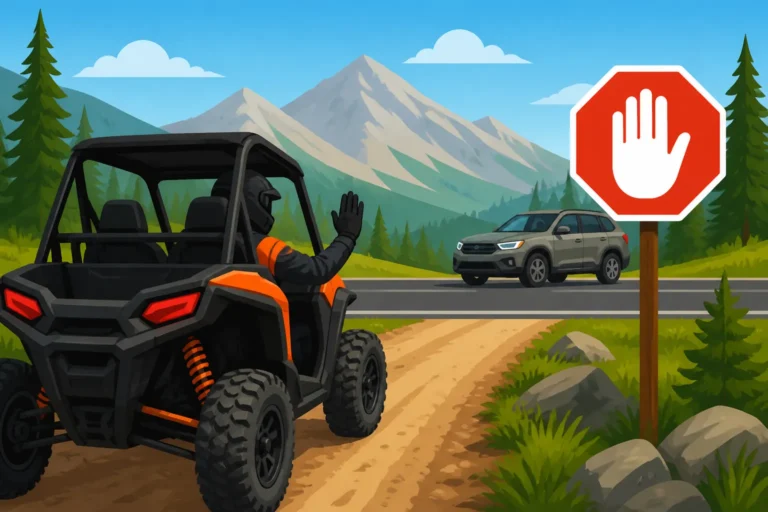
This is perhaps the most critical and easiest strategy to implement. When you see homes approaching, or even when you enter a section of road where residences are present, deliberately slow down. Don't just lift off the throttle slightly; actively engage your brakes and drop your speed to a level that feels almost excessively slow. We're talking 10-15 mph, sometimes even slower, regardless of the posted speed limit. The goal here is not just legality, but perception and minimal impact.
Imagine you're driving your personal vehicle through a quiet neighborhood. You wouldn't blast through at 35 mph, even if that was the default limit. You'd instinctively ease off, coast, and prioritize safety and quiet. Apply that same logic to your OHV. A slow, steady crawl minimizes dust, reduces noise, and gives you ample time to react to any unexpected movements from children, pets, or pedestrians. This deliberate reduction in speed sends a clear message to residents that you acknowledge their presence and respect their peace.
Mitigating Dust Through Mindful Driving
As discussed, dust is a major point of contention for roadside residents. Beyond slowing down, there are specific driving techniques that can help reduce the amount of dust your machine kicks up. Avoid sudden acceleration or braking, which tend to churn up the most grit. Instead, apply throttle gently and smoothly, allowing your tires to roll rather than dig into the road surface. When braking, do so gradually and well in advance of where you need to stop.
If you're riding in a group, try to spread out a bit (while maintaining safe following distances) to allow dust to settle between machines, rather than creating a continuous cloud. Some riders even apply water to their tires before entering residential areas if practical, though this is less common for casual rides. While products like SuperATV's dust shields can help keep dust out of your machine's cab, the most effective way to address the issue for residents is through cautious, low-speed driving. [Dust on a Dry Gravel Road] is inevitable, but its severity is often directly proportional to your speed and aggression.
Noise Control and Vehicle Maintenance
While not all noise can be eliminated, you can certainly take steps to control it. Regularly inspect your muffler and exhaust system for any leaks or damage, which can significantly increase noise levels. A well-maintained stock exhaust is typically the quietest option and perfectly suitable for street-legal OHVs. If you have an aftermarket exhaust, ensure it meets all legal [Idaho Muffler and Exhaust Noise Limits] and consider its impact in residential areas. Some performance exhausts are simply too loud for respectful road use.
When passing homes, avoid unnecessary engine revving or sudden bursts of throttle. Keep your RPMs low and your speed consistent. If you need to communicate with a fellow rider, use hand signals or a comms system rather than yelling over engine noise. Many quality aftermarket components, including some offered by SuperATV, are designed with performance and responsible riding in mind, often helping to keep machines running smoothly and efficiently, which can contribute to lower noise profiles compared to poorly maintained systems.
Maintaining Situational Awareness
Your eyes and ears are your best tools for respectful riding. Scan continuously for potential hazards: children playing, pets roaming, people working in their yards, or vehicles entering and exiting driveways. Be prepared to stop or swerve at a moment's notice. Make eye contact with pedestrians if possible; a nod or a friendly wave can go a long way in showing you are aware of their presence and not just blasting through their neighborhood.
When riding in a group, ensure everyone understands and adheres to the same etiquette. Appoint a lead rider to set the tone for residential areas. [Group Riding Etiquette on a Town Street] should prioritize single-file riding, maintaining appropriate distances, and extreme caution. If you're riding [Idaho Rules for Riding a County Road After Dark], be extra mindful of your lighting and ensure it's not blinding to oncoming traffic or residents. The more attentive and predictable you are, the safer and more accepted your presence will be.
Building Positive Community Relations
The long-term viability of OHV access in Idaho often hinges on the relationship between riders and residents. Every time you ride past a roadside home, you are either reinforcing negative stereotypes or building positive goodwill. Becoming an ambassador for the sport isn't just a nice idea; it's essential for protecting your riding opportunities.
The Perception of OHV Riders
Let's be honest: not everyone loves OHVs. Some residents perceive them as noisy, dusty nuisances driven by reckless individuals. This perception, whether fair or not, can be fueled by a few bad experiences. A single rider speeding past a home, churning up a massive dust cloud, or revving an excessively loud engine can overshadow dozens of responsible riders. This negative impression can lead to complaints, calls to law enforcement, and ultimately, pressure on local authorities to close more roads or tighten regulations.
Your actions, therefore, have a ripple effect. When you consistently ride slowly, quietly, and respectfully, you're not just being a good neighbor; you're actively working to counteract negative stereotypes. You're showing that OHV riders are responsible, considerate members of the community who appreciate access to public lands and want to share roads safely. It's about demonstrating that OHVs can coexist peacefully with residential areas.
Being an Ambassador for the Sport
Think of yourself as an ambassador for the entire Idaho OHV community. Every respectful action you take helps to chip away at negative perceptions. This includes not just how you drive, but how you interact with people you encounter. A friendly wave, a polite nod, or even a brief, courteous exchange if you stop can make a big difference. When residents see responsible riders, they are less likely to complain and more likely to accept OHV access.
Supporting local businesses in trail towns (often mentioned in discussions about [Riding Through McCall, Stanley and Salmon]) also helps build goodwill. When communities see economic benefits from OHV tourism, they are often more inclined to tolerate the minor inconveniences. Being a good citizen of the trails and roads, and showing respect for both public and private property (avoiding [Idaho Trespass Law for Riders]), helps ensure that the scenic routes we all love remain open for generations to come.
Educating Fellow Riders and Group Leaders
The responsibility to ride respectfully isn't just an individual one; it extends to the entire riding community. If you're riding in a group, the lead rider has a particular duty to set the standard for behavior, especially in residential areas. Before embarking on a ride that involves passing homes, have a brief discussion with your group about the importance of slowing down, minimizing dust, and keeping noise levels down.
Share resources like this guide with your riding buddies. Encourage newer riders to understand the nuances of [Idaho Speed Limits for Restricted Vehicles] and the implications of their actions. Peer pressure, when applied positively, can be a powerful tool for promoting responsible behavior. By actively promoting a culture of respect within the OHV community, we can collectively ensure that our sport continues to thrive and that access to Idaho's incredible landscapes remains open for everyone to enjoy.
Here's a quick summary of what it means to be a respectful rider near homes:
| Behavior Aspect | Respectful Rider Practice | Undesirable Rider Practice |
|---|---|---|
| Speed | Deliberately slow (10-15 mph), well below posted limits. | Maintaining posted speed limit, or exceeding it, near homes. |
| Dust | Gentle acceleration/braking; spreading out in groups. | Rapid acceleration, sudden braking, creating large dust clouds. |
| Noise | Low RPMs, well-maintained stock exhaust, no unnecessary revving. | Loud aftermarket exhaust, revving engine, loud music. |
| Awareness | Constant scanning for children, pets, pedestrians; making eye contact. | Fixed gaze ahead, ignoring surroundings, distracted driving. |
| Interaction | Friendly nod/wave, polite if stopped. | Ignoring residents, appearing aloof or aggressive. |
| Compliance | Adhering to all posted and default speed limits, local ordinances. | Disregarding local rules, assuming "no sign means no limit." |
Disclaimer
This article is for general informational purposes only and does not constitute professional advice. Laws, prices and regulations vary by location and change over time. Consult a qualified professional for guidance on your specific situation.