Group Riding Etiquette on a Town Street
Riding your ATV or UTV in a group through an Idaho town can be an exhilarating way to connect trails or grab a meal, but it also presents unique challenges. Without clear communication and a shared understanding of etiquette, a fun outing can quickly turn into a chaotic and even unsafe experience, frustrating both riders and local residents. This guide will walk you through the essential strategies and considerations for ensuring your group rides smoothly, safely, and respectfully on Idaho's town streets, making the experience enjoyable for everyone involved.
Planning Your Group's Journey Through Town
It might seem straightforward to just jump on your machines and head into town, but a little pre-ride planning can make all the difference between a smooth, enjoyable group excursion and a stressful, disorganized mess. When you’ve got multiple off-road vehicles on public streets, clear communication and agreed-upon strategies are absolutely paramount.
Designating Leaders and Establishing Communication
It’s not enough to just say, “Let’s all meet up and ride!” when you’re taking a group of ATVs and UTVs through a town. What seems like a simple drive for individual cars can become a confusing, spread-out experience with multiple off-road vehicles. That’s why the first, and arguably most critical, step is to assign a designated lead rider and a tail rider. The lead rider is the trailblazer, setting the pace, making turns, and navigating traffic. This person needs to be experienced, familiar with the route, and calm under pressure. They are the eyes of the group, responsible for signaling intentions clearly and anticipating potential hazards well in advance.
The tail rider, on the other hand, is the anchor. Their job is to ensure no one gets left behind, especially at busy intersections or if someone experiences a minor mechanical issue. They act as a lookout, providing feedback to the lead rider if the group starts to string out too much. Often, the lead and tail riders will have two-way radios or helmet communicators to keep a constant line of communication open, which is especially crucial when navigating areas with heavy traffic or complex turns. This dynamic duo helps keep the entire group cohesive and aware of what’s happening from front to back.
Beyond just lead and tail, consider assigning a “sweep” rider or two if your group is particularly large, say five or more machines. These riders can help keep the middle of the pack together, assist with relaying hand signals, and provide immediate support for minor issues without necessarily holding up the entire group. Having a clear chain of command and communication before you even pull out of the staging area means less confusion and a much safer ride for everyone, especially when you encounter unexpected obstacles or sudden changes in traffic flow.
Crafting Your Route and Agreeing on Signals
Before your wheels even touch the pavement, everyone in your group needs to be on the same page regarding the route you plan to take through town. Handing out a quick map or even drawing it out on a piece of paper for everyone to see can prevent a lot of headaches and missed turns. Discussing the route allows everyone to visualize turns, potential stops, and areas where traffic might be heavier. It’s particularly important to point out any specific areas where you might need to ride [Single File on a Narrow Road] or cross a major thoroughfare like a state highway. This foreknowledge empowers individual riders to anticipate what’s coming, rather than solely relying on the rider in front of them, which can lead to last-minute braking or unexpected lane changes.
Equally important is establishing a clear set of hand signals that every rider understands and commits to memory. While some signals are universal, like pointing to a turn, others might need to be agreed upon for your specific group, especially for off-road specific communication. Think about signals for "stop," "slow down," "hazard ahead" (pointing to the ground), "single file," or "regroup here." When one rider spots a pothole, a bicycle, or an unexpected change in the road surface, relaying that information visually down the line can prevent a chain reaction of sudden maneuvers. Remember, relying solely on verbal communication can be difficult, if not impossible, due to engine noise, wind, and the distance between machines, making consistent, clear hand signals your best friend for group cohesion and safety on busy streets.
Preparing Your Machine for Street Use
Taking your off-road machine onto public streets in Idaho means you need to ensure it meets all the legal requirements for road use. This isn’t just about avoiding a ticket; it’s about making sure your machine is safe and visible to other drivers, protecting everyone on the road. First, confirm your ATV or UTV has the proper [Idaho's Restricted Vehicle Plate Explained] and a current OHV sticker. You’ll also need functional headlights, taillights, brake lights, turn signals, mirrors, and a horn. Many machines don’t come factory-equipped with all these, so aftermarket additions are often necessary. Companies like SuperATV offer a range of street-legal kits and accessories that can help you meet these requirements, transforming a trail-ready rig into a street-savvy one.
Beyond legality, think about general roadworthiness. Are your tires in good condition and properly inflated for pavement use, which might be different than for trail riding? Are your brakes responsive and well-maintained? Are all your lights—headlights, taillights, brake lights, and turn signals—functioning correctly? A pre-ride check isn't just for long trail days in the backcountry; it's absolutely essential when you're going to be sharing the road with cars, trucks, and pedestrians. This thorough preparation ensures that your machine performs predictably, reducing the risk of a breakdown or, worse, an accident in a bustling town environment. It’s also wise to carry your [Do You Carry the Title on an Idaho Trail?] or at least proof of registration and insurance, as deputies often conduct checks on vehicles operating on public roads.
Riding in Formation and Maintaining Safety on City Streets
Once your planning is solid and your machines are prepped, the next step is executing a safe and disciplined ride through town. This involves more than just following the leader; it’s about maintaining awareness, predictable behavior, and respect for other road users, ensuring the entire group moves as a cohesive unit.
Maintaining Proper Spacing and Visibility
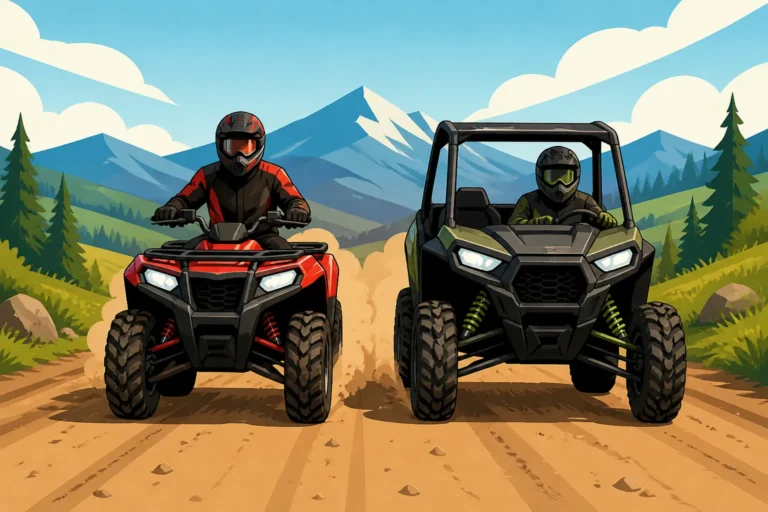
When riding in a group on city streets, it's incredibly tempting to stick close to the rider in front of you, especially if you're unfamiliar with the route or worried about getting lost. However, crowding can quickly become a major hazard. The golden rule is to maintain a safe following distance, just as you would in a car. This allows you ample time to react to sudden stops, unexpected turns, or road debris that might appear. A common formation for multiple vehicles is a staggered line, where riders in the left lane position ride slightly ahead of those in the right lane position. This gives each rider a better view of the road ahead and provides a larger safety cushion between machines. However, on narrow town streets, or if the traffic is heavy, [Riding Single File on a Narrow Road] might be the safer and more appropriate choice.
Visibility is also paramount when sharing the road with various types of traffic. Many ATVs and UTVs, especially when lifted or modified, sit higher than passenger cars, but they are often narrower. Make sure your headlights are on, even during the day, and consider adding reflective tape or brightly colored accessories to your machines. Riders in the middle of the pack should also be constantly checking their mirrors and scanning for gaps that might open up, ensuring they aren’t inadvertently cutting off other traffic or becoming invisible in someone’s blind spot. Riding predictably and maintaining visibility means that drivers around you can better anticipate your movements and react safely, making the ride safer for everyone on the road.
Navigating Intersections and Turns
Intersections are perhaps the most challenging points for a group ride in town. It’s where the group is most likely to become separated, create confusion for other drivers, or even cause a hazardous situation. The lead rider should approach intersections with caution, observing traffic signals and road signs well in advance, and making clear decisions. If the group is large, it’s often impossible for everyone to make it through a single light cycle, and attempting to rush through can lead to dangerous situations and traffic violations. The tail rider plays a crucial role here, ensuring that no one is left stranded in the middle of an intersection or forced to run a red light.
When making turns, the lead rider should signal early and clearly, using appropriate hand signals or turn signals, then execute the turn smoothly and predictably. Each subsequent rider should then mirror that signal and execute their turn only when it is safe to do so, checking for cross-traffic or pedestrians. Never assume the driver behind you knows your intentions, and always check your blind spots. If the group does get split at an intersection, the lead rider should pull over safely past the intersection, if possible, and wait for the tail rider to confirm everyone has re-joined. Impatience or aggressive maneuvers at intersections not only endanger your group but also contribute to a negative perception of OHV riders among the general public. Keep in mind Idaho's rules for [Crossing an Idaho Highway on an OHV] if your route includes such crossings.
Interacting with Other Traffic
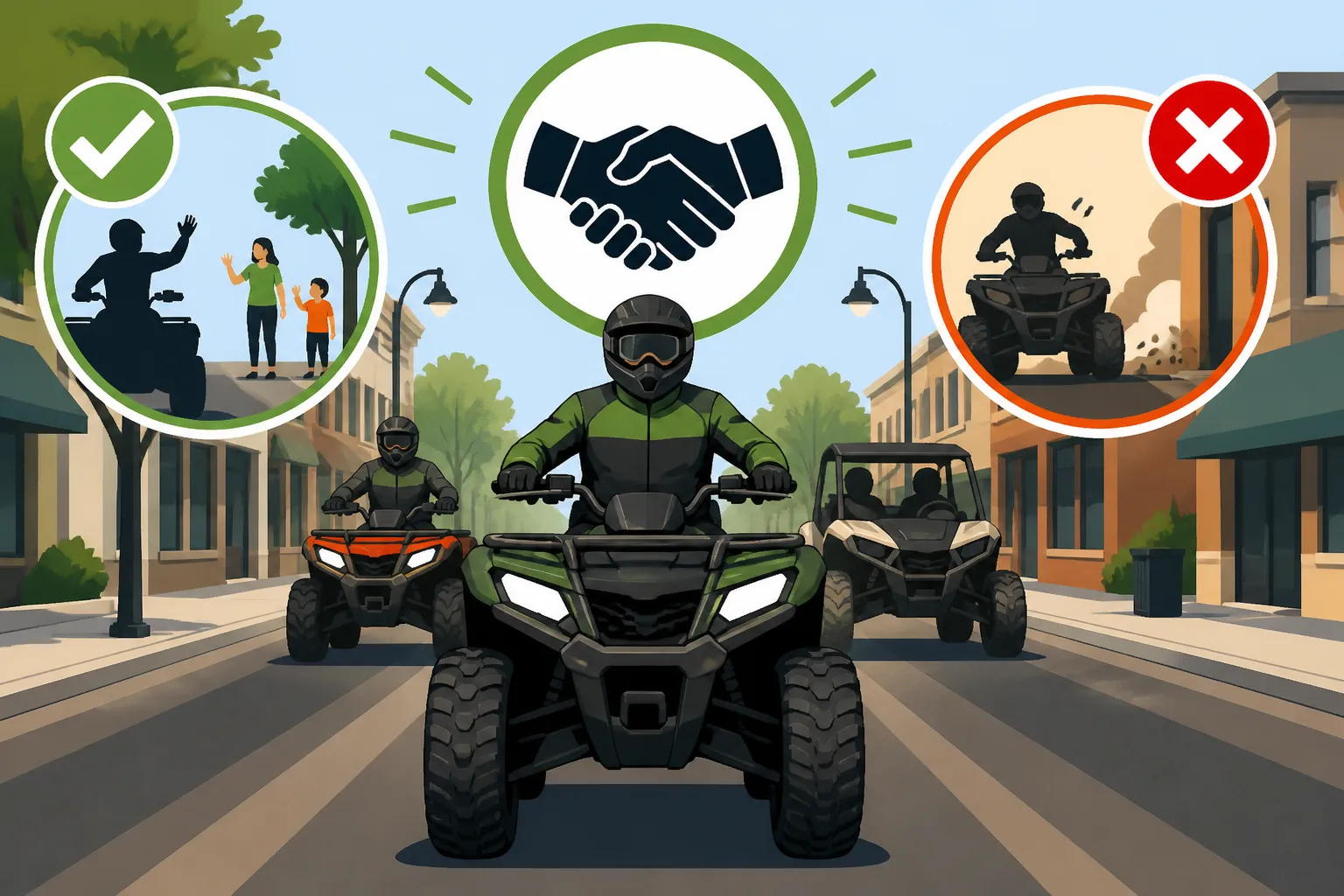
Sharing the road with cars, trucks, and even bicycles requires a specific mindset and a commitment to courtesy. Remember that many drivers may not be accustomed to seeing a string of ATVs or UTVs on their daily commute, and they might not fully understand their capabilities or limitations. Your goal is to be a predictable, courteous, and safe road user. Avoid aggressive acceleration, weaving through traffic, or cutting off other vehicles. If a car needs to pass, facilitate it safely by staying to the right of your lane or, if possible, pulling over momentarily where safe to do so. Making eye contact with other drivers, a quick nod, or a friendly wave can go a long way in de-escalating potential frustration and building goodwill.
It’s also crucial to remember that your machines can be significantly louder than typical street vehicles, especially if they have aftermarket exhausts. Be particularly mindful of residential areas and avoid revving engines unnecessarily. When passing pedestrians or homes, try to keep your speed down and noise to a minimum. By riding defensively and respectfully, your group sets a positive example for the entire OHV community, helping to foster a more accepting environment for riders on Idaho's shared roadways. Remember to be mindful of [Idaho Noise Rules Near Mountain Towns] and adjust your riding accordingly, recognizing that what's acceptable on a remote trail isn't always welcome in a populated area.
Respecting the Community and Minimizing Impact
Riding through a town on an ATV or UTV isn’t just about safety and legality; it’s also about being a good neighbor and an effective ambassador for the sport. The way your group behaves directly influences how local communities perceive OHV riders, which can impact future trail access and road-riding opportunities.
Managing Noise Levels
One of the most common complaints about off-road vehicles operating in town is excessive noise. While the roar of an engine might be thrilling on the trail, it can be a significant annoyance in a residential neighborhood or a quiet downtown area. When riding through populated areas, consciously reduce your speed and avoid excessive throttle input that might generate unnecessary noise. If your machine has an aftermarket exhaust, ensure it meets legal sound limits and consider ways to mitigate its impact in sensitive areas. For instance, some riders install baffles or choose quieter exhaust systems; even performance-oriented brands like SuperATV might offer options that consider sound reduction alongside power.
It's not just about the engine itself; the combined sound of multiple machines can amplify the issue dramatically. Imagine a convoy of ten UTVs rumbling past someone's open window early on a Saturday morning – it’s going to be noticed, and often not in a positive way. Encourage all riders in your group to practice "quiet riding" in town: smooth acceleration, steady speeds, and no gratuitous revving. This small effort can make a huge difference in how your group is received and helps prevent local ordinances that might restrict OHV access in the future. Remember to keep [Idaho Muffler and Exhaust Noise Limits] in mind, as exceeding these can result in citations and negative public sentiment.
Responsible Parking and Staging
When your group arrives at a destination in town – whether it's a restaurant, a general store, or a trailhead staging area – how you park and gather can significantly impact traffic flow, pedestrian access, and local sentiment. Resist the urge to spread out across multiple parking spots, especially if space is limited. Attempt to park cohesively, perhaps in a designated area away from prime retail spots, or consider parking in an area slightly outside the main drag and walking the last block or two. This also applies when staging for a ride; try to use designated staging areas or large, out-of-the-way parking lots where your group won't block driveways, impede traffic, or create congestion for other visitors.
If you’re pulling trailers, be extra mindful of where you leave them. A truck and trailer combination can take up a lot of space and block views for other drivers. Look for designated truck/trailer parking, or find spots where your trailer won’t obstruct traffic or impede pedestrian access. Being thoughtful about your footprint, especially with multiple machines and trailers, demonstrates respect for the community and its infrastructure. A well-organized, compact parking arrangement shows consideration and keeps things flowing smoothly for everyone. When considering [Parking a Side-by-Side on an Idaho Main Street], think about what the locals would appreciate.
Being a Good Ambassador for the Sport
Every time you ride your ATV or UTV on a town street, you are, whether you realize it or not, representing the entire OHV community. A single instance of reckless riding, excessive noise, or disrespectful behavior by one group can unfairly color the perception of all riders. Therefore, it's crucial for every member of your group to act as a positive ambassador for the sport. This means adhering strictly to all traffic laws, being courteous to other drivers and pedestrians, and maintaining a clean riding posture. Avoid throwing trash, respect private property boundaries, and be polite if approached by curious locals.
Consider making a quick stop at a local business, perhaps for gas or a meal. This demonstrates that OHV tourism can be a benefit to small towns, supporting local economies. A friendly wave to a homeowner, a polite interaction with a local shopkeeper, or simply waiting patiently at a crosswalk can leave a lasting positive impression. By consistently modeling responsible and respectful behavior, your group helps to foster goodwill, making it more likely that towns will continue to welcome OHV riders and that riding opportunities will expand, not shrink. Showing this kind of courtesy ensures you're helping, not hurting, the future of the sport in Idaho. Many [Idaho Towns That Welcome OHV Traffic] do so because riders have built a reputation for respect and support over time.
Dealing with Unexpected Situations and Common Challenges
Even the best-planned group rides can encounter unforeseen circumstances. Knowing how to react calmly and efficiently to breakdowns, separations, or injuries can turn a potential disaster into a minor setback, ensuring everyone makes it home safely. Preparation for these scenarios is just as important as planning the route itself.
What to Do if Separated
It's a common scenario: a red light catches half the group, a wrong turn is made, or a rider pulls over for a quick adjustment, and suddenly your cohesive unit is fractured. When a group gets separated, the lead rider should be prepared to pull over safely at the earliest opportunity – perhaps just past the intersection or at a visible landmark – and wait. The tail rider's role becomes even more critical here, as they are the last to confirm who made it through or who might have veered off. Using pre-established communication methods, whether radios or cell phones (if service is available), the lead and tail riders can quickly assess the situation and coordinate a regroup.
Individual riders who find themselves separated should not panic or try to aggressively catch up. Instead, they should proceed to the next agreed-upon regrouping point or the last known turn. If unsure, pull over safely to the side of the road and attempt to contact another member of the group. Never turn around in the middle of a busy street or make sudden, erratic maneuvers to rejoin the pack. Emphasize during your pre-ride briefing that the group will always wait for its members, reinforcing the idea that safety and cohesion trump speed. A good practice is to share phone numbers among all riders before departing, making it easier to re-establish contact, especially in areas with spotty cell service.
Handling Mechanical Breakdowns
A flat tire, an overheating engine, an electrical glitch, or a broken axle can happen to any machine, even those meticulously maintained. When a breakdown occurs in town, the first priority is safety. The affected rider should signal the issue to the group and try to pull over to a safe location, well out of the flow of traffic. The lead and tail riders should immediately be notified, and the entire group should pull over to provide assistance, assuming it’s safe to do so. This might mean finding a nearby parking lot, a wide shoulder, or even a side street where the group can gather without impeding traffic.
Depending on the nature of the breakdown, the group might be able to offer immediate help. Carrying a basic tool kit, tire plug kit, a small air compressor, jumper cables, and perhaps some spare fluids is always a good idea for any group ride. Sometimes, a quick fix by a mechanically inclined rider, or even having a few common wear items from a company like SuperATV on hand, can get someone back on the road. If the issue is more serious, the group needs to decide on a plan: sending a few riders ahead to arrange for a tow, or having a support vehicle meet them. Never leave a rider stranded alone; ensuring everyone is supported, even if it means altering the day’s plans, is paramount to group riding camaraderie and safety. Reviewing your [Insuring an ATV in Idaho] policy beforehand can also provide peace of mind in these situations, especially if a professional tow is needed.
Responding to Rider Injuries
The most serious challenge a group can face is a rider injury. In the unfortunate event of an accident or injury on a town street, the immediate priority is to ensure the safety of the injured rider and prevent further incidents. The entire group should pull over immediately and safely. The first responder should assess the situation, check for injuries, and, if necessary, call for emergency services (911). It's crucial that at least one member of the group is trained in basic first aid and can provide immediate assistance while waiting for professionals to arrive.
Establish a clear perimeter around the incident to protect the scene and other riders from approaching traffic. Use hazard lights on all machines, and if you have emergency triangles or flares, deploy them. Do not move an injured person unless they are in immediate danger (e.g., from fire or oncoming traffic). Someone should be designated to direct traffic if needed and communicate with emergency personnel upon their arrival, providing clear directions to the scene. Having a well-stocked first aid kit easily accessible in one of the UTVs is a non-negotiable for group rides, whether in town or on the most remote trail. A calm, coordinated response in a high-stress situation like an injury can make all the difference in the outcome and demonstrates the true spirit of a responsible riding group.
| Hand Signal | Meaning | Description |
|---|---|---|
| Stop | Come to a complete stop. | Left arm extended straight out to the side, palm down, waving up and down. |
| Slow Down | Reduce speed. | Left arm extended straight out, palm down, waving downwards repeatedly. |
| Hazard Ahead | Obstacle or danger on the road. | Point with a finger or whole hand toward the ground, indicating the side of the hazard. |
| Turn Left | Making a left turn. | Left arm extended straight out to the side. |
| Turn Right | Making a right turn. | Left arm bent at the elbow, forearm pointed straight up, palm facing forward (or right arm extended straight out if safe and visible). |
| Single File | Form a single line. | Raise one arm with index finger pointing up. |
| Staggered Form | Resume staggered formation. | Raise one arm with index finger and middle finger pointing up, spread apart. |
| Fuel Stop | Need to stop for gas. | Point to gas tank with an extended arm and hand. |
| Refreshment Stop | Time for a break/food/drink. | Hold clenched fist to mouth, mimicking drinking. |
| Comfort Stop | Need a restroom break. | Tap top of helmet with an open hand. |
Disclaimer
This article is for general informational purposes only and does not constitute professional advice. Laws, prices and regulations vary by location and change over time. Consult a qualified professional for guidance on your specific situation.