Spring Runoff on Idaho Back Roads
Ah, spring in Idaho! It's that time of year when the days get longer, the sun feels warmer on your face, and the call of the backcountry roads starts to whisper in your ear. You're probably itching to get your ATV or UTV out for that first big ride of the season, dreaming of dust-free trails and blooming wildflowers. But if you head out too early without the right knowledge, you might find your dream ride quickly turning into a muddy, waterlogged nightmare. Spring runoff can transform familiar routes into challenging, and sometimes dangerous, obstacles. This guide is here to help you navigate those unpredictable conditions, keeping you safe and your machine happy on Idaho's beautiful, but often treacherous, spring back roads.
Understanding Idaho's Spring Runoff Phenomenon
Idaho is a state defined by its mountains, and those mountains spend all winter collecting a massive blanket of snow. While that snow is glorious for winter sports, it inevitably melts, and that meltwater has to go somewhere. This annual event, known as spring runoff, is a powerful force that dramatically changes the landscape of our beloved back roads and trails, often turning them into an entirely different beast than you remember from late summer or fall.
The Cycle of Snowmelt and Water Flow
The process of spring runoff isn't just a simple thaw; it's a complex cycle driven by temperature fluctuations, elevation, and the sheer volume of winter snowpack. As the spring sun climbs higher in the sky, it begins to warm the ground, melting the snow from the bottom up, even as the surface still looks pristine. The real action often starts with warmer daytime temperatures melting the snow, which then refreezes at night. This daily freeze-thaw cycle saturates the ground, making it incredibly soft and susceptible to erosion before the main melt truly begins. The higher the elevation, the later this process occurs, meaning you can find varying conditions depending on where you plan to ride. One valley might be dry and dusty, while the next canyon over is still a raging torrent.
Imagine a pristine forest road you remember from August, firm and easily traversed. Come April or May, that same road might be acting like a giant sponge, slowly filling with meltwater. Small trickles become rivulets, and rivulets merge into small streams that flow directly down the path of least resistance – often, that path is the very road you intend to ride. The ground beneath can become completely saturated, losing all its load-bearing capacity, making even a short drive feel like an expedition through a swamp. It's a slow, steady, and relentless force that reshapes the terrain, often making for conditions that are far more challenging than a simple rain shower. This is especially true on logging roads and old mining trails that might not see much in the way of state or county maintenance.
How Runoff Impacts Back Roads and Trails
The impact of this relentless water flow on Idaho's unpaved back roads and trails is profound and often destructive. What starts as a minor rut can quickly deepen into a significant trench as water funnels through it, carrying away soil and loose rocks. These washouts can be surprisingly deep and wide, easily swallowing a tire or even high-centering a larger side-by-side. You might encounter sections where the roadbed itself has been completely undermined, creating unstable shoulders or sudden drop-offs that weren't there last season.
Beyond erosion, you'll also contend with deeply submerged sections where the road transforms into a shallow river. What lies beneath that murky water is often a mystery: hidden rocks, fallen branches, or soft, silty mud that can trap a machine with surprising ease. It's not uncommon to find areas where entire stretches of road are covered by several inches, or even feet, of flowing water, making it impossible to see the underlying terrain. Furthermore, the saturated ground can lead to landslides or rockfalls, especially on steeper canyon roads. You might round a blind corner only to find a fresh pile of debris blocking your path, or worse, a section of the road itself missing. This creates a constantly evolving landscape where familiarity with a route from previous years doesn't guarantee a safe passage in spring.
Preparing Your Machine for Wet and Muddy Conditions
Thinking about taking on those spring roads unprepared is like bringing a spoon to a snowball fight – you're just not equipped for what you're up against. Spring runoff demands a different kind of readiness, both for your machine and for you as the rider. Investing a little time and effort into preparation can be the difference between an epic, albeit muddy, adventure and a frustrating, stuck-in-the-middle-of-nowhere ordeal.
Essential Gear and Modifications for Spring Riding
First things first: your machine. If you plan on tackling spring runoff, certain upgrades move from "nice-to-have" to "absolutely essential." A winch is arguably the most crucial piece of recovery gear. Even if you don't plan on deep water crossings, a winch can get you out of deep mud or over a stubborn, slippery bank. Consider models from reputable brands like SuperATV, known for robust and reliable winches that can handle the heavy pull of a stuck side-by-side. Make sure you also carry appropriate recovery straps, shackles, and a tree saver, and know how to use them safely. If you’re riding alone, a kinetic recovery rope might offer another option for self-recovery if there's enough traction for your tires.
Tires are another game-changer. Those all-terrain tires that serve you well on dry, hardpack trails might struggle immensely in thick mud or over slick, wet rocks. Aggressive mud-specific tires with deep, widely spaced lugs can provide the traction needed to claw through the goo. While not always necessary, if you anticipate very deep water crossings, a snorkel kit can protect your engine by raising the air intake and exhaust. It's an investment, but it could save your engine from hydro-locking. Finally, robust skid plates offer crucial protection for the underside of your machine against hidden rocks, submerged logs, and sharp debris that can damage critical components like axles, CV joints, and engine casings. Don't forget waterproof storage for your spare parts, tools, and emergency supplies – nothing is worse than a soggy first-aid kit when you really need it.
Pre-Ride Checks and Maintenance for Wet Environments
Before you even load up, a thorough pre-ride inspection is vital. Start with your fluids: check engine oil, transmission fluid, and coolant levels. Water and mud can wreak havoc on seals, and you want to ensure everything is topped off. Pay close attention to your brakes; wet conditions can reduce braking efficiency, so confirm your pads aren't excessively worn and that your brake lines are intact. Your lights are crucial for visibility, especially if fog or heavy cloud cover moves in, or if you encounter unexpected delays that push your ride into dusk. Confirm all headlights, taillights, and brake lights are working. It's also a good idea to ensure all your electrical connections are snug and, if possible, have been treated with dielectric grease to prevent corrosion and shorts from water intrusion.
Tire pressure might need a slight adjustment for muddy conditions; sometimes a little lower pressure can increase your contact patch and provide better traction, but be careful not to go too low as you risk debeading a tire or damaging the sidewalls. Crucially, inspect your air filter. Riding through dusty, muddy conditions can quickly clog an air filter, starving your engine and potentially leading to premature wear. Consider carrying a spare or having a pre-filter installed. If you plan on any road sections, ensure your machine meets Idaho’s requirements, including any necessary lights or mirrors. [What Idaho Requires Before You Ride a County Road] is a good resource for understanding these obligations, as even on back roads, you might encounter graded county routes.
Rider Gear for Comfort and Safety
Your personal gear is just as important as your machine's setup. Riding in spring runoff conditions means you will get wet, and likely muddy. Good quality, waterproof outerwear is non-negotiable. Think a durable waterproof jacket and pants that will keep the cold, wet slop off you. Layering underneath is key, allowing you to adjust to changing temperatures throughout the day. Opt for synthetic or wool base layers that retain warmth even when damp, avoiding cotton which gets cold and heavy when wet.
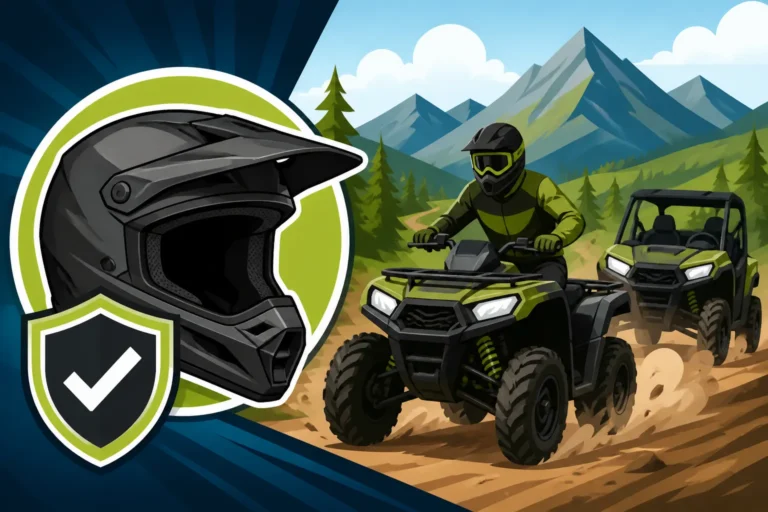
Footwear is another critical component. Tall, waterproof boots will protect your feet and ankles from splashes, mud, and stream crossings. There's nothing quite as miserable as having cold, wet feet miles from anywhere. Waterproof gloves are also a must to maintain grip and dexterity, as cold hands quickly become useless hands. And, of course, a DOT-approved helmet and appropriate eye protection (goggles or a face shield) are always essential, but especially so when dealing with reduced visibility from mud splatter and unpredictable terrain. Consider bringing a change of clothes in a dry bag for the ride home – your vehicle will thank you. Remember that staying comfortable helps you stay focused, which is crucial for safety when navigating challenging conditions.
Navigating Runoff-Affected Roads Safely and Responsibly
Riding in spring runoff conditions isn't just about having the right gear; it's about adopting a mindset of caution, respect, and preparedness. These conditions demand more from you as a rider, requiring keen observation, measured decision-making, and a solid understanding of how to manage your machine in unpredictable environments. Rushing into the unknown is a recipe for disaster.
Assessing Water Crossings and Submerged Areas
One of the biggest challenges of spring riding is encountering water crossings that were mere trickles or dry beds in dryer seasons. Never, ever, assume a water crossing is safe just because you’ve traversed it before. The depth, current, and bottom composition can change dramatically overnight. If you're unsure, or if the water looks too deep, stop. Get out and visually inspect it. If possible and safe to do so, walk the crossing to assess its depth, the firmness of the bottom, and any hidden obstacles like rocks, logs, or deep holes. Look for the shallowest and least turbulent path. Keep in mind that flowing water can create an optical illusion, making it seem shallower than it truly is.
When approaching a water crossing, identify clear entry and exit points. Sometimes, the banks leading into or out of a crossing can be steep and slippery, making it harder to maintain momentum. If the water has a strong current, or if it's deeper than the lowest point of your air intake (without a snorkel), it's best to turn back. Losing control in deep, fast-moving water can quickly become life-threatening. Remember, no ride is worth risking your life or severely damaging your machine. If you find yourself facing significant "fords and high water after runoff," you may need to reconsider your route entirely. [Fords and High Water After Runoff] can give you even more insights into managing these challenging situations.
Driving Techniques for Mud and Slick Surfaces
Once you've assessed a challenging section and decided to proceed, employ specific driving techniques to maintain control. The key is often a combination of lower gear, steady momentum, and smooth inputs. In deep mud, select a low gear (like low range on a UTV) to maximize torque and maintain a consistent, moderate throttle. Avoid sudden acceleration or braking, which can cause your tires to lose traction and dig deeper. Steer smoothly, looking far ahead to anticipate changes in terrain. Sometimes, following the existing ruts can be helpful, but be aware that ruts can also deepen suddenly or lead to an unrecoverable angle.
When encountering slick, wet rocks or slippery clay, your tires will have significantly less grip. Reduce your speed and use engine braking as much as possible to control your descent, avoiding hard braking which can lock up your tires and lead to a slide. If you feel your machine losing traction, ease off the throttle slightly and make small, deliberate steering adjustments. Riding with a group is highly recommended for spring conditions. Not only is it more fun, but having multiple machines and riders provides extra eyes for spotting hazards and crucial support for recoveries. A group can also help if you run into unforeseen mechanical issues or need to navigate through areas without reliable cell service, which is common in many Idaho backcountry areas. [Cell Service in the Idaho Backcountry] is something every rider should consider before heading out.
Minimizing Environmental Impact and Trail Damage
As riders, we have a responsibility to protect the trails and natural environments we enjoy. Spring runoff makes the ground exceptionally vulnerable to damage, so it's more important than ever to ride responsibly. Always stay on designated trails and roads. Riding around mud puddles or washouts, while seemingly harmless, can quickly widen the trail, damage fragile vegetation, and create new erosion points. "Go over, not around" is a good mantra, within reason and safety, for small obstacles. If a section is impassable, turn back rather than creating new, illegal routes.
Pack out everything you pack in, including any trash or discarded items. Even small pieces of litter can accumulate and degrade the natural beauty of the area. Be mindful of noise levels, especially when passing near cabins or populated areas, as loud exhaust can disturb wildlife and residents. Following these principles not only preserves the trails for future use but also strengthens the positive image of the OHV community. We want to be seen as stewards of the land, not as destroyers. [Trail Crews and Summer Repairs] are often volunteers who work tirelessly to fix damage, much of which can be exacerbated by irresponsible riding during sensitive times like spring runoff.
Resources and Information for Planning Your Spring Ride
Navigating the unpredictable nature of spring runoff requires more than just a well-equipped machine and good riding skills; it demands thorough planning and access to current, reliable information. Conditions can change rapidly, and what was open and clear yesterday might be a flooded mess today. Knowing where to find the latest updates is crucial for a safe and enjoyable outing.
Checking Trail Conditions and Forecasts
Before you even hitch up the trailer, your first step should always be to check the latest trail conditions and weather forecasts for your specific riding area. Idaho Parks and Recreation (IDPR) is an excellent resource for general OHV information, but for specific trail conditions, you’ll often need to look to the land management agencies. The U.S. Forest Service and Bureau of Land Management (BLM) offices that manage the areas you plan to visit are invaluable. Many district offices have websites or phone lines with recorded messages about current closures, snow depths, and runoff impacts. Local OHV clubs are also fantastic resources; their members are often out on the trails and can provide real-time updates and advice. Online forums dedicated to Idaho ATV/UTV riding are another great place to ask questions and get anecdotal reports from fellow riders.
Remember that weather forecasts aren't just about sunshine versus rain; pay attention to overnight low temperatures and daytime highs. A stretch of warm, sunny days will accelerate snowmelt and increase runoff. Conversely, a sudden cold snap might freeze muddy sections, creating slick, icy conditions that are equally dangerous. Knowing [Checking Snowpack Before a Mountain Trip] can also give you an early indication of potential runoff severity. High snowpack generally means a longer, more intense runoff period. Always err on the side of caution; if information is scarce or conflicting, it's safer to postpone your trip or choose a different, lower-elevation area.
Alternative Riding Areas During Peak Runoff
Sometimes, despite all your preparations, the high country trails are simply not ready for motorized travel due to persistent snow or severe runoff. This doesn't mean your riding season has to be put on hold! Idaho offers a diverse range of riding opportunities, and often, lower elevation areas or designated OHV parks are perfectly enjoyable in early spring. Look for trails that are known for good drainage or have a rockier base that's less susceptible to deep mud. Some designated OHV areas have extensive gravel roads and improved surfaces that can handle spring moisture much better than primitive forest roads.
If your machine is street legal and properly plated, you might consider exploring some of Idaho's numerous county roads that are open to OHVs. While these might not offer the same "trail" experience, they can provide beautiful scenic drives and access to areas where the snow has melted faster. Just be sure you understand the specific rules for riding on roads, as they differ from trail regulations. [What Idaho's $3 Restricted Use Plate Covers] is a good article to review if you're thinking of taking your machine on the road. The goal is to still get out and ride, but to do so in conditions that are appropriate for the season and safe for everyone involved.
What to Do in an Emergency
Even with the best planning and preparation, emergencies can happen, especially in the remote Idaho backcountry during challenging spring conditions. Always ride with a fully charged communication device. While cell service can be spotty or nonexistent in many areas, a satellite messenger or personal locator beacon (PLB) can be a literal lifesaver, allowing you to send emergency messages or your location to first responders. [Cell Service in the Idaho Backcountry] emphasizes the unreliability of typical phone service. A comprehensive first-aid kit is non-negotiable, and you should know how to use its contents for common injuries.
Carrying essential recovery gear, as discussed earlier, is also vital. A winch, straps, and a shovel can help you get unstuck. Know how to safely recover your machine or assist a fellow rider. If you encounter a situation beyond your capabilities, such as a major injury or being hopelessly stuck far from help, use your satellite messenger. Provide clear, concise information about your location, the nature of the emergency, and the number of people involved. Remember to stay with your machine; it's much easier for search and rescue teams to spot a vehicle than an individual trying to walk out. Knowing [What to Carry on a Remote Ride] is essential for every backcountry enthusiast.
Spring Riding Gear Checklist
Navigating Idaho's spring runoff on your ATV or UTV demands specific preparation. This checklist will help you ensure both you and your machine are ready for the wet, muddy, and unpredictable conditions.
| Category | Item | Why It's Essential | Notes |
|---|---|---|---|
| Machine Prep | Winch & Recovery Kit | For self-recovery from mud, washouts, or getting stuck. | Includes straps, shackles, tree saver, gloves. |
| Aggressive Mud Tires | Improved traction in deep mud, slick clay, and wet rocks. | Inspect tread depth and sidewall condition. | |
| Skid Plates | Protects underside from hidden rocks, logs, debris. | Check for existing damage. | |
| Snorkel Kit (Optional) | Raises air intake for deep water crossings. | Only if you plan on significant water fording. | |
| Waterproof Storage | Keeps spare clothes, tools, and electronics dry. | Dry bags or sealed boxes are key. | |
| Tool Kit & Spare Parts | For minor repairs (spark plug, belt, tire repair kit). | Mud and water can be tough on components. | |
| Fluids (Top off & check) | Engine oil, coolant, brake fluid. | Critical for preventing mechanical issues. | |
| Air Filter | Clean or replace; carry a spare. | Mud and dust quickly clog filters. | |
| Rider Gear | Waterproof Jacket & Pants | Stays dry and warm in splashes, rain, and mud. | Layer underneath with synthetics/wool. |
| Tall Waterproof Boots | Protects feet and ankles from cold water and mud. | Provides crucial grip and comfort. | |
| Waterproof Gloves | Maintains grip, dexterity, and warmth. | Cold, wet hands are a hazard. | |
| DOT-Approved Helmet | Essential head protection. | Always wear one. | |
| Goggles/Face Shield | Keeps mud, water, and debris out of eyes. | Critical for visibility. | |
| Change of Clothes | For a comfortable ride home. | Stored in a dry bag. | |
| Safety & Comm. | First-Aid Kit | Addresses injuries in remote locations. | Know how to use it. |
| Satellite Messenger/PLB | Essential for emergency communication where cell service fails. | Check battery and subscription before each trip. | |
| Navigation Device (GPS/Map) | Helps stay on track and find your way back. | Waterproof GPS or physical map/compass. | |
| Food & Water | Sustenance for unexpected delays or emergencies. | Pack more than you think you'll need. | |
| Headlamp/Flashlight | For repairs or navigation if caught out after dark. | With spare batteries. |
Disclaimer
This article is for general informational purposes only and does not constitute professional advice. Laws, prices and regulations vary by location and change over time. Consult a qualified professional for guidance on your specific situation.