Sheriff Patrols on Back-Road OHV Routes
There's a specific kind of knot that forms in your stomach when you're out enjoying Idaho's incredible backcountry trails on your ATV or UTV, and suddenly, you spot a marked vehicle or uniform. It's that instant rush of "Am I doing everything right? Did I forget a sticker? Is my exhaust too loud?" This guide aims to ease those worries by pulling back the curtain on how sheriff's deputies patrol our beloved back-road OHV routes, what they're looking for, and how you can ride confidently knowing you're fully compliant.
The Reality of Sheriff Presence on Idaho's Back Roads
Many riders imagine that once they leave the pavement behind and hit the gravel, they're entering a wild, unregulated zone. While Idaho's backcountry offers incredible freedom, it's never truly "unregulated." Our county sheriff's departments play a crucial role in maintaining safety and order, even miles from the nearest town. It’s easy to feel like they’re just waiting to write a ticket, but understanding their actual purpose can change that perception entirely.
Why Deputies Patrol Remote OHV Areas
Sheriff's deputies aren't just out there to spoil your fun; their presence serves several vital functions. First and foremost, they're responsible for public safety. This means responding to accidents, assisting stranded riders, and ensuring that trails and roads are being used responsibly to prevent conflicts between different user groups—hikers, mountain bikers, horseback riders, and OHV enthusiasts. They also enforce laws related to environmental protection, preventing illegal dumping, wildfire risks, and damage to sensitive ecosystems. Think of them as custodians of the land and the safety of its users, not just revenue generators. They're often the first on the scene for search and rescue efforts, which is a service every rider hopes they never need but is grateful for when others do.
Jurisdictional Overlap: County vs. State vs. Federal Lands
One of the most confusing aspects for many riders is figuring out who has authority where. In Idaho, you might be riding on county roads, state lands managed by agencies like Idaho Department of Lands, or federal lands overseen by the Forest Service or Bureau of Land Management (BLM). The good news is that county sheriff's deputies generally have jurisdiction across all these lands within their county boundaries. While federal rangers or state conservation officers also have enforcement powers, it's often your local sheriff's deputy you'll encounter. They work in cooperation with these other agencies, often responding to calls or conducting joint patrols. This means no matter if you're on a designated OHV trail in a national forest or a two-track county road leading to a fishing spot, the local sheriff's department can, and will, patrol it. This complex web of authority is why it’s so important to be aware of all local rules and not just federal ones.
Common Patrol Methods and Visibility
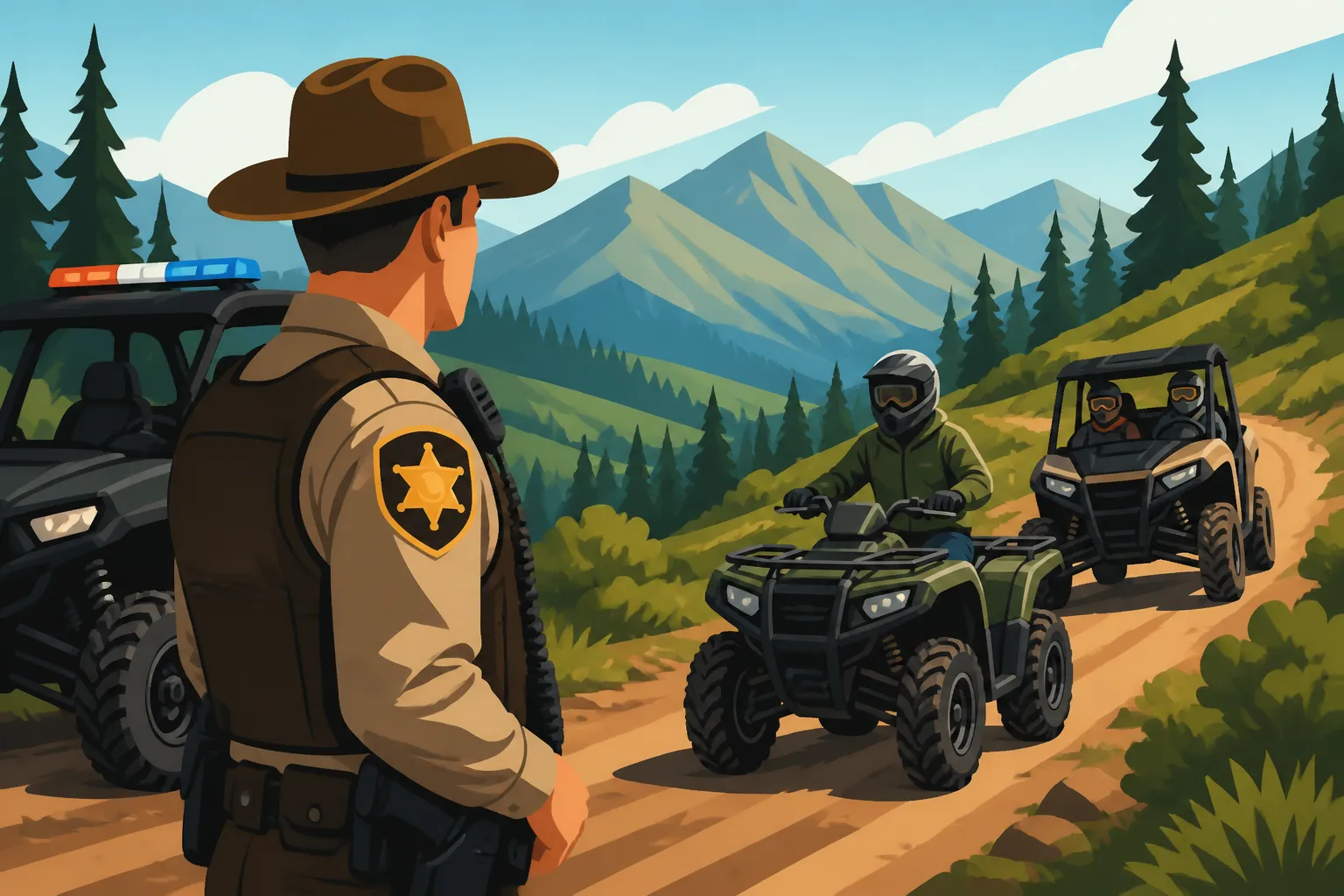
You might picture a deputy cruising down a gravel road in a patrol truck, but their methods are often more varied and less conspicuous. Deputies might be in marked OHVs, allowing them to travel deeper into trail systems. Sometimes, they're in unmarked vehicles or even on foot, especially in areas prone to specific issues like illegal camping or target shooting. They might set up at popular staging areas or intersections, observing traffic and checking for compliance. Other times, they patrol less-traveled routes, looking for signs of illegal activity or simply being present. Don't be surprised if you see a deputy on a dirt bike in single-track areas or on a side-by-side on wider trails. The key takeaway is that their presence isn't always overt; they blend in to observe and address situations as needed. They want to see responsible riding, and a quick wave from a compliant rider often means more than a long stop.
What to Expect When You Encounter Law Enforcement
Coming across a deputy on a remote road can still be a bit startling, even if you know you're doing everything right. Knowing what to expect and how to respond can make the interaction smooth, quick, and stress-free, allowing you to get back to enjoying your ride.
The Standard Stop: What an Officer Asks For
If a deputy signals you to stop, pull over safely to the side of the trail or road, turn off your engine, and keep your hands visible. Just like a stop in your car, courtesy and cooperation go a long way. The deputy will typically approach and explain why they stopped you—it could be a routine check, a specific concern they observed, or even just to offer assistance. They will usually ask for your driver's license (if you're riding on roads), proof of OHV registration or sticker, and proof of ownership (title or bill of sale). [What an Idaho OHV Sticker Costs Each Year] is a good read if you need to double-check those requirements. They may also ask to see your machine's VIN and check for required safety equipment like a spark arrester. Having these documents readily accessible, perhaps in a waterproof bag you carry on your machine, can speed up the process immensely. Accessories like storage boxes or bags from brands like SuperATV can be great for keeping your essentials organized and protected.
Common Violations Deputies Look For
Deputies are trained to spot a range of potential violations, especially those that compromise safety or impact the environment. Here are some of the most common issues they look for:
- Missing or expired OHV sticker/registration: This is a big one. Every machine operating on public land or designated OHV routes needs a current sticker. [Fines for an Unstickered OHV in Idaho] can be pretty steep.
- Improper road use: If you're on a county road, you need to meet specific requirements, including having an Idaho Restricted Vehicle Plate, lights, mirrors, and sometimes a driver's license. For more details, check out [What Idaho Requires Before You Ride a County Road].
- Underage riding violations: Idaho has strict rules regarding age, machine size, and supervision for young riders. A deputy will verify that youth are operating within legal limits.
- Alcohol or drug impairment: Operating an OHV under the influence is illegal and extremely dangerous, mirroring DUI laws for automobiles. [Idaho Alcohol Limits for OHV Operators] applies to OHVs too.
- Environmental damage: Riding off designated trails, tearing up sensitive areas, or illegal dumping are serious offenses.
- Missing safety gear: For riders under 18, helmets are mandatory. You can find more about this in [Idaho Helmet Rules for Riders Under 18].
- Unsafe operation: Reckless riding, excessive speed for conditions, or operating a machine that's clearly not roadworthy can also lead to a stop.
Your Rights and Responsibilities During a Stop
You have rights, but you also have responsibilities. It’s always best to be polite and cooperative. You are required to provide identification and documentation when asked. If you don't understand why you're being stopped or what you're being asked for, you can politely ask for clarification. You don't have to consent to a search of your personal belongings without a warrant or probable cause, but officers can typically inspect your OHV for visible violations (like a missing sticker or an obviously illegal exhaust). If you believe your rights are being violated, state so clearly and politely, and remember that challenging an officer on the side of the road is rarely productive. It's better to comply and address any grievances through the proper channels later. Remaining calm and respectful is your best approach.
Avoiding Issues and Riding Responsibly
Nobody wants to cut short a great day of riding with a citation or a lengthy stop. The good news is that most issues are entirely preventable with a little preparation and adherence to the rules. Being a responsible rider benefits everyone and helps keep our incredible trail systems open.
Proactive Steps for Compliance
Before you even load up your machine, you can take several steps to ensure a smooth, worry-free ride. First, make sure your OHV sticker is current and properly displayed. Where the sticker goes can sometimes be confusing; articles like [Where the Idaho Sticker Goes on the Plate] or [Sticker Placement on a Quad's Fender] offer clear guidance. Next, confirm that your machine is titled correctly and you have proof of ownership—the physical title or a bill of sale can be important. [Titling and Registering an ATV in Idaho] covers the essentials.
If you plan to ride on county roads, ensure you have an [Idaho's Restricted Vehicle Plate Explained] and that your machine meets all the necessary equipment requirements: mirrors, horn, headlights, taillights, and turn signals. Investing in quality accessories, perhaps from a reputable brand like SuperATV, can help ensure your machine is compliant and safe for road use. Always carry your driver's license (if applicable), OHV registration, and proof of insurance in a waterproof container on your person or securely attached to your machine. Finally, conduct a quick pre-ride inspection to ensure all lights work, tires are properly inflated, and your spark arrester is intact.
Understanding Idaho's Road and Trail Rules
Idaho offers an incredible network of trails and roads, but with that access comes the responsibility to understand the rules of the road and trail. For instance, not all county roads are open to OHVs, and those that are often have specific speed limits and equipment requirements. Crossing a state highway is usually allowed, but riding on a state highway is almost universally prohibited. [Riding an ATV on the Road in Idaho] offers a comprehensive breakdown of road use rules.
Beyond roads, be mindful of trail etiquette. Stay on designated trails to prevent environmental damage and respect private property. [Idaho Trespass Law for Riders] is strictly enforced, even in remote areas. Know the noise limits for your machine, especially near residential areas or campgrounds. Understanding these nuances isn't just about avoiding tickets; it's about being a good ambassador for the OHV community and preserving access for everyone.
Reporting Issues and Being a Good Steward
Responsible riding isn't just about following the rules yourself; it's also about being part of the solution. If you witness illegal activity—such as someone riding off-trail, dumping trash, or suspicious activity that could indicate theft—don't hesitate to report it. You can contact the local sheriff's office, Forest Service, or BLM directly. Carrying a satellite messenger in areas with no cell service can be crucial for reporting emergencies or illegal activities. Organizations like [Idaho OHV Clubs and Trail Adoption] are actively involved in maintaining trails and often work closely with law enforcement and land managers. By reporting issues and supporting these efforts, you help ensure that Idaho's back roads and trails remain open and enjoyable for future generations.
Common Misconceptions About Back-Road Patrols
The mystique around sheriff patrols on remote OHV routes often leads to a lot of speculation and sometimes outright myths. It's important to separate fact from fiction to foster a better understanding and a more positive relationship between riders and law enforcement.
"They're Just Out to Get Me": Debunking the Myth
This is perhaps the most common misconception. It's easy to feel targeted, especially when you encounter an officer far from town. However, deputies are primarily focused on maintaining public safety and resource protection. They're often responding to specific complaints (like excessive noise, reckless riding, or trespass), investigating incidents, or conducting routine checks to ensure compliance across the board. Most officers prefer to educate rather than ticket, especially for minor infractions, as long as the rider is cooperative and respectful. Their goal is generally not to "catch" people, but to ensure everyone is operating safely and legally. A positive interaction can often start with a friendly wave and a display of responsible behavior.
The "Remote Means Invisible" Fallacy
Thinking that because you're deep in the wilderness, you're beyond the reach of law enforcement is a dangerous assumption. Idaho's deputies are equipped and trained to access surprisingly remote areas, whether by specialized OHVs, trucks, or even on foot. They rely on local knowledge, communication with other agencies, and often tips from other users. With modern technology like GPS and even drones, finding specific locations is far easier than it once was. Moreover, many remote areas are still traversed by other recreationists or residents who might observe and report illegal activities. Just because you don't see a marked patrol vehicle doesn't mean you're not subject to the law.
Understanding Penalties and How They're Applied
The consequences for OHV violations can vary widely, from a simple warning to significant fines, impoundment of your machine, or even arrest for serious offenses like a DUI. For minor infractions, like a missing sticker or an easily fixable equipment issue, a deputy might issue a warning or a "fix-it ticket" with a timeframe for correction. More serious violations, especially those involving safety risks, property damage, or impairment, will result in citations and potentially court appearances. The cost of tickets can add up quickly, not to mention the potential inconvenience and legal fees. For example, not having the proper documentation can impact things like [Transferring an Idaho OHV Title After a Sale] down the line. It's far better to proactively ensure compliance than to face the penalties, which are designed to deter unsafe and illegal behavior, not simply to penalize.
When you're out exploring Idaho's breathtaking backcountry on your ATV or UTV, the last thing you want is the stress of an encounter with law enforcement. By understanding the roles of sheriff's deputies, knowing what they're looking for, and taking the proactive steps to ensure your machine and your riding habits are compliant, you can navigate those remote roads with confidence. Ride safe, ride smart, and enjoy everything Idaho has to offer!
Disclaimer
This article is for general informational purposes only and does not constitute professional advice. Laws, prices and regulations vary by location and change over time. Consult a qualified professional for guidance on your specific situation.