Cattle Guards and Open Range Signs
There’s a unique sense of freedom that comes with exploring Idaho’s vast backcountry on an ATV or UTV. But as you venture off the main highways and onto those winding county roads or Forest Service trails, you’re bound to encounter two common features that often raise questions for riders: cattle guards and open range signs. These aren’t just quirky bits of rural scenery; they represent important considerations for your safety, your machine, and your legal responsibilities. This guide will walk you through what these features mean in Idaho, how to navigate them safely, and the etiquette of sharing the land with our four-legged residents.
Understanding Idaho's Open Range and What It Means for Riders
When you see a sign that proudly declares "Open Range," it's not just a friendly welcome to vast, unfenced landscapes. It’s a legal declaration that fundamentally changes how you interact with livestock on public and, sometimes, private roads. This concept is deeply rooted in Idaho's history as a ranching state, and understanding it is crucial for any responsible OHV operator.
What "Open Range" Actually Means in Idaho
In Idaho, "open range" refers to an area where livestock owners are generally not required to fence their animals in. Instead, cattle, horses, sheep, and other domesticated animals have the right to roam freely across unenclosed lands, including public roads and highways that pass through these areas. It means that if you're driving your side-by-side down a gravel county road and encounter a herd of cows moseying across, those cows legally have the right-of-way. This is a significant distinction from "closed range" areas, where livestock owners are responsible for keeping their animals fenced in, and animals on the road would typically be considered a nuisance or a trespass. Many of Idaho's most beautiful riding areas, especially in the central mountains and high desert plains, are designated open range. It’s part of the authentic Idaho backcountry experience, but it’s also a constant reminder to stay alert.
The Responsibilities of an OHV Rider in Open Range Areas
When you operate an ATV or UTV in an open range area, the burden of responsibility largely falls on you, the operator. Your primary duty is to control your machine and avoid any collision with livestock. This isn't just about protecting the animals; it's about protecting yourself from potential legal and financial consequences. If you hit and injure or kill an animal in an open range area, you could be held liable for its value. Imagine the frustration and cost of dealing with a damaged machine and a claim for a prize breeding bull. Therefore, vigilance is absolutely key. Always anticipate that animals could be around the next blind corner, just over that rise, or even bedded down on the warm asphalt or gravel. Pay particular attention during dawn, dusk, and nighttime hours, as animals are harder to spot, and their eyes don't always reflect light effectively. Your speed should always be appropriate for conditions, allowing you ample time to react if a cow suddenly steps out onto the trail. Remember, the animals don’t know or care about your schedule; they’re just living their lives.
Navigating Cattle Guards on Idaho's Backroads and Trails
Cattle guards are an ingenious solution to a common rural problem: how do you keep livestock contained without constantly opening and closing a gate? For OHV riders, they're a regular sight, marking transitions between different types of land ownership or grazing allotments. Knowing how to approach and cross them safely is just as important as understanding open range rules.
What Exactly is a Cattle Guard and Why Are They There?
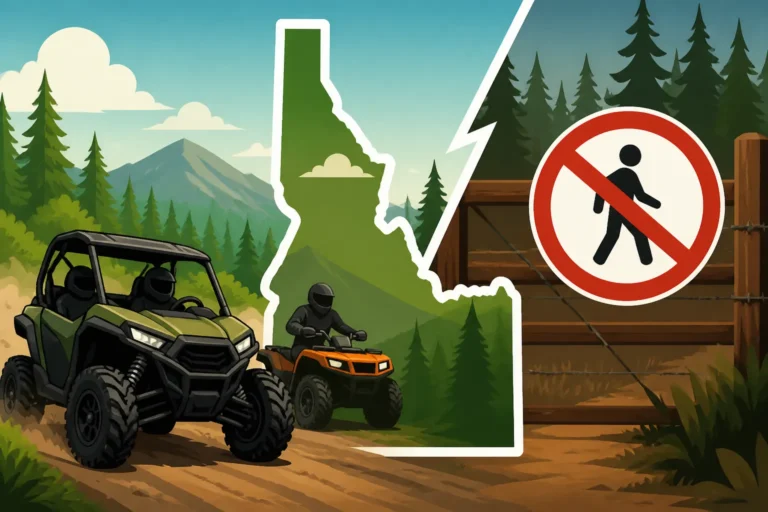
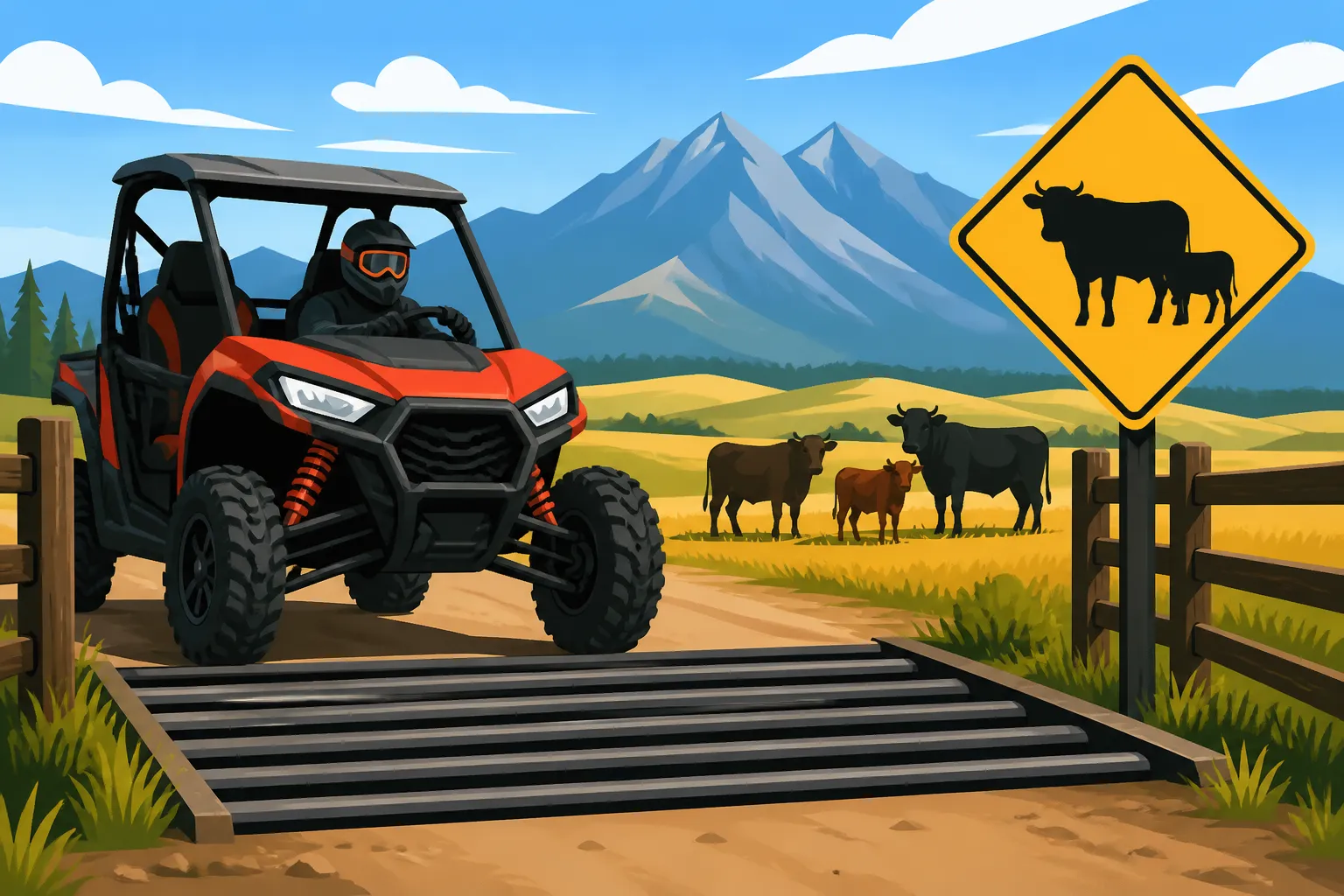
A cattle guard, sometimes called a stock gap, is essentially a series of parallel bars, often made of metal or strong timber, laid over a shallow pit in the road. The design creates a barrier that most livestock are unwilling to cross because they perceive the gaps and uneven footing as unstable or a trap. For vehicles, it's designed to be traversable, allowing you to pass without stopping, unlike a traditional gate. You’ll find cattle guards in Idaho most commonly where a public road, like a county or Forest Service road, crosses into or out of private ranch land, or where different grazing pastures within public lands are separated. They allow continuous flow for vehicles while effectively containing animals within a specific area. It's a testament to the working landscape of Idaho, where ranching and recreation often share the same pathways. They are an essential part of maintaining the integrity of livestock operations across vast tracts of land that also happen to be prime riding territory.
Safe Crossing Techniques for ATVs and UTVs
Crossing a cattle guard on an ATV or UTV requires a bit more care than simply rolling over it in a truck. The key is to slow down significantly before you reach it. Approach at a controlled, steady pace, never slamming on the brakes or accelerating aggressively while you're on the bars. For ATVs, aim to hit the bars as squarely as possible, keeping your weight centered. For side-by-sides, most machines will have tires wide enough to span a couple of bars at once, or you might find a paved section to one side that bypasses the roughest part of the guard. Always scout ahead if you can; some older cattle guards can have loose or broken bars, or the pit underneath might be filled with mud, snow, or debris, creating an unexpected hazard. A sudden jolt or loss of traction can quickly throw you off balance or damage your machine. Aftermarket products like robust skid plates or A-arm guards, which you might get from a place like SuperATV, can offer added protection against impacts from unexpected rocks or debris you might encounter around a cattle guard, though they won't prevent a mishap directly on the bars themselves. Remember, consistency and control are your best friends here. Don't rush, and be ready for the bump.
Legalities, Etiquette, and Practical Tips for Coexisting with Livestock
Riding in Idaho often means sharing the landscape with ranchers and their herds. It’s not just about what’s written in law; it’s about respect, common sense, and ensuring that everyone can enjoy and utilize these incredible public and private lands safely and harmoniously.
Idaho's Laws and Your Legal Obligations
Idaho law regarding open range is pretty clear: if you’re driving in an area designated as open range, the responsibility to avoid hitting livestock rests with you. This means that if you’re involved in a collision with an animal, you could face legal action for damages to the animal, regardless of who might typically have the right-of-way on a paved road. The law prioritizes the protection of agricultural livelihoods. This principle reinforces the need for constant awareness and cautious riding in these areas. While [Idaho Fines for Illegal Road Riding] usually pertain to things like speeding or not having proper registration, reckless operation that leads to hitting an animal could certainly escalate into more severe legal consequences, including civil liability for the value of the livestock. It's not just about obeying traffic laws, but about understanding the broader context of Idaho's rural environment.
Encountering Livestock: Best Practices and Trail Etiquette
Beyond the law, there's a certain etiquette that comes with sharing the backcountry with livestock. When you spot animals—be it a small herd of cattle, a lone horse, or even a flock of sheep—slow way down. In fact, it's often best to stop your machine completely and wait for them to move on. Never try to "herd" them with your OHV, honk your horn repeatedly, or rev your engine to scare them away. This can agitate the animals, cause them to panic and run into dangerous situations, or even provoke an aggressive response, especially from mothers protecting their young or a bull feeling challenged. Give them a wide berth. If you're on a trail and come across a gate near a cattle guard, pay attention to how it's left. If it was closed, close it behind you. If it was open, leave it open. Respecting these small details shows consideration for the landowners and ranchers. This is similar to the courtesy you'd show when [Riding Slowly Past Roadside Homes] – it’s about being a good neighbor in the backcountry.
Pre-Ride Planning and Machine Preparedness
Being prepared for the unexpected is a hallmark of any good OHV rider. When you're heading into areas known for open range or frequent cattle guards, a little pre-ride planning goes a long way. Always assume you will encounter livestock. Factor this into your estimated travel times, as you might need to stop and wait. Ensure your machine is in top shape; good brakes are non-negotiable, and tires with good tread will give you better control on varied surfaces, including the bars of a cattle guard. If you plan to ride near dawn or dusk, make absolutely certain your headlights and taillights are fully functional and clean for maximum visibility. Carrying an emergency kit is always smart for any Idaho ride, but especially in remote areas where a mishap with an animal could leave you stranded. Even if your machine is equipped with rugged SuperATV accessories for tough trails, don't let a false sense of security lead to complacency. The best protection is always a cautious, prepared, and respectful rider.
Here's a quick comparison of what "Open Range" means versus a typical "Fenced" area:
| Feature | Open Range | Fenced/Closed Range (Urban/Suburban Roads) |
|---|---|---|
| Livestock Presence | Animals are legally allowed to roam freely on roads. | Animals are expected to be contained by fences. |
| Right-of-Way | Livestock generally have the right-of-way. | Vehicles typically have the right-of-way. |
| Driver Responsibility | High. Driver must avoid collision; liable for damages. | Moderate. Driver should avoid collision; less direct liability for stray animals. |
| Fencing Requirement | No legal requirement for owners to fence animals in. | Owners are legally required to fence animals in. |
| Common Location | Rural, agricultural, and public lands (Forest Service, BLM). | Developed areas, cities, and private properties. |
[Riding an ATV on the Road in Idaho] often means transitioning through these varied landscapes, so understanding these distinctions is paramount for a safe and enjoyable journey. Always carry proof of your [Idaho Liability Insurance Minimums for Riders] when using public roads, as it can be critical in unforeseen circumstances involving accidents with livestock or other vehicles. And while riding through these areas, remember that part of the adventure is respecting the working landscape that makes Idaho so unique. Be aware of [What an Idaho Deputy Asks a Rider For] during a stop, as they'll likely expect you to know these rules of the road.
Disclaimer
This article is for general informational purposes only and does not constitute professional advice. Laws, prices and regulations vary by location and change over time. Consult a qualified professional for guidance on your specific situation.