Idaho Registration Vendors Near the Trails
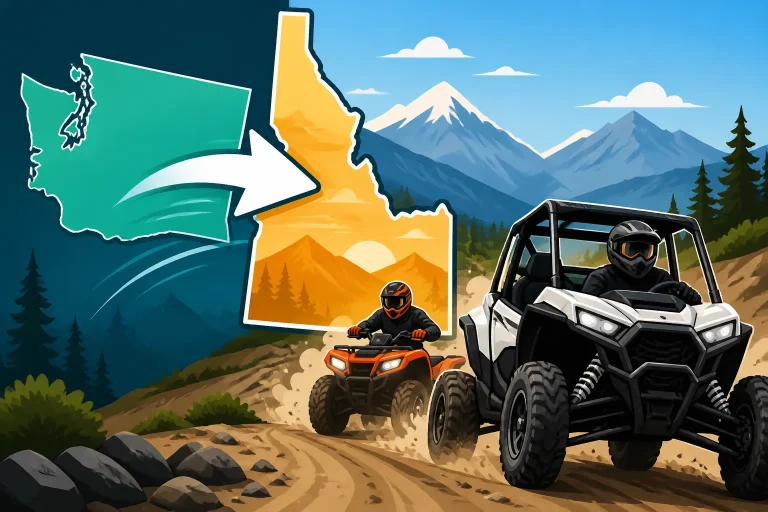
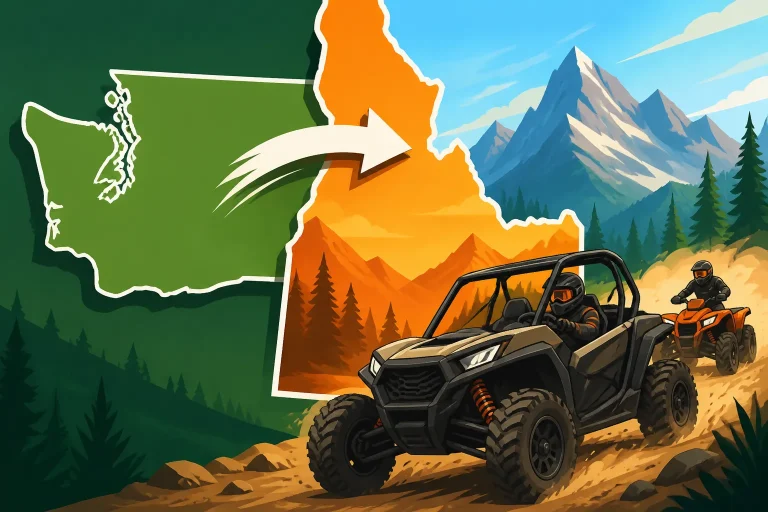
Finding an Idaho OHV sticker or permit near your route can save a long detour, but not every shop handles every kind of registration. The right place depends on whether you need a resident registration, a nonresident sticker, or title work. Here’s how to find a vendor, check what it can do, and avoid reaching the trailhead with the wrong paperwork.
What Idaho registration vendors can and cannot do
A vendor is a place authorized to handle certain Idaho OHV transactions. Depending on the location, that may include selling a sticker or permit, processing a registration, or directing you to the agency that handles your paperwork. A sporting goods store or other vendor near a popular riding area may be convenient, but its services and stock can differ from another location’s.
The first step is to identify what you actually need. Idaho’s resident registration and the sticker required for a nonresident machine are not interchangeable in every situation. Your residency, where the machine is registered, and where you plan to ride can affect which requirement applies. Idaho no longer relies on general reciprocity with neighboring states in the way some riders may expect, so an out-of-state registration alone may not satisfy Idaho’s public-land requirements. Read Idaho’s Non-Resident OHV Sticker and Why Idaho Ended OHV Reciprocity before assuming a home-state decal is enough.
A sticker or permit also does not necessarily complete every registration task. Title applications, ownership questions, and some vehicle paperwork are handled through county offices or other designated channels. A vendor that can sell a riding sticker may not be able to title a machine, resolve a VIN problem, or advise on a complicated ownership transfer. For the difference between riding authorization and vehicle paperwork, see Where Idaho Sells OHV Stickers and IDPR Service Centers and What They Handle.
| What you need | Where to start | What to confirm before you go |
|---|---|---|
| Resident OHV registration or renewal | Idaho registration channel or an authorized vendor | Whether the location processes your machine type and transaction |
| Nonresident sticker or permit | Authorized Idaho seller, online option, or service location | Which permit applies to your machine and the term it covers |
| Title or ownership paperwork | The appropriate county office or title channel | Required documents, accepted proof of ownership, and whether an appointment is needed |
| Replacement for a missing or damaged sticker | The issuing channel or an authorized service location | Whether you need the old registration details or other proof |
| Help with an unusual case | Idaho Parks and Recreation or the relevant county office | Which agency has authority to handle the issue |
A useful rule is to treat the vendor as a transaction point, not as proof that every legal requirement is met. Before riding, confirm that the machine has the correct authorization, that the sticker is displayed as required, and that the route itself is open to your vehicle. What Idaho Requires Before You Ride covers the broader pre-ride checks.
How to find a vendor near your trail
Start with the route, not just the nearest town. A store may look close on a map but sit on the wrong side of a long approach, or it may be closed when you arrive. Identify your planned staging area and the towns you will pass through, then look for an authorized seller along that actual drive.
Use Idaho Parks and Recreation’s current vendor or service information to identify possible locations. You can also check county offices and call businesses that appear on the official list. Search results and older trip reports can be useful clues, but they are not a reliable confirmation that a location still sells the permit you need. The service directory and Idaho Parks and Recreation Registration Phone Line are better starting points when details are unclear.
Check the kind of service, not just the listing
A listing that says “OHV registration” may not spell out whether the business sells nonresident stickers, handles resident registrations, or processes both. Ask specifically about your situation. For example:
- “Do you sell the Idaho sticker or permit required for a nonresident machine?”
- “Can you process a resident registration for this type of OHV?”
- “Do I need to bring the machine, or is the identification information enough?”
- “Can you replace a damaged sticker, or only sell a new one?”
- “Are you open on the day I plan to stop?”
- “Can you complete the transaction in person, or do you only provide information?”
This matters especially when traveling with a group. One shop may have the product for one rider but not the transaction needed by another. A resident’s registration situation may differ from a visitor’s nonresident permit, even if both machines are headed to the same trail.
Use trail towns as a backup, not your only plan
Popular riding areas often have nearby towns where riders can look for vendors, but don’t assume every town has a seller or that a nearby business has the exact sticker available. If a sticker is essential to your trip, arrange it before leaving home when an online option is available, or confirm a vendor directly before building your travel day around a stop. Buying an Idaho Sticker Online explains what to consider when ordering ahead.
If you are heading toward northern Idaho, the Coeur d’Alene area may be a useful place to investigate; riders headed toward Boise can check the Boise-area vendor information. The article Idaho Sticker Vendors in Coeur d’Alene can help narrow the search for that region, while Idaho Registration Vendors Near Boise is relevant for a trip starting in or passing through the capital area. Treat any local listing as a lead to verify, not a guarantee of current hours, inventory, or services.
Remote trail systems require extra planning. A vendor in the nearest town may still be a substantial drive from the staging area, and some routes have limited cell service. If you are already deep into a trip when you realize the paperwork is missing, you may not be able to resolve it conveniently. Make the permit stop part of the route plan rather than leaving it for the last minute.
Choose the right way to get your sticker or registration
There is no single best channel for every rider. A local vendor can be convenient if you need the item in hand before continuing to the trail. An online purchase can reduce errands and uncertainty, while an agency or county office may be the appropriate choice for more involved registration or title questions.
| Channel | Often useful for | Potential drawback |
|---|---|---|
| Authorized local vendor | Getting a sticker or permit while traveling through a town | Limited hours, stock, or transaction types |
| Online purchase | Preparing before travel and reducing stops on arrival | You need to understand delivery or printing requirements and allow time |
| IDPR service location | Questions about OHV programs or transactions it handles | May not be close to your trail or offer county title services |
| County office | Title and certain registration-related matters | Office procedures, hours, and responsibilities can vary |
Buying from a vendor in person
An in-person purchase is practical when you are close to a confirmed seller and need the sticker before riding. Call first, especially during a holiday weekend, shoulder season, or other busy period. Ask the seller to confirm the exact permit type rather than asking only whether it “has Idaho stickers.”
Have the details needed to identify the machine and your situation ready. The seller may need information such as the machine’s make, model, VIN or serial number, and where it is registered. Requirements can differ by transaction, so ask what to bring. Do not assume that a photograph of a number, an old registration document, or a seller’s bill of sale will be accepted in every case.
If the machine has a title issue, name discrepancy, lien, or missing ownership document, a retail vendor may not be able to solve it. Contact the agency or county office responsible for that paperwork before you travel. For title-related questions, see Documents to Bring to an Idaho Assessor’s Office and Proof of Ownership for an Idaho OHV Title.
Buying online before the trip
Online purchasing can be a good fit when you know which authorization applies and want to avoid a detour. Before submitting anything, confirm that you are selecting the correct permit for your residency and machine. Read the instructions for how the sticker or confirmation is delivered and whether you need to wait for a physical item.
Don’t treat an order receipt as a substitute for the required sticker unless the official instructions explicitly say it is acceptable. If you place an order shortly before departure, check the estimated delivery or processing details and make a backup plan. A permit that is in the mail does not help if you reach the trail before it arrives and you are required to display it.
If a vendor or official channel offers an option to print or show confirmation, follow the stated instructions exactly. Keep relevant proof with your trip paperwork, but do not rely on a screenshot alone when a physical sticker is required. Renewing an Idaho OHV Sticker Online covers the online renewal process and the checks to make before you finish a transaction.
Going to a county office or service center
A county office is often the more appropriate starting point for title and ownership work than a store that sells riding permits. Service responsibilities differ, so verify which office handles your particular request before showing up. The county where you live, the machine’s history, or the type of paperwork involved may affect the process.
IDPR service locations and county offices should not be treated as interchangeable. One may be able to answer program or sticker questions while the other handles a title application. If the task involves both, ask which part must happen first and whether you need to bring original documents. Avoid making a long drive based solely on a general online description of services.
Prepare before you leave for the trail
A quick pre-trip check can prevent a frustrating turn back. Do it before the machine is loaded or the group sets out, while there is still time to correct a paperwork problem.
- Identify the rider and machine situation. Note whether the machine is an Idaho resident machine, an out-of-state machine, rented, borrowed, or newly purchased. These details can change what authorization applies.
- Name the transaction you need. Decide whether you need a resident registration, a nonresident sticker, a replacement, a renewal, or title help. Don’t use “registration” as a catch-all when speaking with a vendor.
- Check the official channel. Look up the relevant agency or vendor information, and confirm the business’s current hours and services by phone.
- Ask what to bring. Have the machine’s identifying information and any requested documents ready. If ownership is complicated, contact the title office first.
- Confirm the term and timing. Idaho OHV registration follows a calendar-year cycle; check the current rules for when a particular sticker or permit is valid. Nonresident permits may have different terms, so confirm the expiration details for your selection. See Idaho OHV Registration Runs January to December and [When an Idaho Non-Resident Sticker Expires].
- Check delivery or pickup arrangements. For online purchases, make sure the sticker will arrive before the ride or verify the official instructions for another accepted option.
- Plan for sticker placement. Find out where the sticker must go and make sure it will be visible and secure. Placement can depend on the machine or plate setup; see Where the Idaho Sticker Goes on the Plate.
- Check the route separately. A valid sticker does not make every road or trail open. Review current route maps, closures, and local rules for the area you intend to ride.
The order of those steps matters. For example, a buyer who has not completed title paperwork may need a different conversation from a rider who simply needs a nonresident sticker. If the seller never transferred ownership correctly, buying a riding permit will not fix the title. For a used machine purchase, Buying a Used Side-by-Side in Idaho: The Paperwork and Transferring an Idaho OHV Title After a Sale help separate those tasks.
Keep paperwork accessible
Carry or store required documents in a way that protects them from rain, mud, and vibration. Keep a copy of your purchase details or registration information somewhere separate from the machine if practical. That can make it easier to contact the right office if the sticker is lost or damaged while traveling.
Do not carry a title on the trail unless an official requirement or a specific transaction calls for it. Titles are important ownership documents and can be difficult to replace. For more on what riders should keep with them, see Do You Carry the Title on an Idaho Trail? and Keeping Paperwork on the Machine.
Common vendor and permit problems to avoid
Confusing a sticker with a title
A sticker is not proof that you own the machine, and a title is not necessarily the riding authorization you need. Keep the two questions separate: Is the machine correctly documented as owned and titled, and does it have the required authorization for the ride? If you are buying or transferring a machine, address ownership paperwork before treating a sticker purchase as a complete solution.
Assuming an out-of-state registration covers Idaho
A plate or registration from another state may not satisfy Idaho’s OHV sticker requirements. Visitors should verify Idaho’s current rule for their machine rather than relying on what another state accepts. The rules can also differ between public land, private property, and road use. Montana Registrations and Idaho Trails and Oregon Riders and the Idaho Sticker provide examples of questions visitors from neighboring states should check.
Waiting until the staging area
A vendor may not be located at the trailhead, may be closed, or may not have the right service available. When the riding area is remote, there may be no dependable way to solve a paperwork issue on arrival. Buy or arrange the required authorization early enough to respond if a transaction is delayed.
Assuming the vendor can answer every legal question
Retail staff can often explain the transaction they handle, but they may not be able to interpret your particular road-access question, resolve a title dispute, or advise on every exemption. For an unusual case, contact the agency with authority over that issue. A clear description of the machine, your residency, and the planned riding area helps you get a more useful answer.
Forgetting that rules can change along the route
A sticker does not authorize every road, and the route may cross jurisdictions with different restrictions. County ordinances, land-management rules, seasonal closures, and machine-width limits can affect where you may ride. Check the map and local rules for each section, especially if your route crosses a county line or leaves one public-land system for another.
Frequently Asked Questions
Can I buy an Idaho OHV sticker near a trail?
Often, vendors are located in towns and communities used by riders, but availability and services vary. Confirm the exact permit type, hours, and current ability to sell it before making a detour.
Does a nearby vendor handle title work too?
Not necessarily. Many vendor locations focus on selling stickers or processing limited transactions. Ask whether the business handles your specific title or ownership issue; county offices may be the right place for that paperwork.
Can I rely on an out-of-state sticker?
Do not assume so. Idaho’s nonresident OHV requirements may apply even when the machine has another state’s registration. Check the current rule for your residency, machine, and planned riding area.
Is an online order enough to ride?
Only if the official instructions for your specific purchase say that the documentation you have is sufficient. Confirm whether you need to wait for or display a physical sticker before using the machine.
Disclaimer
This article is for general informational purposes only and does not constitute professional advice. Laws, prices and regulations vary by location and change over time. Consult a qualified professional for guidance on your specific situation.