Idaho Rules for a Rider Turning 16
Turning 16 can change who may supervise an Idaho ATV or UTV rider, but it does not automatically make every ride legal. Trail access, road use, safety-course rules, helmets and machine fit are separate questions. Here’s what to check before a new 16-year-old heads out, and which age-related rules may still apply.
What changes when an Idaho rider turns 16
Idaho’s under-16 supervision rule is the first change to understand. A rider who is younger than 16 must ride under the required direct supervision of an adult on public land. The rule is commonly associated with keeping the supervisor within 300 feet. Once the rider turns 16, the under-16 supervision requirement no longer applies simply because of age.
That does not mean an adult can stop paying attention. A 16-year-old may still be inexperienced, unfamiliar with a route or unable to handle a particular machine safely. A parent or other experienced rider can continue to set boundaries, check route conditions and stay close enough to help. The practical safety value of supervision does not disappear on a birthday.
Before heading out, confirm the current supervision requirements and where they apply. Public land, private property, county roads and other road types can be subject to different rules. Permission to ride on private property does not give a rider permission to use a public road or trail. For the age-based rule and its limits, see Idaho Supervision Rules and the 300-Foot Rule.
Turning 16 also does not automatically qualify a teenager to ride any machine. A large side-by-side can be difficult to control, and a quad that is too powerful or heavy for a rider can create serious risk. Consider the teenager’s experience, reach, strength and ability to operate the controls—not just their age. Youth Machine Size Rules Idaho Parents Ask About can help families think through a suitable machine.
| Question | What turning 16 means | What to check before riding |
|---|---|---|
| Adult supervision on public land | The under-16 supervision requirement generally no longer applies based only on age | Current rules for the land and route |
| Safety course | Age 16 does not automatically remove any requirement tied to the rider’s birth date or riding location | Course eligibility, completion and certificate requirements |
| Helmet | A 16-year-old is still under 18 | Helmet rules for the location and ride |
| County-road operation | A birthday does not create road access or driving privileges by itself | Road opening, machine equipment, registration and license requirements |
| Machine choice | A rider’s age alone does not show that a machine is manageable | Size, power, controls, passenger setup and the rider’s experience |
Safety courses and helmets still matter
A common misunderstanding is that turning 16 ends every youth-related requirement. It does not. Idaho’s OHV safety-course rules may depend on a rider’s birth date and where the machine will be operated, rather than whether the rider is under 16. A 16-year-old may still need to meet the course requirement. Check the current rule before the trip, and keep proof of course completion accessible if required. See Idaho OHV Safety Course Requirements for more detail.
Even if a course is not required for a particular ride, it can be useful preparation. A rider should know how to use the machine’s controls, make safe turns, manage speed, stop on uneven ground and respond if the machine tips or becomes stuck. Training is especially worthwhile when the teenager is moving to a different machine or riding somewhere with unfamiliar terrain.
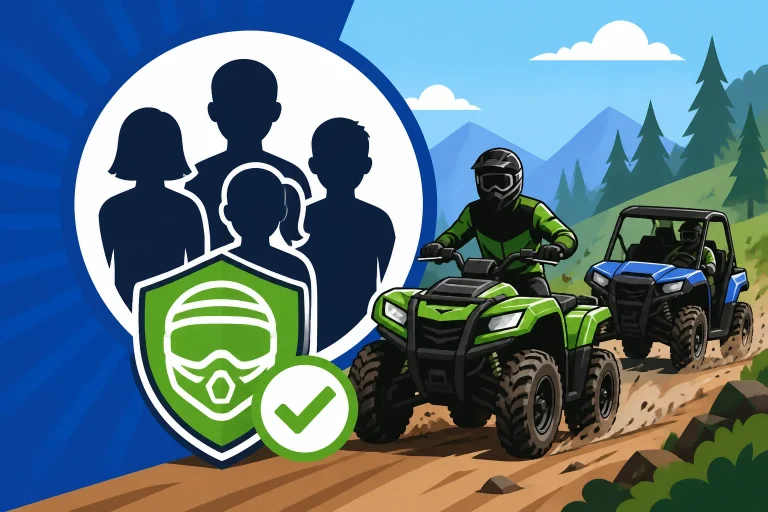
Helmet rules are another age threshold that does not end at 16. A 16-year-old is still under 18, so do not assume that the rider can leave a helmet behind. Confirm the rules for the specific location and ride, and choose a properly fitted helmet that meets the applicable standard. Eye protection matters too, especially on dusty trails or gravel roads. The relevant age rules are covered in Idaho Helmet Requirements Under 18.
A helmet is only one part of a safer setup. Before riding, check that:
- The rider can reach and operate every control without shifting into an unstable position.
- The helmet fits securely and stays in place when the rider moves.
- Goggles or another suitable form of eye protection are available.
- The machine’s passenger seat and restraints, if any, are designed for the people riding.
- The rider knows the route, turnaround plan and what to do if separated from the group.
If the teenager is still learning, start with a manageable route and modest speeds. A rider who no longer needs an adult supervisor under an age-based rule may still benefit from having an experienced person nearby.
County roads require separate checks
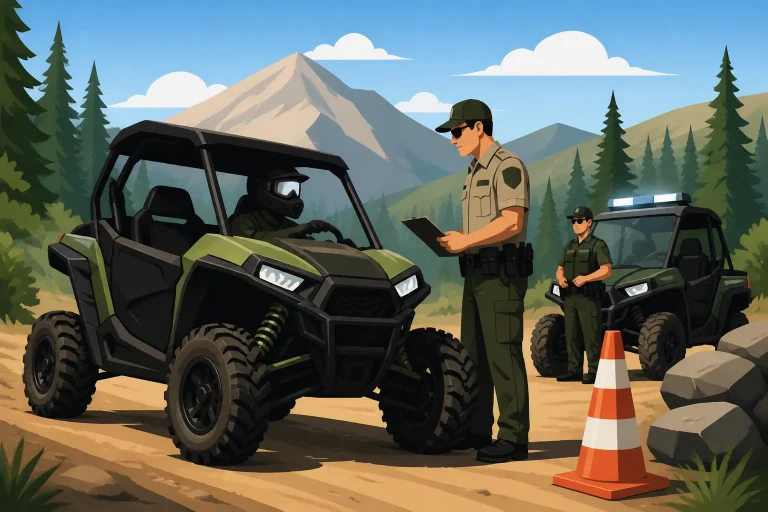
Turning 16 does not give a rider a blanket right to operate an ATV or UTV on Idaho roads. Road access depends on the road itself, the machine’s registration and equipment, and the operator’s eligibility. A route that looks like a convenient connection between two trails may be closed to OHVs or subject to local restrictions.
For county roads, check whether the specific road is open to OHVs and what conditions apply. A restricted plate or other registration does not make every road available. Local ordinances can close roads that might otherwise appear usable, and rules can change as a route crosses into another jurisdiction. What Idaho Requires to Ride a County Road explains why it is important to check the road, not just the machine’s paperwork.
Operator eligibility is a separate issue. A teenager’s driving permit or license may come with restrictions, and an OHV road ride may have requirements that differ from riding a trail. Do not assume that turning 16 gives the teenager a standard license or that a permit allows them to operate an OHV on a public road. Confirm the license rules and any limits that apply to that specific operator. See Driver’s License Requirements on Idaho Roads and Idaho Road Rules for a 15-Year-Old for related details.
Road equipment and registration also matter. Depending on where and how the machine will be operated, riders may need the appropriate sticker or plate, required lighting and other equipment, and proof of insurance. Before leaving, verify what applies to the machine and route. What Idaho Riders Need Before They Ride is a useful starting point for the basic paperwork and preparation questions.
For a teen’s first road section, a parent or experienced adult can review the route in advance and explain where to stop, how to handle traffic and what to do if conditions change. That is good planning, not a substitute for the rider meeting the legal requirements.
A practical pre-ride check for a newly 16-year-old rider
A short check before departure can prevent a common mistake: treating the birthday as the only rule that matters. Work through the details in order, especially if the ride includes both trails and roads.
- Identify where the ride will take place. Separate private land, public trails and road segments. Get permission for private property, and check access rules for public routes.
- Confirm the age-related requirements. The rider is no longer under 16, but may still be covered by requirements for riders under 18 or by rules based on birth date.
- Check the safety-course rule. Verify whether the rider needs a course or proof of completion for the planned operation.
- Review road access separately. Confirm that each county road is open to OHVs and that the rider, machine and paperwork meet the requirements. Don’t rely only on a map route or a plate.
- Match the machine to the rider. Check fit, power, controls, passenger arrangement and the rider’s ability to stop and maneuver safely.
- Pack what the ride calls for. Bring required safety gear and documentation, plus communication and basic supplies suited to the route.
If the ride includes out-of-state visitors, borrowed machines or a rental, check who is responsible for the sticker and whether the machine may use the intended route. Requirements can differ based on the rider and machine, not simply the group leader’s paperwork. A little advance checking is easier than discovering a problem at a trailhead or road crossing.
The key point is simple: turning 16 generally ends the under-16 supervision requirement, but it does not end all youth rules or create automatic road privileges. Check course and helmet requirements, verify road access and choose a machine the rider can control. When local rules or a route are unclear, confirm them with the responsible land manager or local authority before setting out.
Disclaimer
This article is for general informational purposes only and does not constitute professional advice. Laws, prices and regulations vary by location and change over time. Consult a qualified professional for guidance on your specific situation.