Idaho OHV Rules That Changed Recently
Idaho OHV rules can be confusing for visitors, especially if your home state’s registration used to count in Idaho. The key change was the end of reciprocity for out-of-state OHV registrations. Here’s what that means for stickers, road use and trip planning—and how to avoid assuming that one permit covers every place you want to ride.
The major change: Idaho ended OHV reciprocity
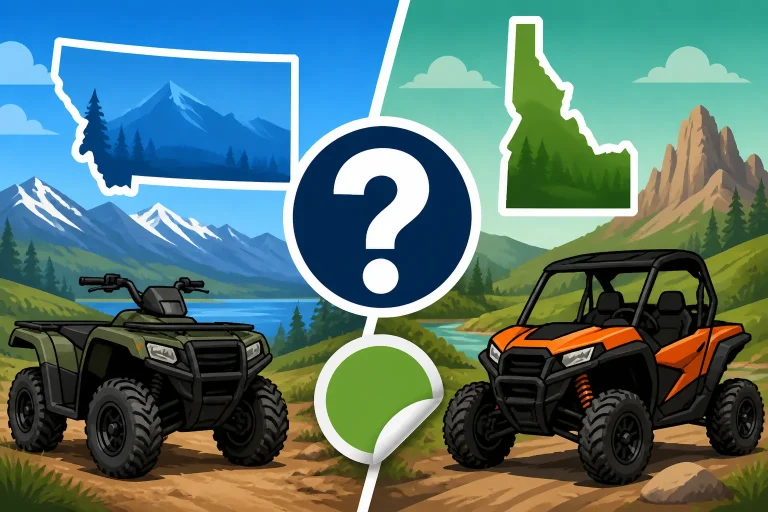
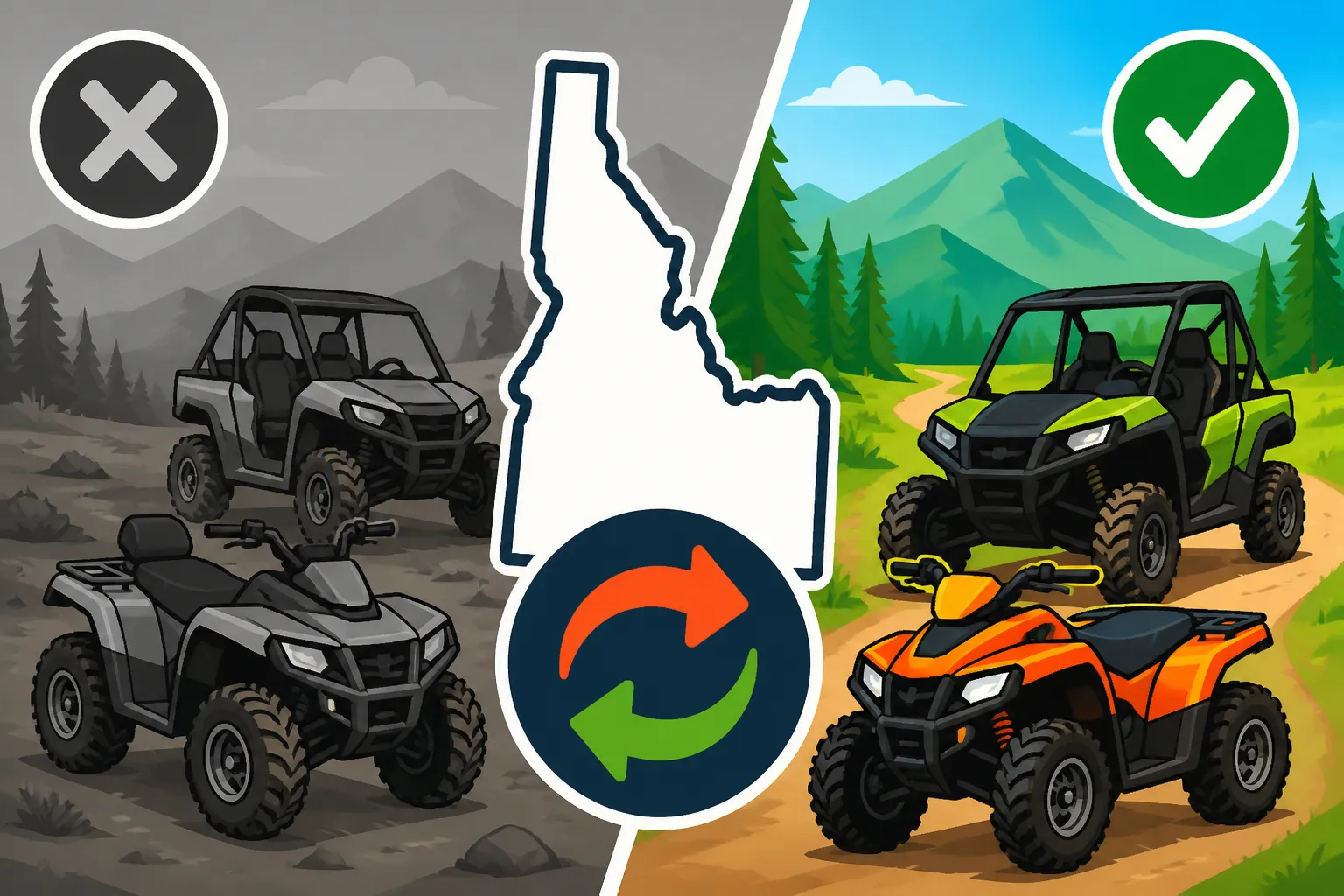
The most important change for many visiting riders was Idaho’s decision to stop honoring other states’ OHV registrations as a substitute for Idaho’s nonresident sticker. The change took effect in 2020. Before that, some out-of-state riders could rely on reciprocity agreements; now, having a home-state registration or sticker does not by itself satisfy Idaho’s nonresident OHV permit requirement.
That does not mean every machine needs the same permit in every situation. Requirements depend on details such as where you ride, how the machine is registered and whether an exemption applies. But for a typical out-of-state rider taking an ATV, dirt bike or side-by-side onto Idaho public riding areas, the practical takeaway is simple: check whether the machine needs an Idaho nonresident sticker, even if it is properly registered at home.
If you are comparing your home-state paperwork with Idaho’s rules, start with Why Idaho Ended OHV Reciprocity and Idaho’s Non-Resident OHV Sticker. These explain why a valid out-of-state credential may not replace the Idaho permit. For state-specific questions, consult Idaho Parks and Recreation, commonly called IDPR, before traveling.
The reciprocity change is separate from vehicle title and road-use rules. A sticker is not a title, and it does not automatically make an OHV legal on a public road. Likewise, a machine that has a plate or registration for road use may still need to meet the rules that apply to the particular trail or public land where you ride.
| Situation | What to check |
|---|---|
| You bring an OHV from another state | Whether Idaho requires a nonresident sticker for the places you plan to ride |
| You ride a machine registered in Idaho | Whether its Idaho registration and sticker are current and fit the intended use |
| You want to use public roads | Whether the road is open to OHVs and whether your machine and operator meet road requirements |
| You ride private property | Whether the private-land situation qualifies for an exception and whether you will also use public land |
| You rent or borrow a machine | Whether the machine already has the required Idaho permit and who is responsible for checking |
“Recently changed” can be misleading if you have not ridden in Idaho for several seasons. The end of reciprocity remains the major change many visitors need to account for, but not every rule a rider encounters is new. Age requirements, safety-course rules, road access, local closures and sticker details are separate questions. Treat them as separate checks rather than assuming a single recent update changed everything.
Who may need an Idaho sticker now
For a nonresident, the first question is not simply, “Is my machine registered at home?” Instead, ask whether you will operate an OHV in a place where Idaho requires its nonresident permit, and whether your particular vehicle or use falls within an exception. Public riding areas can include routes managed by different agencies, so check the rules for the land and route, not just the state in general.
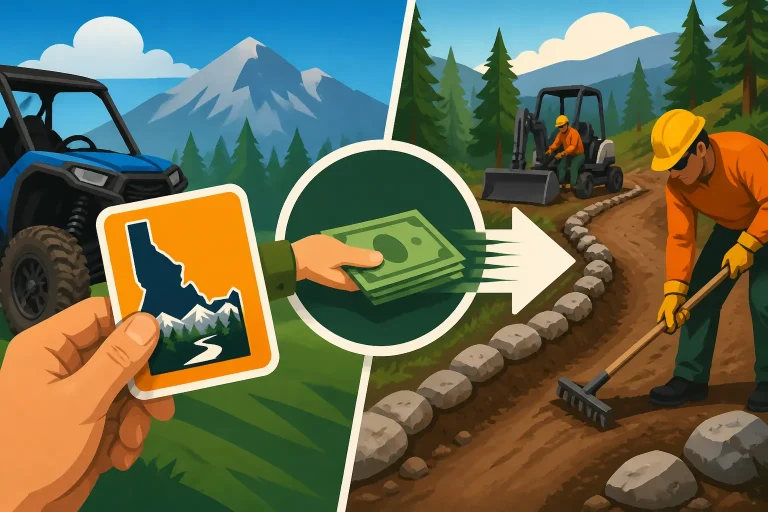
The sticker requirement can also be different for residents and visitors. An Idaho resident should confirm the appropriate Idaho registration or sticker for the machine. A visitor should check the nonresident permit rules. If you are riding more than one machine, do not assume that one sticker or one registration covers the whole group; check whether each machine needs its own credential. The related articles Idaho Non-Resident Sticker Price by Term, One, Two and Three-Year Idaho Stickers and Buying an Idaho Sticker Online Before a Trip can help you sort out the available permit options and purchase steps. Confirm current amounts, terms and availability with IDPR or an authorized seller.
A sticker is generally a machine-specific credential, not a rider’s general pass. That distinction matters if you are taking several ATVs, letting a friend operate your machine or arranging a group trip. Check the sticker on each machine and keep the supporting paperwork accessible. If you are renting, ask the shop whether the machine has the required Idaho sticker and which routes the rental agreement allows. Do not assume the shop’s registration or permit covers a different machine you bring along.
Some private-land and specialized-use situations may be treated differently from ordinary public-land recreation. But a machine’s presence on private property does not automatically settle the rules for the rest of a trip. You might leave a ranch, cross onto public land or use a road that has its own restrictions. A practical approach is to confirm the exception with the relevant authority rather than relying on a general statement that “private property is exempt.” For more detail, see Idaho Rules on Private Land and Farm and Ranch Exemptions in Idaho.
Keep these distinctions in mind:
- Sticker or permit: May be required for operating an OHV in certain Idaho settings.
- Title: Establishes ownership for machines Idaho requires to be titled; it is not a riding permit.
- Plate: May relate to road use, but a plate alone does not establish that every road or trail is open to the machine.
- Safety certificate: May be required for certain younger riders or operating situations; it does not replace a sticker.
- Road permission: Depends on the road’s status, local rules and the vehicle and operator requirements.
If you are unsure which category your machine falls into, identify its type, registration state and planned riding locations before calling or checking official information. Those details make it easier to get an answer that applies to your trip rather than a broad answer that may not fit.
What the change did not do
The end of reciprocity did not make every Idaho road open to OHVs, and buying an Idaho sticker does not grant general road access. Road use depends on whether a specific road is open under state and local rules. A county may allow OHV travel on some roads and close others. A road can also cross from one jurisdiction into another, where the rules change. Check the applicable ordinance and route information before riding between trail sections or into town. Which Idaho Roads Are Open to OHVs and Finding an Idaho County’s OHV Ordinance are useful starting points.
A restricted-use plate is not a blanket road pass either. If you plan to ride a road, make sure you understand what the plate does and does not authorize, and whether the road is open to the vehicle. Idaho’s Restricted Vehicle Plate and Road Use covers the distinction. Also review What Idaho Requires to Ride a County Road if your route includes county roads.
The reciprocity change did not remove the need to check youth rider rules. Some operating situations have requirements related to age, direct adult supervision or an approved safety course. Those rules can depend on where a young person is riding, so do not assume that a safety certificate is required—or that it is unnecessary—based only on the rider’s age. Check the current rules for the location and activity. Who Must Take the Idaho Safety Course and Idaho Supervision Rules and the 300-Foot Rule address common questions.
Nor did the change create a single set of rules for every public-land route. A Forest Service road, a Bureau of Land Management route, a county road and a designated OHV trail can have different access conditions. Seasonal closures, fire restrictions, maintenance work and local orders may affect a route even when your sticker and paperwork are in order. Check current route information shortly before leaving, particularly if the trip depends on a specific connection between roads or trails.
How to prepare for an Idaho ride
A quick pre-trip check can prevent the most common paperwork and access problems. Complete it for each machine, not just for the person organizing the ride.
- Identify the machine and its registration status. Note whether it is an ATV, dirt bike, side-by-side or another vehicle, and whether it is registered in Idaho or another state. Have the registration details available when checking permit requirements.
- Confirm the sticker requirement. If you are visiting from outside Idaho, do not treat an out-of-state sticker as a substitute. Check IDPR’s current nonresident requirements and any applicable exception. If you are riding an Idaho machine, verify that its required credential is current.
- Check the exact route. Find out whether each road, trail or connecting segment is open to your machine. Look for current land-manager notices and county restrictions; a route appearing on a map does not necessarily mean it is open.
- Check the operator requirements. If anyone riding is under 16, review the age, supervision and safety-course rules that apply to the planned route. Confirm whether helmet and eye-protection rules apply to the riders in your group.
- Ask about road equipment and insurance. If the plan includes a public road, check whether the machine needs road-use equipment, a particular plate or insurance, and whether the operator must hold a driver’s license. Trail stickers alone do not answer these questions.
- Keep proof available. Carry or store the permit and registration information in a way that is accessible during the ride. A photo may be a helpful backup, but do not assume it replaces any document an authority requires you to have.
When rules are unclear, ask a precise question: “I’m a nonresident bringing this type of machine, and I plan to ride these named routes. What sticker, registration and operator requirements apply?” That is more useful than asking whether an out-of-state ATV is “legal in Idaho,” which can mean several different things.
Plan to verify details again if your itinerary changes. A route closure, local ordinance or different land manager can alter what is allowed without changing the sticker rules. Similarly, a machine that is permitted on an OHV trail may not be eligible for a road section. Keep permit, land access and road legality as separate checks throughout the trip.
Disclaimer
This article is for general informational purposes only and does not constitute professional advice. Laws, prices and regulations vary by location and change over time. Consult a qualified professional for guidance on your specific situation.