Idaho Non-Resident Sticker Price by Term
A trip to Idaho can get expensive before you even reach the trailhead, and the non-resident OHV sticker is one cost that is easy to misunderstand. Idaho offers stickers by term, but the cheapest option is not automatically the best fit. Here’s how to compare the available terms, check the current price, and avoid buying a sticker that doesn’t cover the machine or dates you have in mind.
What the Idaho non-resident sticker covers
The non-resident OHV sticker is a permit for qualifying off-highway vehicles used in Idaho. It is generally relevant to visitors bringing their own ATV, UTV, dirt bike or other OHV to ride in places where Idaho requires the permit. It is not a general pass for every road, trail or public-land use, and it does not replace other requirements that apply to the machine or rider.
A sticker is associated with a machine, not simply with the person who paid for it. If your group is bringing several machines, don’t assume one sticker covers the whole group. Check the current rules for each vehicle and purchase a separate permit where required. A passenger does not ordinarily need a separate vehicle sticker just for riding along, but the machine itself still needs to meet applicable requirements.
It also helps to separate the sticker from road-use paperwork. A sticker does not by itself make an OHV street legal, create a road registration, or authorize travel on a road that is closed to OHVs. Road access depends on the road, local rules, the machine’s equipment and the rider’s qualifications. See What Idaho Requires to Ride a County Road if your route includes a county-road section, and Idaho’s Restricted Vehicle Plate and Road Use for the difference between a sticker and road-related credentials.
For a machine that will stay on private property, the answer may differ from a ride on public land. Get permission before riding someone else’s land, and don’t assume that permission alone settles every permit question. Idaho’s rules can depend on where and how the machine is being used. Do You Need a Sticker on Private Land in Idaho? explains why the location matters.
The sticker is also not a substitute for checking access. A permitted machine can still be prohibited from a particular route because of a seasonal closure, a local restriction, a vehicle-width limit or a land manager’s rules. If your trip involves a state park, forest road or federal public land, check the applicable access rules as well. The permit and the route answer different questions: whether the machine has the required sticker, and whether that machine may use that particular route.
How the term options compare
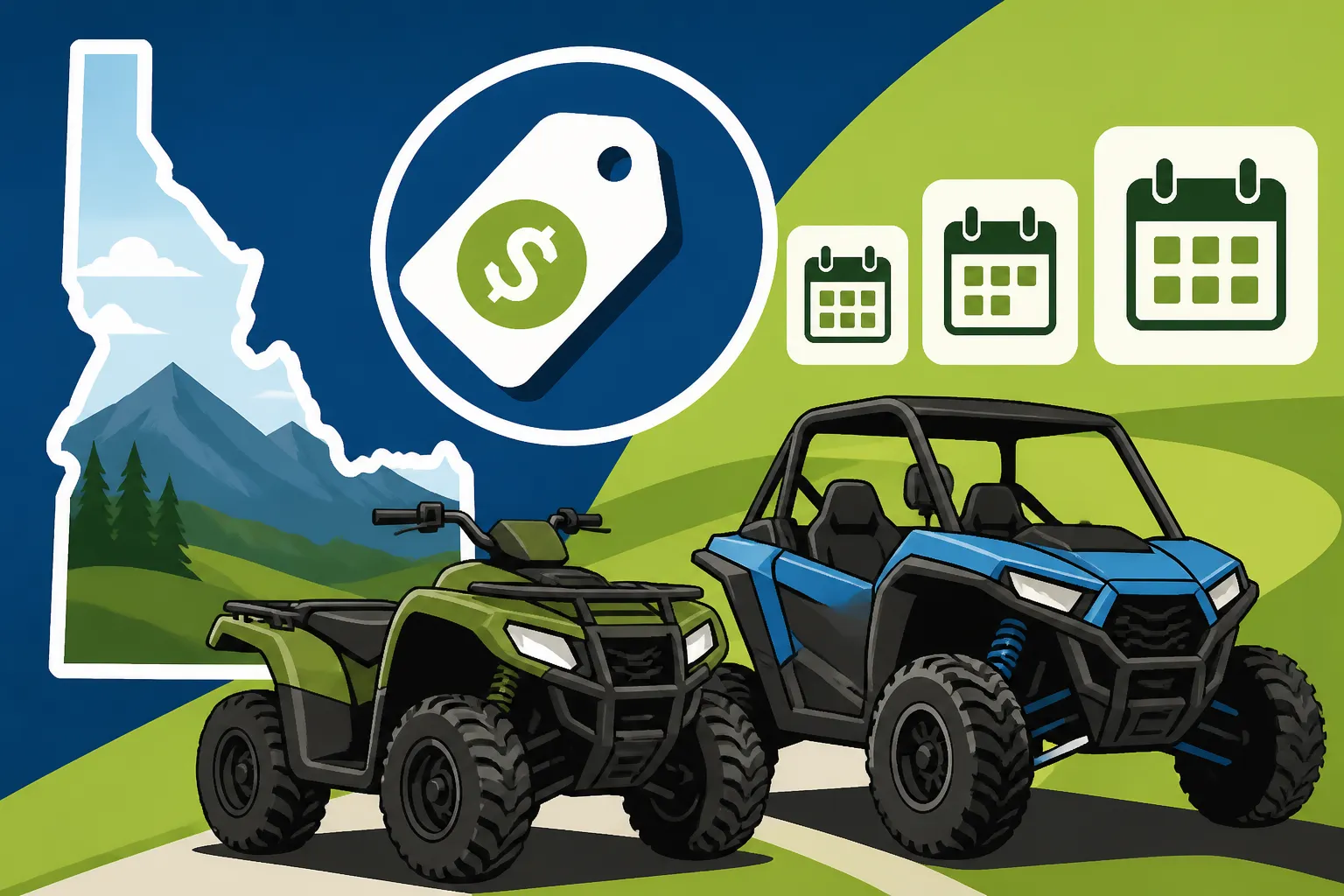
Idaho’s non-resident sticker is offered in different terms. The options commonly discussed are one-, two- and three-year stickers, but the current price and exact expiration language should always be checked with the official seller before you buy. Prices and sales details can change, and an old price shown in a saved search result, forum post or trip-planning note may no longer apply.
Use this table as a way to compare the choices, not as a price list. Check the current checkout total and the expiration date for the specific sticker being sold.
| Term | Usually makes sense when | Main trade-off | What to confirm |
|---|---|---|---|
| One year | You expect a single trip or are unsure when you’ll return | You pay again if you make another trip in a later covered period | The exact end date and whether your planned riding dates fall within the term |
| Two years | You expect to ride in Idaho in more than one season or year | It costs more at the time of purchase than the shortest term | The total price compared with buying shorter terms separately, plus the expiration date |
| Three years | You visit Idaho regularly and expect to keep using the same machine there | You pay more up front and may lose value if plans change or you sell the machine | Whether the full period fits your expected use and whether the sticker can transfer |
The important comparison is the total cost for the period you expect to ride, not just the amount due today. If you are making one trip, a longer term may leave you paying for time you will never use. If you return regularly, a longer sticker may be more convenient and could compare favorably with buying a shorter term each time. Only the current official price list can show whether that is true for your situation.
If you’re deciding between terms, write down your likely ride dates first. Then compare the sticker’s actual expiration date against those dates. Don’t rely on a casual description such as “one year” to mean exactly twelve months from the purchase date. Permit terms can be defined by a printed expiration date or a specific period, and the seller’s current rules control. [When an Idaho Non-Resident Sticker Expires] is useful if you’re trying to understand how the end date affects a trip.
A few practical details can change the value of a longer term:
- How often you visit: A second trip may make a longer term worth considering, but count only trips you realistically expect to take.
- When you buy: A sticker bought close to its expiration date may offer less useful riding time than one purchased early in its term. Check the exact date before paying.
- Whether you’ll keep the machine: If you might sell or replace it, ask whether the permit is transferable. Don’t assume a sticker follows you to a different machine.
- How many machines you bring: Work out the permit cost per eligible machine, not just the cost for the first vehicle.
- Where you’ll ride: The sticker may be required for some planned use, but it doesn’t make every route legal. Confirm access separately.
- Whether the trip could shift: A long term can be convenient, but a change in travel plans may mean you don’t get the use you expected.
If the price difference between terms seems small, consider whether the extra time is genuinely useful to you. If the longer option costs substantially more, compare that total with your likely future trips rather than treating the unused months as savings. And if you are unsure whether the sticker applies to your machine or location, settle that question before comparing prices.
For a deeper look at what the term choices mean, see One, Two and Three-Year Idaho Stickers. The useful takeaway is simple: choose based on the sticker’s actual validity dates and your expected rides, not on the term label alone.
How to find the current price and buy the right sticker
Because permit fees can change, verify the price through Idaho’s official information or an authorized sales channel before you buy. Look at the final purchase screen, not only a search snippet or an older article. The checkout total may also show a vendor or transaction charge separately from the permit price, so check the breakdown rather than assuming every displayed total is the base sticker fee. For more on that distinction, see Idaho OHV Sticker Fee and the Vendor Charge.
Use this process before you leave home:
- Confirm that your machine needs the non-resident sticker. Check the current requirements for the machine type and the places you intend to ride. Don’t infer the answer from what a friend bought for a different vehicle or trip.
- Check the term options and current price. Use an official or authorized source and note the exact expiration date associated with each option.
- Compare the full cost over your expected riding period. Include any displayed seller or processing charge, and compare realistic trip dates rather than the sticker labels alone.
- Enter the correct machine information. Follow the seller’s instructions carefully. If you’re unsure which number to use, ask the seller or the relevant agency before submitting payment.
- Keep the receipt and proof of purchase. Save a digital copy and, if you can, a paper copy. Follow the instructions for placing or displaying the physical sticker.
- Check route access separately. Confirm that the routes are open and suitable for your machine. A sticker is not permission to use a closed road or trail.
If buying online, make sure you understand whether you will receive a physical sticker by mail, receive instructions for picking it up, or need to visit a seller. Allow enough time for whichever method applies; don’t assume an order confirmation means the sticker has arrived or is displayed correctly. Buying an Idaho Sticker Online Before a Trip covers the practical timing questions, and Where to Buy an Idaho Non-Resident Sticker can help you compare purchase options.
An online marketplace listing is not the same thing as confirmation from an authorized seller. Don’t treat an Amazon listing, product photo or seller description as proof that a permit is valid for Idaho. Use official or authorized channels for the sticker itself, and confirm the seller’s status if anything is unclear. Amazon can be useful for trip supplies such as a waterproof sleeve for receipts or a small storage pouch, but those items are not permits and do not replace the required sticker.
Keep your proof somewhere you can find it without digging through luggage at a trailhead. A labeled document pouch from Amazon can help separate permit records from maps, fuel receipts and other trip papers. That’s a convenience, not a compliance measure: follow Idaho’s instructions for displaying the sticker, and keep the purchase confirmation available in the way the seller recommends.
If you’re buying for a group, sort out the machines before placing an order. Make a simple list of each vehicle and the information needed for the purchase. This reduces the chance of ordering the wrong term or entering a number incorrectly. If a friend is bringing a machine separately, don’t assume your purchase covers it; check that machine’s permit needs on its own.
Picking a term for your trip
The right term depends on how often you ride in Idaho, when you’ll be there and whether you expect to bring the same machine back. Here are common situations and a sensible way to think through them.
You’re visiting for one planned trip
Start by comparing the shortest available term with your actual riding dates. If you are traveling once and do not expect to return during the longer term, a longer option may offer little practical benefit. Before choosing, check that the sticker will still be valid for the whole trip, including any extra days you might stay because of weather or a schedule change.
If you are traveling late in a term, take particular care with the expiration date. A sticker described as “one year” may not provide a full year from the day you purchase it. Confirm the date shown by the seller and make sure it covers the final day of riding.
You expect to return
If Idaho is part of your regular riding plans, compare the longer term with the cost of buying again for each future trip. Be realistic about the likelihood of returning. A planned visit that depends on work, weather, trail access or a machine purchase may not be certain enough to justify paying more up front.
If a longer term appears to save money, check that the sticker can be used for the same machine throughout that period. Ask about transfer rules if you could sell the vehicle, replace it or change the machine you bring. The sticker’s useful value depends on the terms attached to it, not just its duration.
You’re bringing more than one machine
Price the permits per machine and add the totals. A single family trip can involve a quad, a side-by-side and a dirt bike, and the requirements may not be identical for every vehicle. Check each one separately rather than buying multiple copies of one permit based on assumption.
If several people are sharing a machine, that is different from several machines being used. A sticker tied to one vehicle should not be assumed to cover another just because the same family or group owns both. Write down each machine’s identifying information before ordering, and check the seller’s instructions for matching a sticker to the right vehicle.
You’re renting or borrowing
Ask the rental business or owner whether the machine already has the required permit and whether it covers your dates and planned use. Get a clear answer before you set off. A verbal “it should be fine” is less helpful than knowing what sticker is on the machine and whether the rental or borrowing arrangement includes responsibility for it.
For a rental, also check the contract and route restrictions. The rental company may limit where the machine can go, and an Idaho sticker does not override those limits. For a borrowed machine, clarify who is responsible for getting the permit and what proof you should carry. The relevant rules may depend on the machine and where it will be ridden, so verify rather than assuming the owner’s home-state paperwork settles the question.
Avoiding common sticker mistakes
Most sticker problems are preventable. They tend to happen when riders treat the permit as a general pass, guess at the expiration date or leave the purchase until the last minute.
Buying the wrong term: A longer sticker is not automatically the better deal, and the shortest option may be a poor fit if you return often. Compare current totals and actual expiration dates against your plans.
Assuming the sticker is valid for a full year from purchase: Read the expiration information for the specific permit. If the end date is unclear, ask the authorized seller before ordering. This matters most when you buy close to the end of a calendar or permit period.
Confusing a sticker with a plate or registration: The sticker and road credentials serve different purposes. If you plan to use public roads, check the rules for that route and machine. A sticker alone does not make a machine road legal.
Assuming one sticker covers a group: Count machines, not riders. Confirm whether each machine needs its own sticker and make sure the permit is assigned and displayed as directed.
Waiting until the trailhead: A seller may be closed, out of stock or unable to provide the purchase method you expected. Check where to buy ahead of time and leave enough margin for any mailing or processing steps. If you plan to purchase in person, confirm the location sells the specific permit you need. Idaho Registration Vendors Near the Trails can help you think through local purchase options.
Trusting old information: A saved screenshot, social media post or past receipt can be useful for planning, but it is not a reliable source for today’s fee or expiration terms. Confirm current details before each trip, especially if you have not ridden in Idaho for a while.
Thinking a permit guarantees route access: A sticker does not override seasonal closures, vehicle-size restrictions or land-manager rules. Check maps and current notices for your actual route. A machine can be properly stickered and still be on a route it may not use.
Before leaving, check the sticker’s placement instructions, make sure it is readable and keep the purchase proof accessible. You don’t need to carry every ownership paper on your body while riding, but you should know where required documents are and be prepared to show the information relevant to your machine and trip. A small labeled pouch from Amazon can keep paper documents dry in a trailer or vehicle; keep digital copies too, but don’t assume a phone image replaces any physical display requirement.
The bottom line: the “best price by term” is the current total for the term that covers the dates and machines you will actually use. Verify the fee and expiration date through an official or authorized source, then check access rules for every route. That approach is more reliable than choosing by a headline price alone.
Disclaimer
This article is for general informational purposes only and does not constitute professional advice. Laws, prices and regulations vary by location and change over time. Consult a qualified professional for guidance on your specific situation.