Riding to Lunch in a Mountain Town
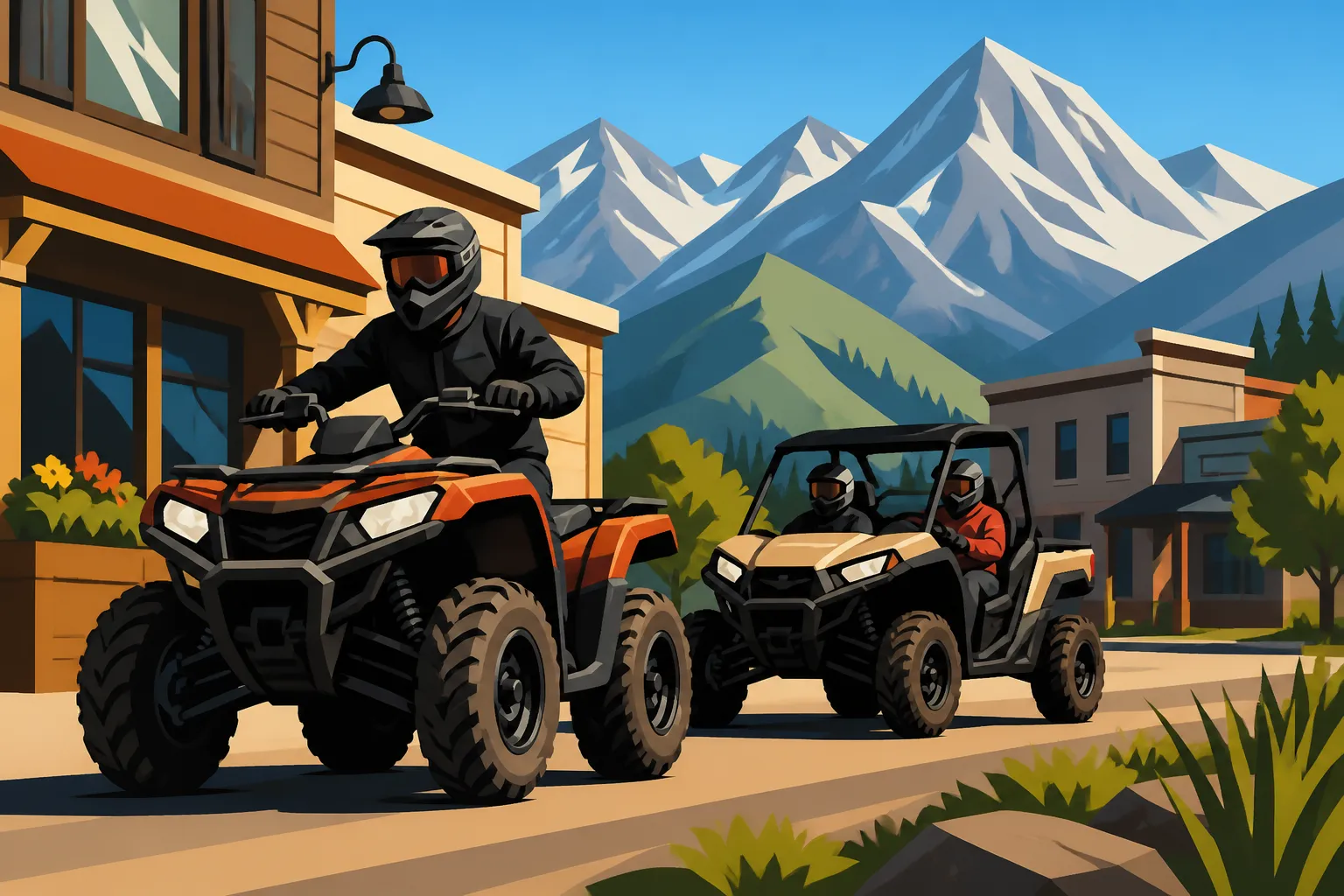
A trail ride can turn frustrating fast when lunch is the goal but the last mile runs onto a road that may not allow OHVs, or the restaurant has nowhere safe to park. This guide explains how to plan a ride into an Idaho mountain town, check the legal route, choose a practical stop, and avoid leaving your machine—or your group—in a difficult spot.
Plan the town stop before you leave the trailhead
A restaurant being close to a trail does not automatically make it reachable by ATV or UTV. The route may cross a county road, enter town streets, or pass through a section where local restrictions apply. Treat lunch as a small route-planning project, not an assumption you can sort out once you arrive.
Choose a town that fits the ride
McCall, Stanley, Salmon, and Idaho City can all be useful starting points for exploring Idaho’s mountain country, but their access, street layouts, and nearby riding opportunities differ. A route that works well for a roadside stop outside town may not provide a legal or convenient way into a downtown restaurant district. Check the specific route and destination rather than relying on a town’s general reputation as rider-friendly.
For example, a group leaving a trail near McCall might find that the nearest appealing restaurant is only a short distance away in a straight line. That does not tell you whether the connecting streets are open to OHVs, whether a permitted route reaches the restaurant, or whether parking is available. The same issue can come up around Stanley, where a restaurant may be close to a trail corridor but separated from it by a road or town boundary.
Salmon is another potential lunch stop for riders exploring the area, but the right plan depends on the roads and access points available for the day. If you are considering a town stop there, review Riding to a Restaurant in Salmon alongside the route’s local rules. For a broader sense of which communities may be practical for OHV visits, see Idaho Towns That Welcome OHV Traffic. Neither title should replace checking the route itself: access can vary from one road, season, or destination to another.
Build the full route, including the return
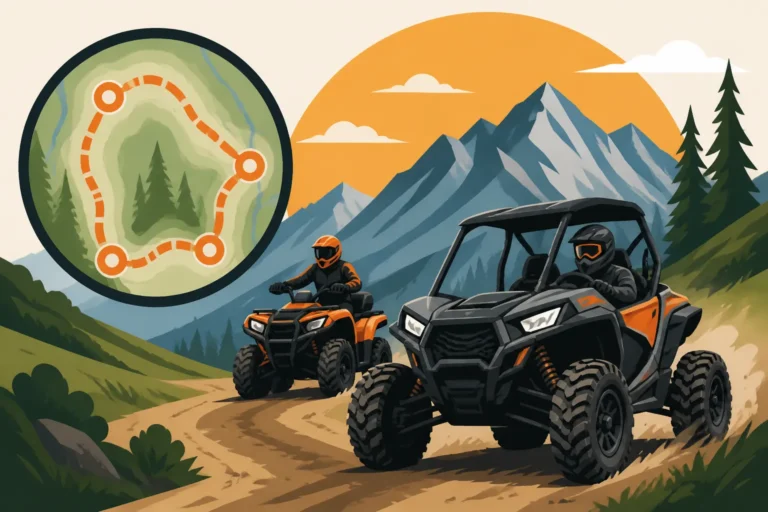
Map the ride from the trailhead to the lunch stop and back again. Pay particular attention to the transition between trail, forest road, county road, and town street. A route can be legal on public land and still become unsuitable when it reaches a local road. The final approach to the restaurant is often the part riders overlook.
Use more than one source when possible. An official motor vehicle use map can help establish which routes are designated for motorized use on the land it covers. County or city information can help clarify local road restrictions. A navigation app such as onX Offroad can help you see route connections and terrain, but do not treat a line on a screen as proof that a road is open to your machine. Compare the app’s route with current official maps and local rules.
Also plan the return trip before ordering. A group that rides into town late in the afternoon may be tempted to take a quicker road back, even if that road is not part of the permitted route. Save the legal route, note key junctions, and decide where the group will regroup if riders become separated.
Confirm access and parking before the ride
A route that reaches the edge of town is not necessarily a route to a restaurant’s door. Before setting out, identify a lawful place to stop and confirm whether the business has space for OHVs. If the restaurant’s lot is small, busy, or intended for passenger vehicles, parking a side-by-side may obstruct customers or create a safety issue.
When you call or visit a restaurant’s website, ask a practical question: “Is there a place nearby where we can legally park an ATV or UTV without blocking traffic or access?” If the answer is unclear, plan to park at an appropriate staging area and walk, or choose a different destination. A short walk is usually better than improvising a stop on a narrow shoulder.
Check the road rules before riding into town
Road access is not one statewide yes-or-no answer for every street. Idaho OHV road use can depend on the type of road, its designation, local ordinances, required equipment, and the rider’s situation. A town-to-trail route that is permitted in one place may not be permitted in another.
Verify every road segment
Before the trip, list each public road the route uses and check whether OHVs are allowed on it. Look for local restrictions as well as state requirements. A road can be closed by a local ordinance even when it appears to connect two open riding areas. The article Idaho City and County Ordinances That Close Roads is a useful reminder that local rules can change the answer at a town boundary or a particular junction.
Do not assume that a road is open because you see other machines using it, because a navigation app draws a route, or because it is unpaved. Do not assume that a restricted-use plate means every public road is available, either. Before riding to a downtown destination in McCall, for instance, research the particular streets you would use. Riding OHV Into Downtown McCall can help you think through that town-specific question, but you still need to verify the route for your own trip.
Where the route involves a county road, check What Idaho Requires to Ride a County Road. For general road-use details, Idaho Road Rules Riders Get Wrong can help surface common misunderstandings. Make sure the information applies to the exact road and machine you plan to use.
Confirm what your machine and riders need
A road route may bring requirements that do not apply in the same way on a trail. Before leaving, check whether your machine needs the relevant registration, sticker, plate, insurance, lighting, or other equipment for the roads you intend to ride. Requirements can depend on where you ride and how the vehicle is configured, so do not rely on a friend’s setup as a guide.
Think about the riders as well as the vehicle. If children or teens are in the group, verify the rules that apply to their age and supervision. Confirm that each passenger has an appropriate seat and safety equipment, and that the machine is designed to carry that passenger. A lunch stop should not become the reason a group pushes onto a road before checking whether everyone and every vehicle is ready for that ride.
A simple pre-ride checklist helps:
- Identify the exact roads between the trail and the destination.
- Check local road access and any closures or seasonal limits.
- Confirm the machine’s required registration, equipment, and coverage.
- Check rider and passenger requirements.
- Save the verified route and a backup plan.
If any part of the route is uncertain, choose a different destination or park at a lawful location and walk. It is easier to adjust plans before the group is tired, hungry, and already at a junction.
Make the lunch stop work for riders and townspeople
A successful town stop is more than finding a restaurant. It means arriving without creating a traffic problem, protecting the machine and gear, and being considerate of people who live and work there. Small details matter, especially in a compact mountain town during a busy summer day.
Pick a destination with practical access
Look at the final approach, not just the restaurant’s name on a map. Is there room to pull in without blocking a sidewalk, driveway, fire lane, or parking space? Can the group safely turn around? Will several machines arrive at once? A restaurant with a spacious lot may be a better choice than a popular spot on a narrow street, even if the latter is closer.
Call ahead if you are bringing a group. Ask whether the restaurant can accommodate the machines and whether there is a preferred place to park. Some businesses may be happy to see riders but lack room for a row of vehicles. Others may suggest a nearby public parking area or a quieter time to arrive. Respect the answer; do not leave machines where they interfere with deliveries, emergency access, or residents.
Keep the group organized when entering town. Ride slowly, follow posted signs, and use only the streets confirmed as open to your vehicle. If the route does not allow you to ride directly to the restaurant, do not take a shortcut through a parking lot, alley, private lane, or roadside shoulder. A walk from a proper parking spot is a straightforward alternative.
Secure machines and gear during the meal
Before leaving the machines, take keys and valuables with you, secure loose equipment, and avoid leaving helmets, bags, or tools where they can be easily removed. Park where the vehicle is visible and does not obstruct other people. If several machines are involved, agree on one parking area and have someone check that the group has not spread across multiple spaces.
If you use onX Offroad to keep track of the route, save the lunch destination and the return route before the ride. That can help the group regroup after lunch, particularly if riders arrive at different times or the parking area has multiple exits. Still, use local signs and official information to guide road choices; a saved line is a navigation aid, not permission to ride.
Keep the town stop low-impact
Mountain towns often have limited parking, narrow streets, and residents who share roads with tourists, delivery vehicles, cyclists, and pedestrians. Be courteous when approaching a business, avoid unnecessary engine revving, and do not idle longer than needed. Keep the group’s footprint compact and move along promptly if the parking area is filling up.
Noise deserves extra thought around homes and lodging. An engine that seems ordinary on a trail can feel intrusive on a quiet street. Follow posted requirements for exhaust and equipment, and ride at a considerate pace. If a local ordinance or sign makes the route unclear, stop somewhere safe and check rather than asking the group to continue while you decide.
| Lunch planning question | Why it matters | Practical next step |
|---|---|---|
| Is the road route open to OHVs? | Trail access does not guarantee town-street access. | Check official maps and local road rules for each segment. |
| Can the group park near the restaurant? | Large machines may not fit in ordinary parking spaces. | Call ahead or choose a suitable legal parking area. |
| Does the route work both ways? | A permitted approach may not be the best return route. | Save the return route and identify a backup before leaving. |
| Are riders and machines prepared for road use? | Road sections can involve requirements beyond trail riding. | Review registration, equipment, and rider requirements. |
| Is the stop considerate of the town? | Crowded or noisy stops can disrupt residents and businesses. | Ride slowly, park neatly, and keep engines quiet. |
Use a dependable plan for changing conditions
Even a carefully planned lunch ride can be affected by road work, fire closures, weather, seasonal restrictions, or a crowded town. Leave room in the schedule to change plans without pressure. The best route is not always the shortest one; it is the one you can ride lawfully and comfortably with the group you have.
Check conditions again on the day of the ride
Before loading up, check for closure notices and current route information. A route that appeared suitable when you planned the trip may be closed or affected by conditions on ride day. Look at official land-management and local notices, and use maps that show the correct area and route type. onX Offroad may help you review the route layout, but check important access details against official information rather than relying on an app alone.
Share the plan with the group before engines start. Point out the roads that are part of the route, where the lunch stop is, and what to do if the route is blocked. If anyone is unfamiliar with the area, give them time to save the route and understand the key turns. In remote areas, do not count on having reliable cell service at every junction.
A backup destination can save the day. If town access is unclear or parking is full, use a preselected alternative that does not require an unverified road connection. Idaho Trailhead Parking and Staging can help with thinking through where to leave a vehicle, while Fueling an OHV in an Idaho Trail Town is useful when your outing also involves a fuel stop. Keep the lunch plan flexible enough that no one feels pressured to take a questionable shortcut.
Set a realistic schedule
A town stop can take longer than expected. The group may need to ride slowly through a built-up area, find suitable parking, wait for a table, and get everyone organized again before leaving. Add time for those transitions rather than planning the ride as if lunch were a quick trail junction.
Pay attention to daylight, fuel range, and the pace of the least experienced rider. If the group is running late, shorten the ride or choose a closer stop rather than rushing on public roads. On a mountain route, a detour can add substantial time, and a familiar map distance may not reflect the speed possible on rough terrain.
For a family or mixed-experience group, agree on a regrouping location before entering town. If the group becomes separated, riders should know where to stop and wait instead of circling unfamiliar streets. A simple plan reduces stress and helps the whole outing feel like a lunch ride rather than a navigation scramble.
Know when to change the plan
If you cannot confirm that a road is open, do not ride it just to keep the lunch reservation. If a restaurant has no suitable parking, choose another place or park legally and walk. If the weather, smoke, or a closure changes the route, head back or use the alternative you checked in advance.
A good mountain-town lunch ride is built around the ride first and the restaurant second. Choose a destination that fits the permitted route, verify the road and parking details, and leave enough time to return without rushing. That little bit of preparation makes it much easier to enjoy the meal—and the miles on either side of it.
Disclaimer
This article is for general informational purposes only and does not constitute professional advice. Laws, prices and regulations vary by location and change over time. Consult a qualified professional for guidance on your specific situation.