Minimum Age for the Online Course
Parents often find two different age questions tangled together: how young a child may enroll in Idaho’s online OHV safety course, and what rules apply when that child rides. The course’s enrollment age is not the same as the legal age to operate an ATV or UTV. Here’s how to check eligibility and understand what a certificate does—and does not—change.
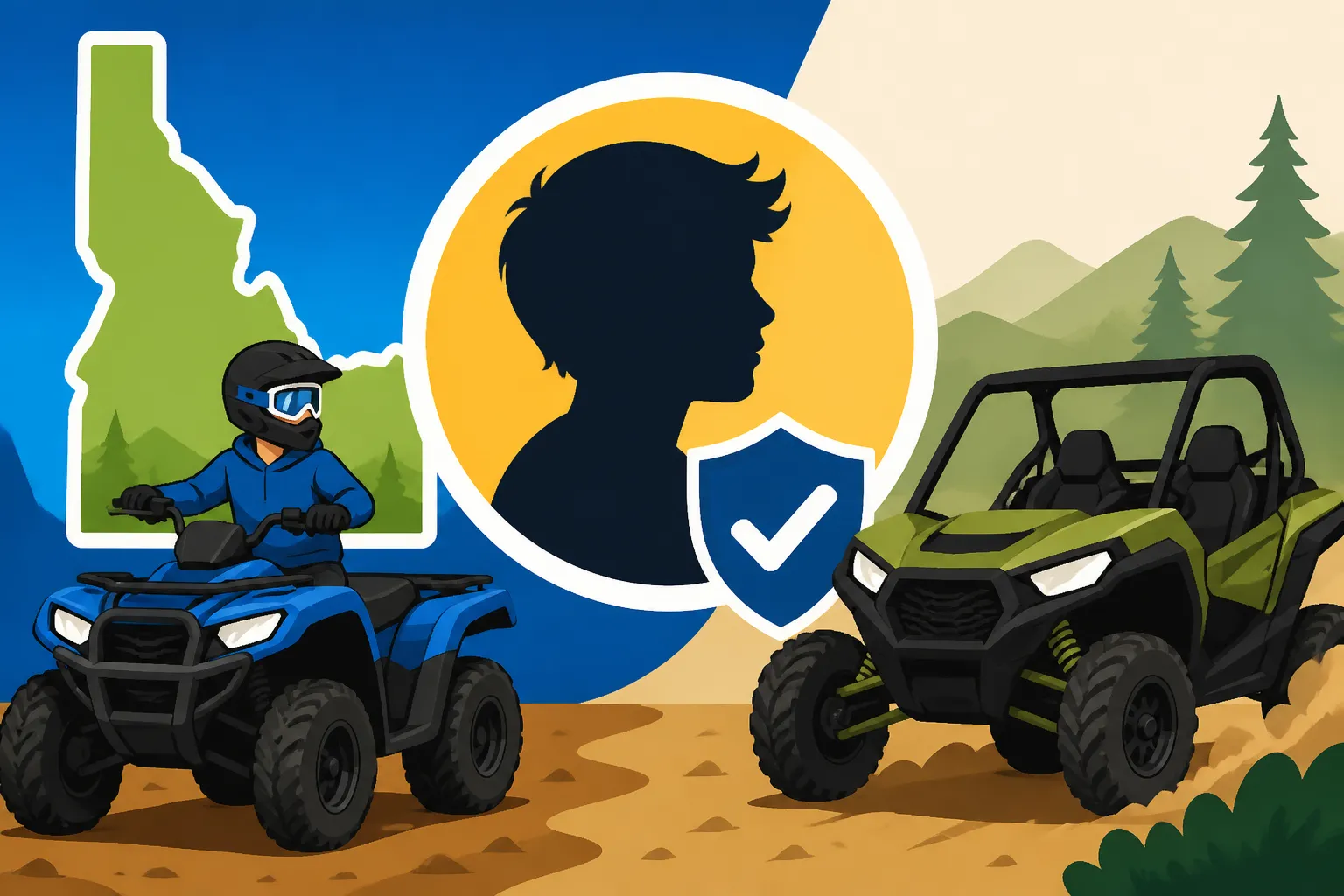
The online course is generally for riders age 10 and older
Idaho’s online OHV safety course is generally available to riders who are at least 10 years old. That is an enrollment threshold for the course, not a minimum age for all ATV or UTV riding. Before enrolling, check the current course page for its age requirement and any instructions for a parent or guardian.
The age limit matters because online courses may ask a young student to read, follow lessons, and complete knowledge checks independently. A parent can help a child understand the material, but should not take the course or answer in the child’s place. The point is to make sure the rider—not just the accompanying adult—understands basic safety practices.
Course access can depend on the approved provider and the way its enrollment process is set up. If a child is younger than 10, do not enter a false birth date or assume that another provider’s course will count. Ask Idaho Parks and Recreation or the course provider which options are currently accepted. The state’s Idaho OHV Safety Course Requirements explain the broader course rules, while Taking the Safety Course Online can help with the enrollment and completion process.
| Question | Practical answer |
|---|---|
| What is the usual minimum age for Idaho’s online course? | Generally 10 years old; confirm the current provider’s enrollment rule before starting. |
| Is that the minimum age to ride an OHV? | No. Course eligibility and the rules for operating a machine are separate. |
| Does a parent’s certificate count for the child? | No. The child who rides should complete the course and earn their own certificate when required. |
| Does passing the course make every road or trail legal? | No. Route access, supervision, machine suitability, and other rules still apply. |
| What if the child is below the course age? | Check with the state or approved provider rather than guessing or using an unapproved course. |
If the online registration page lists a different minimum, use the current official enrollment instructions rather than relying on an old screenshot, a retailer’s description, or an informal answer in a riding group. A course certificate is most useful when it is recognized for the specific Idaho requirement the family needs to meet.
Course age is different from the age to ride
A child being old enough to take an online course does not automatically mean the child may operate every ATV or UTV, on every route, without an adult. Idaho’s rules for younger riders depend on the riding situation, and road use can involve requirements beyond the basic safety course.
Parents should think about four separate questions:
- Can the child enroll in the course? Check the age set by the approved online provider.
- Can the child physically and safely operate this machine? The rider must be able to reach and use the controls and fit the machine properly.
- What supervision applies? Idaho has youth supervision rules for certain riding situations. A certificate should not be assumed to remove every supervision obligation.
- Is this particular route open to this rider and machine? Public-road rules and trail restrictions are separate from course completion.
For more on the general age framework, see Idaho Age Rules for Riders Under 16 and Who Must Take the Idaho Safety Course. Those topics help clarify who may need the course, but the details still depend on where and how the machine is being used.
Younger children need an appropriate machine and close oversight
An online course teaches concepts; it cannot make an oversized or poorly fitted machine safe for a child. Check the owner’s manual for the manufacturer’s minimum age guidance and operating limits. Consider whether the rider can sit securely, steer, brake, reach the controls, and understand how the machine responds before allowing practice.
A youth model is not automatically a good fit simply because it is marketed to children. A child’s size, coordination, judgment, and experience all matter. Avoid carrying a child on a machine that is not designed for a passenger, and do not treat an adult-sized ATV or UTV as a training machine just because an adult is nearby.
Parents can reinforce course lessons with supervised practice in a controlled area. Start with stopping, turning, throttle control, and recognizing hazards at a pace the child can manage. Keep practice away from roads, steep slopes, traffic, and unfamiliar terrain until the rider has the skills and the route is permitted.
Supervision rules still matter
Idaho’s rules include supervision provisions for young riders in some circumstances. The details can depend on the setting and the rider’s status, so verify what applies before leaving a staging area. The Idaho Supervision Rules and the 300-Foot Rule offer a focused explanation of that issue.
A safety certificate should not be treated as a universal substitute for adult involvement. Even if a certificate affects a particular supervision requirement, a young rider may still need an adult’s judgment, coaching, and help responding to changing trail conditions. Supervision is also a practical safety measure: a child can have trouble, become separated, or encounter a hazard that course material cannot anticipate.
What the certificate proves—and what it does not
A course completion certificate shows that the named student completed an approved safety course. It is not an ATV or UTV license, does not establish that a child is ready to operate a particular machine, and does not grant permission to ride wherever motorized travel is restricted.
Keep the certificate accessible, especially when the child rides on public land or where an officer or land manager may ask about youth-course compliance. Follow the course provider’s instructions for saving or printing proof of completion. For practical details, see Carrying a Safety Certificate. If the document is misplaced, Getting a Duplicate Safety Certificate may help identify the proper replacement process.
The certificate also does not settle these questions:
- Whether the child may ride a specific machine under Idaho’s age and supervision rules.
- Whether the machine is suitable for the child’s size and experience.
- Whether a road or trail is open to that type of OHV.
- Whether the machine has the required registration or sticker.
- Whether the child may operate on a road, where additional rules can apply.
A course may cover safe operation, but compliance is broader than passing its lessons. Before a trip, check the route’s access rules and the machine’s paperwork. If the family plans to use a county road, do not assume that course completion alone makes the ride lawful. Idaho Rules for Riders Under 16 on Roads and Can a 12-Year-Old Ride an Idaho Forest Road? address situations where road or forest-road rules may change the answer.
Check the course and certificate before the ride
A little preparation avoids last-minute confusion. Use this sequence:
- Confirm the child’s age against the current online enrollment page. If the course page is unclear, contact the provider or Idaho Parks and Recreation.
- Make sure the course is accepted for Idaho’s requirement. A course offered online is not necessarily an approved substitute.
- Have the child complete the lessons themselves. A parent can assist with access and reading support, but the student should demonstrate their own understanding.
- Save the completion record. Keep an electronic copy and, if useful, a printed copy with the machine’s other documents.
- Check the riding plan separately. Confirm supervision, route access, machine suitability, and registration or sticker requirements.
If the child is younger than the online course’s minimum age, the answer is not to skip safety preparation. Use age-appropriate instruction and adult supervision, and ask the relevant state office what options are available for that child’s circumstances. Do not assume a course from another state, a private training session, or a parent’s certificate satisfies an Idaho requirement unless the state confirms that it does.
Road riding and trail riding are not the same
Families sometimes take a course because they want a child to ride on a forest road or connect a trail to a town. That plan needs its own check. A course certificate does not open a road that is closed to OHVs, and it does not by itself satisfy the equipment or operator rules for a road section.
The rules for a young rider can differ between an off-road trail, a public forest road, and a county road open to restricted vehicles. Road use may require additional conditions, including supervision, equipment, or other qualifications. Check the exact route rather than relying on a map line or another rider’s past experience. See What Idaho Requires to Ride a County Road for the road-use basics, and Idaho’s Forest Road Rule and the Safety Course for the relationship between course completion and forest-road riding.
Before setting out, confirm:
- The route is currently open to the machine.
- Any age, supervision, and operator requirements are met.
- The ATV or UTV is permitted on that route, including any width or vehicle-class limits.
- The machine has the required registration or sticker.
- The child has suitable protective equipment and can communicate with the adult.
A sensible rule for parents is to treat the course as one part of readiness, not as a permission slip. A child who meets the enrollment age and passes the course may still need supervision, a smaller machine, more practice, or a different route. When course eligibility or a specific youth rule is unclear, verify it before riding rather than trying to resolve it at a trailhead.
Disclaimer
This article is for general informational purposes only and does not constitute professional advice. Laws, prices and regulations vary by location and change over time. Consult a qualified professional for guidance on your specific situation.