Can You Ride an OHV on an Idaho State Highway?
It's a common dilemma for anyone exploring Idaho's vast trail systems: you're out on your ATV or UTV, enjoying the backcountry, and suddenly you hit a paved road. It might be a short stretch, a bridge, or just a crossing, and you wonder if you can just motor on down the highway for a bit to connect to the next trail. The answer, unfortunately, is almost always a resounding "no" when it comes to Idaho State Highways. This guide will dive deep into why these routes are generally off-limits, what limited exceptions exist, and how you can legally navigate Idaho's incredible landscapes without running afoul of the law.
The Blunt Truth: Idaho State Highways Are Off-Limits to OHVs
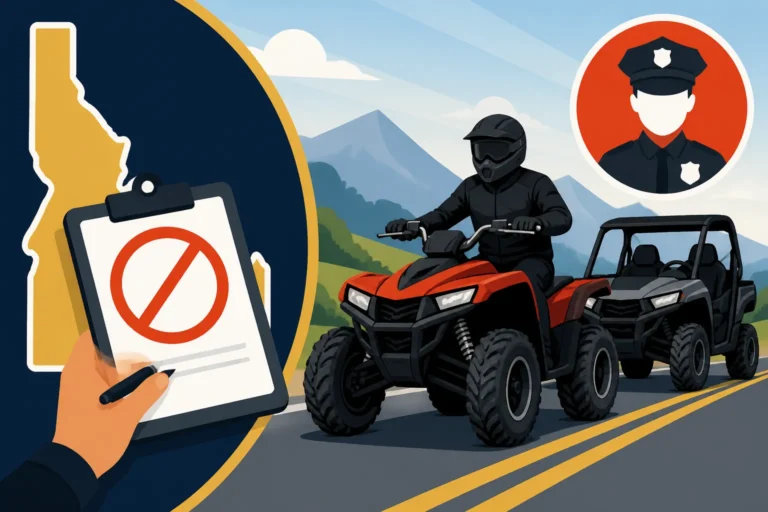
Let's not beat around the bush here. For the most part, you cannot ride an off-highway vehicle (OHV) on an Idaho State Highway. This isn't just a suggestion; it's a rule enforced for very good reasons. Many riders, especially those new to Idaho or visitors from out of state, often assume that if a machine is "street legal" with a restricted plate, it can go anywhere a car can. This is a crucial misconception that can lead to tickets, accidents, and even impoundment of your machine.
Idaho's state highway system is designed for high-speed, high-volume traffic. These roads are often multi-lane, have higher speed limits, and are traversed by everything from passenger cars to large semi-trucks. An ATV or UTV, while incredibly capable off-road, is simply not built for these conditions. They lack the speed, the crash protection, and often the full suite of safety features (like advanced braking systems or crumple zones) that are standard on highway-legal automobiles. Imagine trying to merge onto a highway with an 80 mph speed limit on a machine that tops out at 55 mph, or even less for some utility models. It’s a recipe for disaster, not just for you but for everyone else on the road.
Why the Hard No? Understanding Idaho's Intent
The regulations against OHVs on state highways are primarily rooted in safety and traffic flow. Idaho's transportation authorities prioritize the safe and efficient movement of traditional highway traffic. Integrating slower-moving, less visible OHVs into this mix would create significant hazards. Lawmakers recognize that while OHVs are a vital part of Idaho's recreational and working culture, there are specific environments where they are appropriate and others where they simply aren't.
Think about the dynamics of a highway. You have vehicles traveling at high speeds, often needing to pass slower traffic. An OHV might struggle to maintain the minimum speed required to keep up with the flow, forcing other drivers to make sudden lane changes or brake maneuvers. This increases the risk of collisions significantly. Furthermore, OHVs have a different turning radius and braking characteristics compared to cars, which can be unpredictable for other drivers on a high-speed road. The intent behind these rules is to keep you safe and prevent traffic accidents that could easily be avoided by using designated OHV routes or local roads. It's not about stifling your fun; it's about protecting lives.
The Distinction Between State Highways and County Roads
This is where a lot of confusion comes in, and it's important to understand the difference. Idaho has a massive network of roads, including federal highways (like I-15 or US-95), state highways (marked with an Idaho shape on the shield, like ID-55 or ID-21), and then a sprawling system of county roads and Forest Service/BLM roads. [What Idaho Requires to Ride a County Road] is very different from what it takes to ride a state highway.
- State Highways: These are managed by the Idaho Transportation Department (ITD). They are generally the main arterial routes connecting towns and regions, often paved, and designed for higher speeds and volumes. As a rule, OHVs are prohibited here, with very specific exceptions for crossing, which we’ll discuss next.
- County Roads: These are maintained by individual counties. They vary wildly in condition, from paved arteries in urban areas to remote, unpaved two-track roads deep in the mountains. Many counties do allow OHV use on their roads, especially unpaved ones, provided your machine meets certain requirements (like having a restricted plate, insurance, and appropriate lighting). However, this isn't universal; some counties or specific county roads may still be closed to OHVs. It's crucial to check local ordinances. You can often find information on [Idaho City and County Ordinances That Close Roads].
- Forest Service/BLM Roads: These are typically unpaved roads within federal lands. OHV use is generally allowed on these unless specifically posted otherwise, provided your machine has the necessary state sticker. These are often the lifeblood of Idaho's OHV trail access.
The key takeaway is that the "rules of the road" change dramatically depending on which governmental entity manages that particular stretch of asphalt or gravel. Just because you can ride a county road doesn't mean a state highway is open to you.
Navigating Intersections and Crossings: Where Limited Access is Allowed
While riding on an Idaho State Highway is largely forbidden, there are specific, limited circumstances where you might be allowed to interact with one. These are typically for the purpose of connecting trails or accessing services, and they come with very strict rules. It's not a free pass to travel miles down a highway; it's about making a brief, controlled maneuver.
Making a Quick Dash Across a Highway
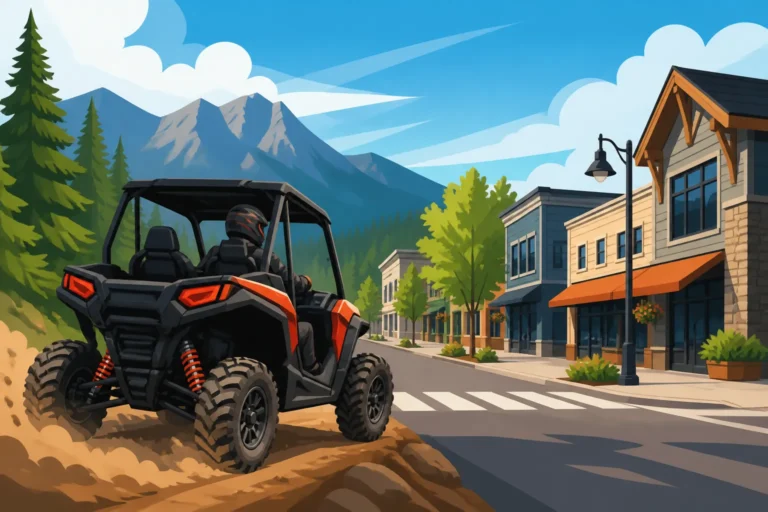
Imagine you're on a county road that dead-ends into a state highway, and directly across the highway, another county road or a forest trail begins. In many cases, Idaho law allows you to make a direct, perpendicular crossing of a state highway. This is often the most common interaction OHV riders will have with these major arteries.
The rules for [Crossing an Idaho Highway on an OHV] are very specific:
- Perpendicular Crossing: You must cross the highway at approximately a 90-degree angle to minimize time spent on the pavement. You cannot turn and drive down the highway, even for a short distance, before turning off. It's a straight shot across.
- At a Legal Intersection: Crossings must occur at a designated intersection, usually where a legal public road (like a county road or forest road) meets the state highway. You can't just pick a random spot to dart across.
- Come to a Complete Stop: Before entering the highway, you must come to a complete stop, just like any other vehicle.
- Yield to All Traffic: You must yield the right-of-way to all vehicles on the state highway. Do not proceed until it is absolutely safe to do so, with ample time and distance from oncoming traffic. These roads are fast, and misjudging speed can be catastrophic.
- Minimum Time on Pavement: The goal is to spend the absolute minimum amount of time on the state highway. Get across safely and efficiently.
It's critical to treat these crossings with extreme caution. The difference in speed between your OHV and highway traffic is substantial, making it difficult for other drivers to react to your presence. Always assume other drivers don't see you. Equipping your UTV with a good set of mirrors and bright LED lighting, perhaps from a brand like SuperATV, can significantly improve your visibility and awareness during these critical maneuvers.
The Rules for Riding Parallel to a Highway Shoulder (and why you can't)
Another common question is whether you can simply ride on the shoulder of a state highway, parallel to the traffic, to cover a short distance. The answer, almost without exception, is no. Idaho law generally prohibits OHVs from traveling on the shoulder of a state highway.
While shoulders might seem like a safe buffer from high-speed traffic, they are not designed for continuous travel by OHVs. Shoulders are often narrower, can have debris, and are intended for emergency stops, disabled vehicles, or sometimes for bicycles where designated. They are not an alternate route for off-highway vehicles. Trying to ride the shoulder introduces several risks:
- Sudden Entry onto Pavement: If the shoulder narrows, disappears, or becomes impassable, you might be forced to merge suddenly into high-speed traffic, creating a very dangerous situation.
- Visibility Issues: Drivers on the main roadway might not expect to see a slow-moving OHV on the shoulder, especially if there's a slight grade or curve. Their focus is on the travel lanes.
- Emergency Vehicle Access: Shoulders need to be clear for emergency vehicles like ambulances, fire trucks, or police, as well as for tow trucks or maintenance crews.
- Legal Ramifications: Riding on the shoulder is still considered operating on the state highway in a prohibited manner and can lead to the same fines and penalties as riding in the travel lanes.
The spirit of the law is to keep OHVs entirely separate from the state highway environment unless absolutely necessary for a direct crossing. If you find yourself needing to travel parallel to a state highway, the legal and safe approach is to find an alternative route using county roads, forest roads, or designated OHV trails. This might mean a longer, more circuitous journey, but it ensures your safety and compliance with the law.
What to Do Instead: Legal Road Riding Options in Idaho
Given the restrictions on state highways, you might be thinking, "So, where can I ride my OHV on a public road in Idaho?" The good news is that Idaho offers extensive opportunities for legal road riding, primarily through its county road network and the use of the Idaho Restricted Vehicle Plate. It just requires a bit of planning and understanding of the local rules.
Embracing the County Road Network
Idaho's counties have a significant amount of discretion over OHV use on roads they maintain. Many rural counties actively encourage OHV tourism and have opened large portions of their road systems to machines with the proper registration. These are often the gravel and dirt roads that spiderweb through mountains, forests, and agricultural lands, providing incredible access to the backcountry.
To legally ride on county roads, several conditions typically apply:
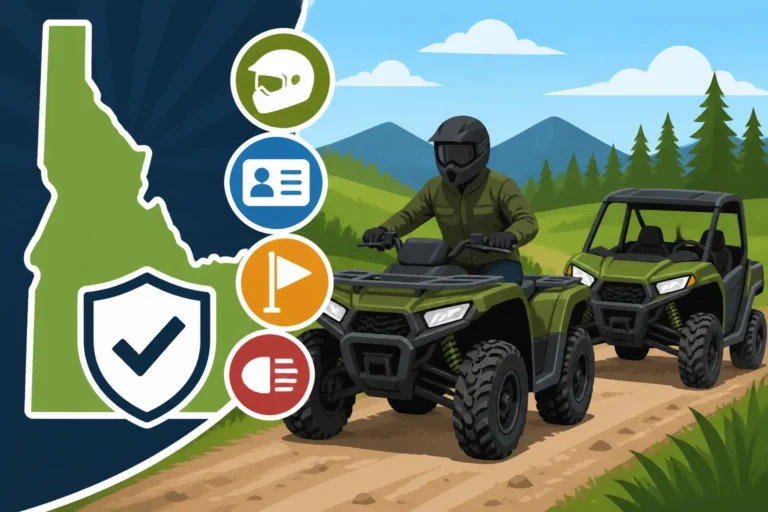
- Idaho OHV Sticker: Your machine must have a current Idaho OHV sticker, which indicates you've paid the annual registration fee.
- Idaho Restricted Vehicle Plate: For most county road riding, you'll need an [Idaho's Restricted Vehicle Plate Explained]. This is a special license plate that designates your OHV as having met certain requirements for limited road use. It's distinctly different from a standard vehicle license plate.
- Insurance: You'll need liability insurance, just like a car. This protects you and others in case of an accident.
- Driver's License: The operator must possess a valid driver's license.
- Machine Requirements: Your OHV must meet certain equipment standards, including headlights, taillights, brake lights, mirrors, a horn, and a spark arrester. Many aftermarket accessories, such as a full SuperATV turn signal kit or side mirrors, can help ensure your machine is compliant.
- Local Ordinances: Always check with the specific county's sheriff's office or website for their local OHV ordinances. Some counties might have specific roads or areas closed to OHVs, or particular rules about hours of operation.
Riding county roads allows you to connect trail systems, access small towns for fuel and food, and explore scenic routes that might not be part of the designated OHV trail network. It's a fantastic way to extend your riding adventures.
The Idaho Restricted Vehicle Plate: Your Key to More Roads
The Restricted Vehicle Plate (often called an "R-plate" or "Restricted Use Plate") is foundational to legal OHV road riding in Idaho. This plate signifies that your OHV meets the state's minimum requirements to be operated on certain public roads. It's important to understand that having an R-plate does not make your OHV street legal in the same way a car is. It grants specific, limited privileges. [Idaho Plates That Begin With R] are distinct and immediately signal to law enforcement what type of vehicle you are operating.
The R-plate essentially says: "This OHV has passed basic safety requirements (lights, horn, mirrors) and is permitted on county roads where allowed by local ordinance, but is still restricted from state and federal highways (with very few exceptions for crossing)."
Without an R-plate (and the associated insurance and driver's license), your OHV is generally limited to designated OHV trails, Forest Service/BLM roads (unless explicitly signed otherwise), and private land. If you plan to ride anywhere on Idaho's public road system beyond designated trails, getting an R-plate is usually a necessary step. It opens up a huge network of connectors and scenic routes that would otherwise be off-limits. Make sure all your required equipment, like a sturdy horn or DOT-compliant mirrors, is in working order – many riders choose durable, off-road specific components, perhaps a robust SuperATV windshield that also allows for wiper attachment, to meet these requirements while also being trail-tough.
Planning Your Route to Avoid State Highways
Successful OHV road riding in Idaho requires good route planning. You can't just jump on Google Maps and expect it to guide you correctly, as those maps often don't differentiate between OHV-legal county roads and off-limits state highways.
Here are some tips for planning:
- Motor Vehicle Use Maps (MVUMs): For federal lands (National Forests, BLM lands), always consult the relevant MVUM. These maps clearly designate which roads and trails are open to which types of vehicles and are the definitive guide for federal land use.
- County Websites/Sheriff's Offices: Check county resources for local OHV ordinances and maps. Many counties that welcome OHVs will have this information readily available online.
- OHV Apps and GPS: Utilize mapping apps designed for off-road use, like onX Offroad or other GPS units that allow you to download trail and road data. These often show OHV-specific routes and can help you identify county roads versus state highways.
- Paper Maps: Don't underestimate the value of a good old-fashioned paper map, especially in areas with no cell service. Combine a good state highway map with county-level maps for the areas you'll be riding.
- Trailhead-to-Trailhead Connectivity: Look for routes that use a combination of designated OHV trails and OHV-friendly county roads to connect different trail systems without ever touching a state highway. This is where most of Idaho's "backcountry street legal" riding happens.
It might take a bit more effort to plan a route that completely avoids state highways, but the peace of mind knowing you're riding legally and safely is well worth it. There are countless miles of legal roads and trails waiting to be explored without risking a run-in with the law on a major highway. [Riding an ATV on the Road in Idaho] can be an amazing experience if you know the rules and stick to them.
Consequences of Disregarding the Rules
Ignoring the prohibitions on riding your OHV on an Idaho State Highway can lead to a range of unpleasant and potentially dangerous outcomes. It's not just a minor infraction; it can have serious legal, financial, and safety consequences. Law enforcement, including Idaho State Police and county sheriffs, take these rules seriously to protect both OHV riders and the general public.
Potential Fines and Citations
If you're caught riding your OHV on an Idaho State Highway where prohibited, you can expect to receive a citation. The specific penalties can vary depending on the county and the discretion of the issuing officer, but they are generally not trivial. [Idaho Fines for Illegal Road Riding] can range from several hundred dollars for a basic violation to much more significant amounts if other infractions are involved (like reckless driving, no insurance, or no valid driver's license).
Beyond the immediate fine, there can be other consequences:
- Impoundment: Your OHV might be impounded, meaning you'll have to pay towing and storage fees in addition to any fines. This can quickly add up to a substantial sum.
- Points on Your Driving Record: Depending on the nature of the violation, it could result in points being added to your driver's license, potentially affecting your insurance rates.
- Future Riding Restrictions: Repeated offenses could lead to more severe penalties, possibly even affecting your ability to operate an OHV or other vehicles in the future.
- Legal Fees: If you choose to contest the ticket, you might incur legal fees on top of everything else.
It's a costly gamble that simply isn't worth taking. The Idaho Department of Parks and Recreation, along with local law enforcement, works hard to educate riders about where they can and cannot go. Ignorance of the law is generally not considered an excuse, so it's your responsibility to know the rules before you ride.
Safety Risks on High-Speed Roads
While fines are a clear deterrent, the most severe consequence of riding an OHV on a state highway is the inherent safety risk. These roads are simply not designed for OHVs, and OHVs are not designed for them.
Consider these critical safety factors:
- Speed Differential: As mentioned earlier, OHVs are significantly slower than highway traffic. Even if your side-by-side can hit 60 mph, maintaining that speed for long periods is taxing, and most riders won't achieve it safely, especially on varied terrain or with passenger/cargo loads. Cars often travel at 70-80 mph on Idaho highways. The difference in speed dramatically reduces the time other drivers have to react to your presence.
- Visibility: OHVs are smaller and sit lower than many cars and trucks. They can be harder to see, especially in blind spots, around curves, or in adverse weather conditions. While you might have bright LED lights on your SuperATV rig, they can still be easily overlooked by a driver scanning for larger vehicles.
- Lack of Protection: In the event of a collision with a car or truck, an OHV offers very little occupant protection. There are no crumple zones, airbags, or substantial steel frames designed to absorb high-speed impacts. Injuries in such collisions are often severe or fatal.
- Handling Characteristics: OHVs have a higher center of gravity, shorter wheelbase, and different suspension tuning compared to road vehicles. They are more prone to rollovers on paved surfaces, especially during evasive maneuvers at highway speeds. Sudden braking or sharp turns on asphalt can be dangerous.
- Road Debris: Shoulders and travel lanes of highways often accumulate debris from other vehicles (tire fragments, metal, rocks). This can be a significant hazard for OHV tires, leading to blowouts or loss of control.
It’s easy to think, "It's just a short stretch, what's the harm?" But statistics show that many serious accidents happen precisely because of these "short stretches" or momentary lapses in judgment. Prioritizing safety means sticking to the roads and trails where your OHV is truly meant to be ridden. There are plenty of incredible places to explore in Idaho without putting yourself or others at undue risk on a state highway. Stay safe, know the rules, and enjoy the vast, legal riding opportunities Idaho has to offer.
Disclaimer
This article is for general informational purposes only and does not constitute professional advice. Laws, prices and regulations vary by location and change over time. Consult a qualified professional for guidance on your specific situation.