Adult Supervision Requirements in Idaho
Adult Supervision Requirements in Idaho
When a child rides an ATV or UTV in Idaho, it is not enough for an adult to be somewhere nearby. The rider’s age, where the machine is being used, the adult’s qualifications and the distance between them can all matter. This article explains the 300-foot supervision rule, how it works in practice, and what it does not replace.
The basic supervision rule
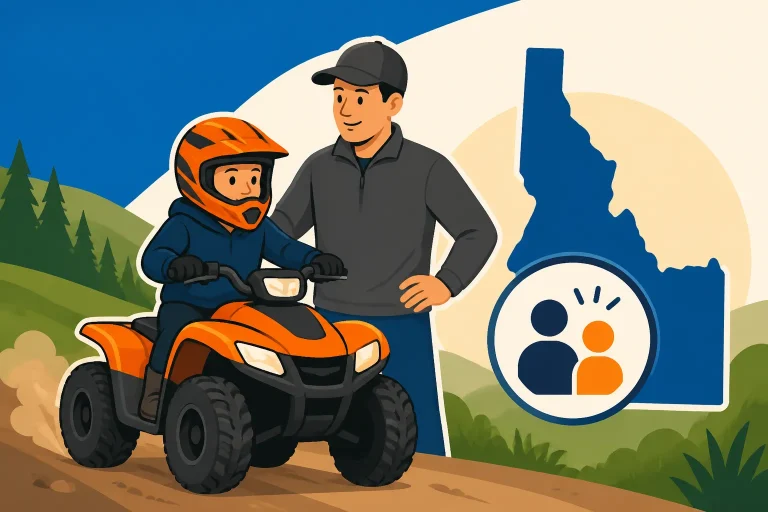
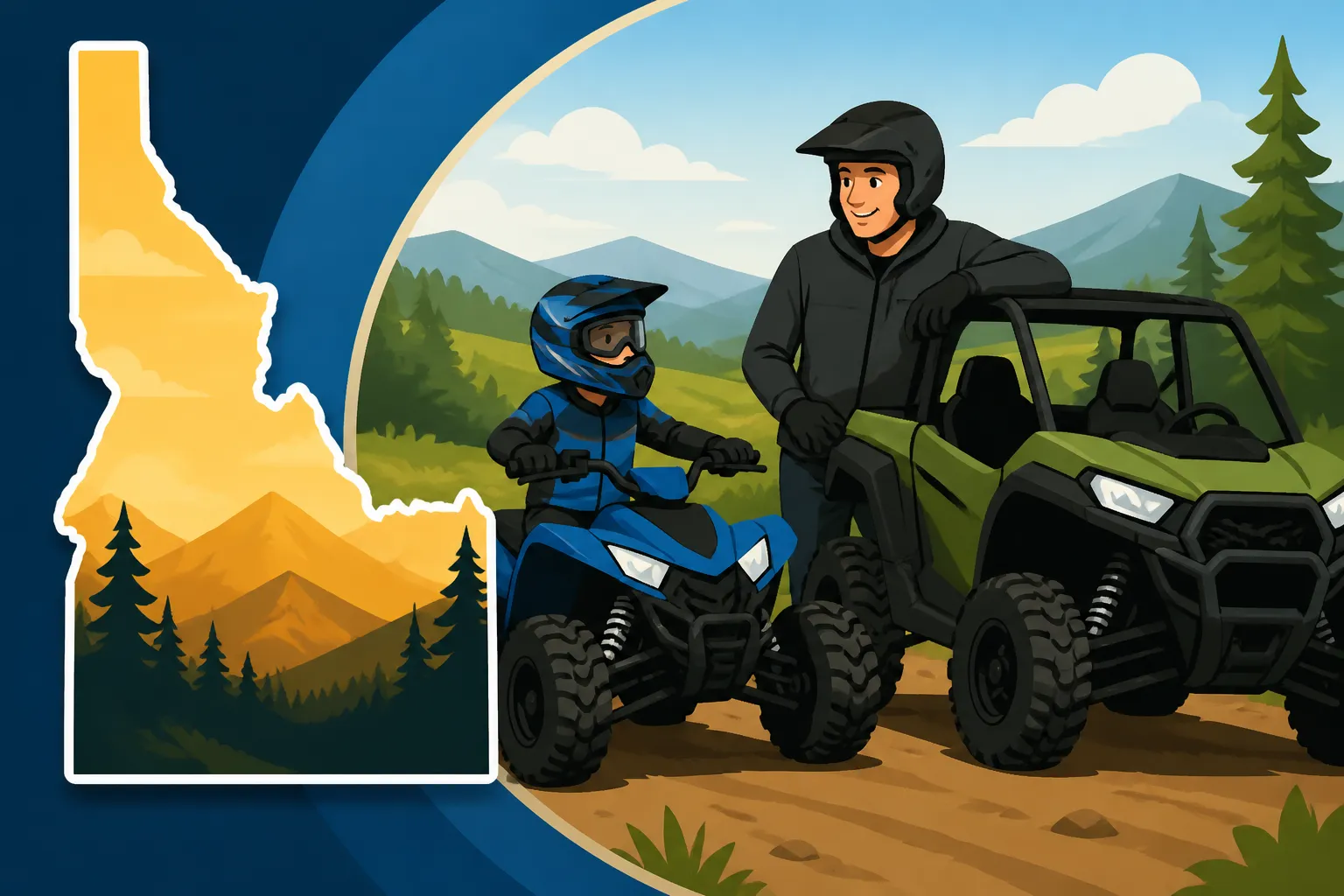
Idaho’s youth supervision requirements are especially important for riders under 16 operating an off-highway vehicle on public land. In general, the young rider must be supervised by an adult who is at least 18, has a valid driver’s license and stays within 300 feet. The adult should be able to observe and respond to the rider, not merely be somewhere in the same riding area.
That distance is a maximum, not a target. A supervisor who is technically within 300 feet but cannot see the rider or intervene promptly because of terrain, trees or other obstacles may not be providing meaningful direct supervision. The safest approach is to stay close enough for clear communication and keep the child in view whenever conditions allow.
The rule is about adult supervision, not about whether a child is skilled enough to operate a particular machine. A parent’s presence does not make an oversized or unfamiliar ATV appropriate for a child. Nor does supervision automatically satisfy separate requirements for a safety course, registration or sticker, road use, protective equipment, passengers or access permission.
For an overview of the broader age rules, see Idaho Age Rules for Riders Under 16. The practical details of distance and line of sight are also covered in Idaho Supervision Rules and the 300-Foot Rule and The 300-Foot Supervision Distance.
Who counts as the supervising adult?
Plan on the supervisor being an adult who is at least 18 and holds a valid driver’s license. Being a parent or guardian does not, by itself, satisfy those qualifications. Likewise, an older sibling who is still a minor is not a substitute for a qualified adult supervisor.
The adult is responsible for staying close enough to supervise throughout the ride. That means keeping track of the child’s location and riding conditions, not simply meeting the child at the trailhead or checking in after the ride. If the adult leaves the area, becomes separated or can no longer monitor the rider, the child should stop until qualified supervision is restored.
An adult’s driver’s license is a qualification for supervising; it does not grant the adult permission to ride anywhere. The supervisor still needs to follow the rules that apply to the adult’s own machine and route.
What does “within 300 feet” mean in practice?
Think of the distance as a boundary that should be easy to maintain, rather than something to test. A straight stretch of open ground may make it possible to stay together at a little more distance. A winding trail, steep slope, heavy vegetation or a noisy machine may call for much closer spacing.
The adult should be able to recognize when the young rider is having trouble and get to them quickly. If the adult cannot see the rider around a bend or over a rise, stop at a safe place and regroup. Do not let the child continue out of sight while assuming the separation is still within the permitted distance.
A distance estimate can be hard to judge on a long trail. Ride together, choose clear stopping points and agree that the child will wait at turns and junctions. Do not use a phone, GPS display or map as a replacement for close supervision.
Where the rule applies and what it does not settle
The riding location matters. Requirements for public land may not be identical to rules for private property, a road open to OHVs or a designated riding area. Before a trip, identify the type of land and route you plan to use rather than assuming that the 300-foot rule is the only relevant requirement.
Public land and designated riding areas
Public land can include places where riders encounter trail signs, access restrictions, seasonal closures and route-specific rules. A young rider who is supervised may still be prohibited from using a route that is closed to their machine or class of vehicle. A trail’s width, allowed vehicle type and current closure status matter independently of age.
Check maps and restrictions before setting out. For federal land, use the applicable route information and confirm that the route is open to the machine you plan to ride. Reading an Idaho Motor Vehicle Use Map explains why a route’s appearance on a map is not, by itself, proof that motorized use is allowed.
A sticker, permit or registration requirement is also separate. Supervision does not make an otherwise unstickered machine legal to use where a sticker is required, and it does not provide permission to ride on closed land. Visitors should check requirements for each machine and each rider, including Idaho Permit Rules on Public Land.
Private property
Private property can have different rules from public land, but “private” does not automatically mean “anything goes.” The owner’s permission matters, and other legal requirements may still apply. A private road may also connect to or function as part of a public route, so do not rely on land ownership alone to decide which rules govern a road.
Parents should also consider the risks of riding on private ground. A field or ranch road may have gates, vehicles, livestock, ditches, irrigation structures or changing work conditions. Keep the child within safe view and set clear limits on where they may ride.
For more detail on the distinction, see [Idaho Rules on Private Land]. If the ride is part of ranch work, separate exceptions or requirements may be relevant; Idaho Rules for Ranch Work Machines covers that context.
County roads and other road riding
A county road is not simply another trail. A road may be open to OHVs only under specific local rules, and a restricted vehicle plate or other equipment requirements may apply. A supervisor staying within 300 feet does not make a closed road open or waive road-riding requirements.
Before taking a young rider onto a road, confirm that the route is authorized for the machine and that the operator meets the applicable age, licensing and equipment rules. Idaho Rules for Riders Under 16 on Roads focuses on youth road riding, while What Idaho Requires Before You Ride a County Road covers the wider set of requirements.
Do not assume that a machine can travel along a road just because it can cross that road or because another rider has used it. Local restrictions and route designations can change, and some roads remain closed to OHVs.
How to supervise a child on a real ride
A workable supervision plan begins before the engine starts. Decide which adult is responsible, where the group is going and what the child should do if the group becomes separated. Then keep the plan simple enough that the child can remember it while riding.
Choose the adult and the riding arrangement
The supervising adult can ride another machine or, where conditions permit, remain on foot. Either way, the adult needs to stay close and maintain effective supervision. A supervisor who is walking should not be left so far behind that the child can leave the adult’s view or exceed the required distance.
If the adult rides, select a pace and route that let them keep the child in sight. Riding well ahead and expecting the child to catch up is a poor fit for supervision. So is following far behind on a dusty trail where the adult cannot see what the child is doing.
A second adult can help with a group, but be clear about who is responsible for each child. Avoid treating the group’s general presence as supervision when no one adult is actually monitoring the young rider.
Agree on simple riding rules
Before leaving the staging area, explain a few concrete rules:
- Stay where the supervising adult can see you and do not ride ahead around a bend.
- Stop at turns, intersections, trail junctions and any place where the group is no longer together.
- Wait for the adult’s direction before crossing a road or continuing past a gate or sign.
- Stop the machine if you become separated, have a problem or are unsure whether the route is open.
- Do not carry a passenger unless the machine is designed for one and the applicable rules allow it.
These instructions are useful even when the child is an experienced rider. Familiarity with a machine does not prevent a trail from changing or an unexpected hazard from appearing.
Match the route and machine to the child
A child may be legally supervised and still be poorly matched to a particular vehicle or trail. Choose a machine the child can control and a route that fits their size, experience and ability to stop or turn safely. Keep the first outing manageable and avoid terrain where a small mistake could put the rider in danger.
For a quad, check that the child can reach the controls and operate them reliably. For a side-by-side, explain how to use seat belts and nets, and make sure the child is seated in a position intended for a passenger or operator. Do not let a child ride in a cargo area or on a seat not designed for a person.
Machine-size rules and safe fit are separate from the adult-supervision requirement. Youth Machine Size Rules Idaho Parents Ask About can help with that decision.
Plan for separation and changing conditions
Dust, engine noise, weather, fatigue and trail traffic can all make it harder to stay together. Agree on a stopping procedure before riding: if the child loses sight of the adult, the child stops in a safe place and waits; the adult returns to the last point where the group was together. Do not tell a child to keep moving in search of the adult.
A route that was easy at the start may become more difficult as the day goes on. If the child is tired, uncomfortable or struggling to keep control, turn back or take a break. Supervision is not just watching; it includes making a sound decision to end the ride when conditions no longer suit the rider.
Other requirements parents should check
Adult supervision is only one part of a legal and safe ride. The other requirements depend on the rider, vehicle, land and route. Check them separately rather than treating the adult’s presence as a general exemption.
Safety education
A safety certificate and adult supervision are not the same thing. Depending on the rider and where the machine will be used, an approved OHV safety course may also be required. Do not assume that a parent’s license or riding experience substitutes for a certificate.
Confirm the current course rules before riding, especially for public land and forest roads. Idaho OHV Safety Course Requirements and Who Must Take the Idaho Safety Course address when education requirements may apply. If the rider has taken a course elsewhere, check whether Idaho accepts that certificate rather than assuming it does.
Keep any required certificate accessible during the ride, and make sure the child knows where it is stored. Paperwork does not replace supervision, but it can help resolve questions during a stop.
Helmet and protective equipment
Check helmet requirements for each rider and passenger, including the rules that apply to people under 18. Even when an adult rider is not required to wear the same equipment, choosing appropriate protection for everyone is a sensible safety measure.
A helmet should fit the rider and be suitable for the intended activity. Eye protection, gloves, sturdy footwear and clothing suited to the weather can also reduce exposure to dust, debris and minor injuries. A poorly fitting helmet is not a good substitute for one that fits securely.
See Idaho Helmet Requirements Under 18 for the age-related rules. Check machine-specific safety equipment as well: UTV occupants should use the available restraints and protective barriers as intended.
Stickers, registration and route permission
A machine may need an Idaho OHV sticker or other documentation for the place where it will be ridden. A nonresident machine may have a separate permit requirement. These rules are not replaced by the child’s age, the supervisor’s license or the child’s safety certificate.
Check each machine individually, including borrowed and rental machines. Do not assume that a sticker on one family vehicle covers another. For a visitor, Idaho’s Non-Resident OHV Sticker explains the separate permit question.
Even a properly documented machine must stay on routes open to it. Confirm local restrictions, seasonal closures and any trail-specific vehicle limits before departure.
Passengers and road equipment
A child riding as a passenger still needs to meet the rules that apply to that seat and machine. A one-seat quad is not made safe or legal for two people by having an adult nearby. For a side-by-side, use designated seats and restraints and check requirements for a child passenger.
Road use brings another set of considerations. Depending on the road and machine, licensing, insurance, lighting, plates and other equipment may be required. Do not use the general supervision rule as a shortcut around those conditions. If your plan includes a road section, verify the route and requirements before leaving the trailhead.
A practical pre-ride checklist
Use this checklist before an Idaho ride with anyone under 16:
- Confirm age-related rules: Check the requirements for the rider’s age and the type of machine.
- Choose a qualified supervisor: Make sure the responsible adult meets the age and driver’s-license qualifications.
- Keep within the supervision distance: Stay within 300 feet and close enough to observe and respond.
- Identify the land and route: Confirm whether the ride is on private property, public land, a county road or another route.
- Check route access: Make sure the route is open to that vehicle and rider.
- Verify course requirements: Confirm whether the child needs an approved safety certificate and carry proof if required.
- Check the machine’s paperwork: Review sticker, registration or permit requirements for each vehicle.
- Fit the machine and equipment: Confirm the child can operate it and use the right safety equipment.
- Set a separation plan: Tell the child where to stop and what to do if the group becomes separated.
- Reassess during the ride: Stop or turn back if visibility, fatigue, trail conditions or the child’s control make supervision difficult.
When any key point is uncertain, pause the ride and verify the applicable rule with the official agency responsible for the land or requirement. A few minutes of checking is safer than discovering a restriction after the group is already on the route.
Frequently Asked Questions
Does the adult have to ride on the same ATV or UTV?
Not necessarily. The adult may supervise from another machine or on foot, provided they remain within the required distance and can effectively supervise. Staying out of sight or too far behind defeats the purpose of the rule.
Is being within 300 feet enough if the adult cannot see the child?
Do not rely on distance alone. Terrain, trees, dust or a bend can prevent an adult from monitoring the child or responding quickly. Keep the rider in view when possible and regroup whenever the adult and child become separated.
Does adult supervision let a child ride on any Idaho trail?
No. Supervision does not open a closed trail or replace permit, vehicle, safety-course, equipment or road-use requirements. Confirm that the route is open to the machine and rider.
Does the same rule apply on private property?
Rules can differ by location and activity, but private property still requires the owner’s permission and may be subject to other requirements. Check the property’s status and any applicable rules rather than assuming that the public-land rule is the only consideration.
Does the adult’s driver’s license replace the child’s safety certificate?
No. The adult’s qualifications and the child’s course requirements are separate questions. Check the applicable safety-course rules for the rider and intended riding location.
Disclaimer
This article is for general informational purposes only and does not constitute professional advice. Laws, prices and regulations vary by location and change over time. Consult a qualified professional for guidance on your specific situation.