How an Idaho County Closes a Road to OHVs
There's nothing quite as frustrating as planning a fantastic day out on your ATV or side-by-side, picturing that perfect scenic route, only to arrive and find your intended path blocked by a "Road Closed to OHVs" sign. It throws a wrench in your plans, forces last-minute detours, and often leaves you wondering why this road, which was perfectly fine last season, is suddenly off-limits. This guide is all about peeling back the layers on that process, explaining precisely how an Idaho county makes the decision to close a road to off-highway vehicles, the steps involved, and what you, as a rider, can do to stay informed or even have your voice heard.
Understanding the Local Landscape: Why Roads Get Closed
When we talk about riding in Idaho, we often focus on the vast network of forest roads and BLM lands, but county roads are a significant piece of the puzzle, especially when connecting trail systems or accessing remote areas. These roads are managed differently, and their closure to OHVs isn't a spontaneous event. It's usually a carefully considered process driven by specific concerns and local governance.
Reasons Behind Closures: Safety, Environmental, Residential Concerns
County commissioners don't just wake up one morning and decide to close a road on a whim. There are always underlying reasons, often stemming from genuine issues that have been brought to their attention.
One of the most common reasons is public safety. This could involve roads that are narrow, winding, and heavily trafficked by other vehicles, creating hazardous conditions when OHVs are present. Perhaps there have been a high number of incidents or near-misses involving OHVs and cars, or the road conditions themselves (like steep drop-offs or blind corners) are deemed too dangerous for mixed-use traffic. Sometimes, it's about speed. While our machines are built for performance, the posted speed limits on many county roads simply aren't suitable for all types of OHV operation, and compliance can be an issue. Concerns about dust, noise, and general rider behavior might also fall under the safety umbrella, as they can lead to conflicts with other road users or residents.
Then there are environmental concerns. While less common for outright road closures on county land compared to dedicated wilderness areas, certain roads might traverse sensitive habitats, wetlands, or areas prone to erosion. Increased OHV traffic could exacerbate these issues, especially during wet seasons. The county might also be responding to concerns about damage to the road itself, requiring more frequent and costly maintenance if OHVs are contributing to its deterioration. This isn't about blaming riders; it's often about managing finite resources and preserving natural areas for everyone.
Finally, and perhaps most frequently, we encounter residential concerns. Imagine living on a quiet gravel road that suddenly becomes a thoroughfare for dozens of OHVs heading to a popular trail system. The dust, the engine noise, the perceived lack of respect for private property, or even just the sheer volume of traffic can drastically impact the quality of life for residents. People move to rural Idaho for peace and quiet, and when that's disrupted, they often turn to their local government for solutions. A county commission needs to balance the recreational desires of OHV riders with the rights and well-being of its tax-paying residents. These concerns often become particularly acute in areas where rural residences are growing alongside increased OHV tourism.
Who Has the Authority: County Commissioners, Local Ordinances
In Idaho, the primary authority for closing county roads to OHVs rests with the County Commissioners. These elected officials are responsible for governing the county, making decisions about land use, infrastructure, and public safety within their jurisdiction. They serve as the legislative body for the county, meaning they have the power to create and enforce local laws, or "ordinances," that pertain to county roads.
When a county decides to close a road to OHV traffic, it's typically done through the adoption of a county ordinance. This isn't just a memo or a casual decision; it's a formal legal act. The ordinance will specifically state which roads or sections of roads are closed to OHVs, the rationale behind the closure, and often the penalties for non-compliance. These ordinances are binding within that county's boundaries and are distinct from state laws that govern OHV use on state highways or federal regulations on Forest Service or BLM roads. Understanding this distinction is crucial, as a road that's open in one county might be closed just a few miles down the line in another, depending on their respective ordinances. Riders should always be aware of [Idaho City and County Ordinances That Close Roads] before heading out.
The Process: How a County Ordinance Comes to Be
The path to a county road closure is generally quite structured, involving several key steps designed to ensure public input and legal due process. It's not always quick, and it can involve a fair bit of back-and-forth, especially if there's significant public interest or opposition.
Initiating a Closure: Citizen Petitions, Commissioner Initiatives
A road closure rarely comes out of nowhere. There's usually an impetus, a trigger that starts the conversation within the county government.
Often, the process begins with citizen petitions or complaints. This is particularly common when residential concerns are at play. A group of homeowners along a specific road might gather signatures, write letters, or appear at county commissioner meetings to voice their grievances about OHV traffic. They'll present their case, highlighting issues like noise, dust, safety concerns for children or pets, or a perceived increase in trespass. These collective voices can be very powerful in prompting commissioners to consider action. Sometimes, individual residents or landowners might simply call or email the county directly with their specific concerns, and if enough similar complaints accumulate, it can signal a problem area.
Alternatively, a closure might originate from commissioner initiatives. This could happen if a commissioner observes a safety issue firsthand, if the county road department flags a maintenance problem exacerbated by OHVs, or if local law enforcement (like the county sheriff) reports an increase in accidents or violations related to OHV use on a particular road. The commissioners might also be responding to broader regional trends or proactive planning efforts. For example, if a major recreational area sees a sudden surge in OHV use, the commissioners might preemptively review connecting county roads to manage potential impacts before widespread problems arise. Sometimes, it's about aligning local rules with neighboring jurisdictions or state guidelines, ensuring a consistent approach to public safety and resource management.
Public Hearings and Input: Gathering Community Feedback
Once the idea of a road closure is on the table, a critical phase involves public hearings and input. This is where the democratic process really shines (or bogs down, depending on your perspective!). Idaho law generally requires that changes affecting public access, especially those made through ordinances, involve opportunities for public comment.
Typically, the county will issue public notices about the proposed ordinance. These notices might appear in local newspapers, on the county's official website, or be posted at the county courthouse. These announcements are your cue to pay attention! They will outline the specific roads or areas under consideration for closure and announce the date, time, and location of public hearings. These hearings are formal meetings where anyone from the community can attend and voice their opinions, concerns, or support regarding the proposed closure. Riders, residents, business owners, and advocacy groups all have a chance to speak. It's a vital opportunity to provide commissioners with real-world perspectives, data, and alternative solutions. Many riders might not realize the importance of showing up and speaking calmly and articulately at these hearings, sharing how a closure would impact their ability to access trails or conduct their recreational activities. Written comments are also usually accepted, allowing those who can't attend in person to still contribute their thoughts. Commissioners are tasked with listening to all sides and weighing these public comments against the initial reasons for the proposed closure.
Passing the Ordinance: Formal Steps and Legal Requirements
After all the public input has been gathered and considered, the county commissioners move to the formal process of passing the ordinance. This involves several legal and procedural steps to ensure the new rule is valid and enforceable.
First, the proposed ordinance will typically be read at one or more public meetings. This allows for final review and potential amendments based on the feedback received during the public hearing phase. Commissioners may discuss and debate specific clauses, clarify language, or even modify the scope of the closure. Once the language is finalized, a vote is held among the county commissioners. For an ordinance to pass, it generally requires a majority vote. If it passes, the ordinance is then officially recorded in the county's public records, often assigned an ordinance number, and published as required by law. This publication ensures that the public is formally notified of the new regulation. The effective date of the closure will be specified in the ordinance, giving time for signage to be installed and for the public to become aware of the change. This formal process is crucial for establishing the legal basis for enforcement, which means penalties like those discussed in [Fines for an Unstickered Machine in Idaho] could apply if riders ignore the new rules. Without these formal steps, any attempt to close a road might be challenged in court as being arbitrary or lacking due process.
Navigating the Signs: Identifying Closed Roads
Knowing that a road could be closed is one thing; actually identifying which ones are closed when you're out riding is another. Idaho's vast network of roads means you need to be vigilant and informed before you head out, and know what to look for when you're on the trail.
Official Signage and Markers: What to Look For
When a county road is officially closed to OHVs, you should expect to see official signage and markers. This isn't just a handwritten note tacked to a tree; legitimate closures are indicated by signs that conform to certain standards.
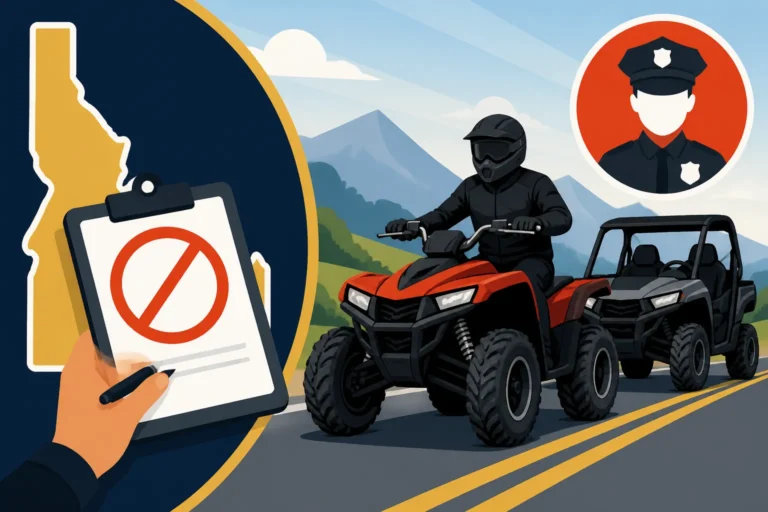
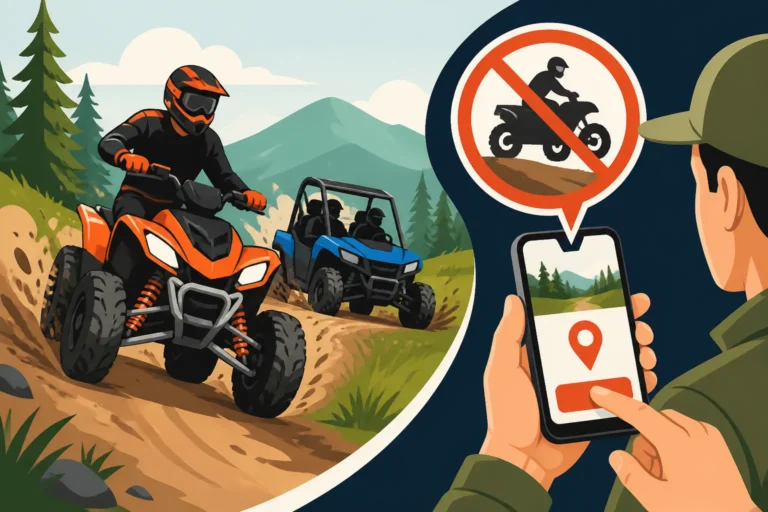
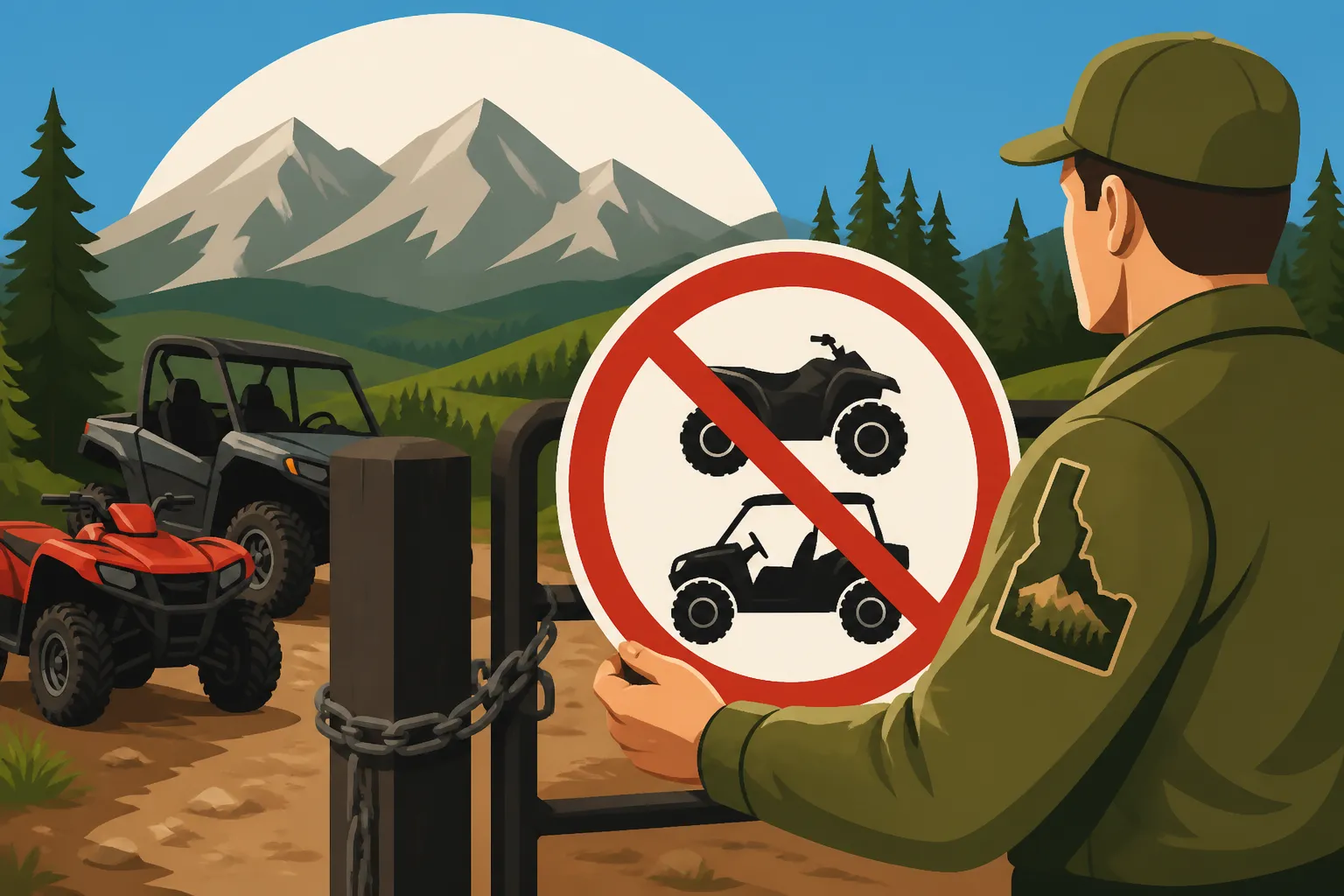
Look for signs that clearly state "Road Closed to OHVs," "Motorized Vehicles Prohibited," or similar wording. Often, there will be a graphic symbol of an OHV with a red circle and a diagonal slash through it, indicating a prohibition. These signs should be prominently placed at all entry points to the closed section of the road. Sometimes, the signs might specify which types of OHVs are prohibited (e.g., "ATVs and UTVs Prohibited"), or they might indicate a seasonal closure. It's important to differentiate these official signs from temporary warnings or informal requests. A true closure will be clearly marked, often on a standard highway signpost. If you see signs that look like they've been placed by individuals rather than the county, it's always best to err on the side of caution or double-check with the county sheriff's office. Ignoring official signage, even if you weren't aware of the ordinance, can lead to citations from the sheriff's department, which enforces county ordinances, as detailed in [Sheriff Enforcement on Idaho Back Roads].
Interpreting MVUMs and Local Maps: Digital and Physical Resources
Beyond physical signs, the most reliable way to know which roads are open or closed to OHVs is by consulting Motor Vehicle Use Maps (MVUMs) and other local maps.
While MVUMs are primarily issued by the Forest Service and BLM for federal lands, they often provide valuable context for adjacent county roads or indicate where federal roads transition into county jurisdiction. These maps are the definitive guide for where you can legally ride motorized vehicles. They'll show roads designated for highway-legal vehicles, roads open to all vehicles (including OHVs), and roads explicitly closed to certain vehicle types. It's crucial to understand [Reading an Idaho Motor Vehicle Use Map] and carry one with you for the areas you plan to explore. For county-specific road closures, you'll need to look beyond MVUMs. Many Idaho counties publish their OHV ordinances and often provide maps on their websites showing designated routes and restricted areas. Apps like onX Offroad or other GPS tools can also be invaluable, as they often integrate data from MVUMs and local sources, providing real-time awareness of your location relative to restricted zones. However, always remember that technology can have its limits, especially in remote areas with no cell service, so a physical map and compass remain essential backup tools. Some riders even go as far as to equip their machines with robust navigation systems, and for that, reliable accessories from brands like SuperATV can ensure your screens are protected and visible, no matter where your adventure takes you.
Enforcement and Consequences: Fines and Penalties
Ignoring a road closure isn't just about breaking a rule; it carries real consequences, including fines and penalties. Law enforcement takes these closures seriously, especially if they were implemented due to safety or environmental concerns.
If you're caught riding an OHV on a road that's been closed by county ordinance, you can expect a citation. The specific fine amount will vary by county and the severity of the violation, but it's typically an expensive lesson. Beyond monetary fines, repeated violations or particularly egregious acts (like damaging the road or trespassing on private property while attempting to bypass a closure) could lead to more severe penalties. In some cases, your machine could even be impounded. Furthermore, violations can impact future access for all riders. When law enforcement has to frequently respond to illegal riding, it reinforces the perception that OHVs are a problem, making it harder for advocacy groups to argue for expanded access or prevent future closures. It's a collective responsibility, and by respecting posted closures, we help maintain a positive image for the OHV community. Always be sure to keep your [What Idaho Requires Before You Ride a County Road] paperwork handy, as an officer will likely ask for it at a stop.
Challenging a Closure or Advocating for Access
It's easy to feel helpless when a road you love is closed, but you're not without recourse. There are avenues for challenging closures, advocating for access, and influencing future decisions. It requires active participation and a willingness to engage with the system.
Engaging with Local Government: Attending Meetings, Writing Letters
One of the most direct ways to have an impact is by engaging with your local government. This means being proactive, not just reacting after a decision has been made.
Start by regularly attending county commissioner meetings, even if there isn't an immediate issue. This helps you understand the rhythm of local governance and build relationships with your elected officials. When a proposed closure is on the agenda, be there to offer constructive input during the public comment period. Prepare your points, speak clearly and respectfully, and focus on solutions or compromises rather than just complaints. For example, instead of just saying "don't close this road," you might suggest alternative routes, propose speed limits or time-of-day restrictions for OHVs, or offer to organize volunteer efforts for road maintenance. Writing thoughtful, well-researched letters or emails to your commissioners can also be highly effective. Detail how the closure impacts you, offer factual information, and suggest alternatives. Personal stories, especially when backed by facts and a collaborative spirit, can resonate more than angry rhetoric. Remember, commissioners are often balancing many competing interests; showing them you're a responsible user who wants to be part of the solution can make a huge difference.
Joining OHV Advocacy Groups: Collective Action
While individual voices are important, collective action through OHV advocacy groups can amplify your message significantly. There's strength in numbers, and these organizations are often well-versed in navigating local politics and legal frameworks.
Idaho is home to numerous [Idaho OHV Clubs and Trail Adoption] organizations dedicated to preserving and expanding access for motorized recreation. These groups often have direct lines of communication with county and state officials, monitor proposed legislation and ordinances, and have the resources to present a unified front. By becoming a member, you contribute to their efforts, whether it's through membership dues that fund advocacy work, or by volunteering your time for trail maintenance or public outreach. These groups can educate you on upcoming proposals, guide you on how to effectively comment on an ordinance, and even provide legal counsel if necessary. They often organize letter-writing campaigns, attend hearings en masse, and work to build positive relationships with landowners and other user groups. Joining such a group not only helps protect your riding opportunities but also connects you with a community of like-minded enthusiasts who share your passion for Idaho's backcountry.
Understanding the Appeals Process: If One Exists
In some cases, if an ordinance is passed that you believe is unjust or legally flawed, there might be an appeals process. However, this is generally a more complex and legally intensive route.
Appealing a county ordinance typically involves legal action and can be an expensive and time-consuming endeavor. The grounds for appeal are usually limited to procedural errors in how the ordinance was passed (e.g., failure to provide adequate public notice) or if the ordinance is deemed arbitrary, capricious, or unconstitutional. It's not usually about simply disagreeing with the decision itself. Before considering an appeal, it's crucial to consult with an attorney who specializes in administrative law or land use. OHV advocacy groups often have legal resources or can recommend legal counsel who understand the nuances of these cases. While an appeal might seem like a last resort, knowing that it could be an option underscores the importance of being aware of the process from the very beginning, ensuring that all procedural requirements were met by the county.
Staying Informed: Your Role as an Idaho Rider
The best defense is a good offense, and for OHV riders, that means staying informed. Being proactive about understanding local rules and potential changes can save you headaches, fines, and wasted travel time.
Monitoring County Websites and News: Proactive Research
Your first line of defense in staying informed about county road closures is proactive research through county websites and local news.
Most Idaho counties maintain official websites where they post public notices, meeting agendas, and newly adopted ordinances. Make it a habit to check the "Commissioners" or "Planning & Zoning" sections of the county websites for the areas you frequently ride. Look for upcoming meeting agendas that might include discussions about road use or OHV access. Local newspapers, both print and online, are also excellent sources of information. They often cover county commissioner meetings and proposed changes that might affect recreational access. Setting up Google Alerts for keywords like "OHV ordinance [County Name]" or "road closure [County Name]" can also provide automated updates delivered to your inbox. Being diligent with this monitoring means you'll be aware of potential closures before they become official, giving you time to engage in the public comment process if necessary.
Subscribing to OHV Alerts and Club Communications: Community Networks
Beyond official county channels, a fantastic way to stay connected is by subscribing to OHV alerts and club communications. This taps into the collective knowledge and advocacy efforts of the wider riding community.
Many Idaho OHV clubs and associations, like the Idaho Recreation Council, have email newsletters or social media groups where they share critical updates regarding trail and road closures, legislative efforts, and public hearings. These groups are often the first to hear about proposed changes and can quickly disseminate information to their members. Subscribing to these alerts ensures you're not relying solely on your own research, but benefiting from the efforts of dedicated volunteers who are actively monitoring these issues. This is also where you'll learn about volunteer trail days or opportunities to support initiatives that keep trails open. Some organizations, for example, might be working with county officials to find solutions that allow for continued OHV access on specific roads, perhaps through seasonal use agreements or designated routes. Participating in this community network ensures you're part of a larger conversation and can lend your voice when it counts.
Respecting Posted Closures: Being a Responsible Rider
Ultimately, once a road is officially closed to OHVs, respecting those posted closures is paramount to being a responsible rider. While it's frustrating to lose access, ignoring a closure undermines the efforts of advocates and puts all riders in a negative light.
When you see an official sign indicating a road is closed to OHVs, turn around. Don't try to find a way around it, and certainly don't assume it doesn't apply to your specific machine. Ignoring closures can lead to citations, which not only cost you money but also contribute to a perception among local officials and residents that OHV riders are disrespectful or prone to breaking rules. This negative perception makes it exponentially harder for OHV advocates to argue for more access or prevent further closures in other areas. Your actions, whether good or bad, reflect on the entire riding community. By demonstrating responsible behavior, adhering to rules, and respecting private property and local ordinances, we collectively build goodwill and trust, which are essential for maintaining and expanding our riding opportunities in Idaho. This also means being knowledgeable about specific local rules, like [Idaho Rules Where a Forest Road Becomes a Highway], as county roads often connect these different land designations. Ensuring your machine is well-maintained and equipped, perhaps with durable parts from SuperATV, also shows a commitment to safe and responsible riding, minimizing breakdowns that might lead to unintended trespass or dangerous situations.
County Road Closure Process Snapshot
| Step | Description | Key Stakeholders | Public Involvement | Potential Outcome |
|---|---|---|---|---|
| 1. Initiation | Concerns raised by citizens, law enforcement, or commissioners. | Citizens, Sheriff, Commissioners | Informal complaints, petitions | Item placed on Commission agenda. |
| 2. Research & Review | County staff gathers data on safety, impacts, alternatives. | County Staff, Commissioners | Informal discussions | Draft ordinance created. |
| **3. Public Hearings | Formal meetings for public comment on proposed closure. | Commissioners, Public, OHV Groups | Formal testimony, written comments | Feedback informs final decision. |
| 4. Ordinance Adoption | Commissioners vote on the proposed ordinance. | Commissioners | Final vote, sometimes more comment | Ordinance passed or rejected. |
| 5. Implementation | Signage installed, ordinance published, effective date starts. | County Staff, Enforcement | None (post-decision) | Road legally closed to OHVs. |
| 6. Enforcement | Law enforcement monitors and cites violations. | Sheriff, Riders | None | Fines, penalties for non-compliance. |
Disclaimer
This article is for general informational purposes only and does not constitute professional advice. Laws, prices and regulations vary by location and change over time. Consult a qualified professional for guidance on your specific situation.