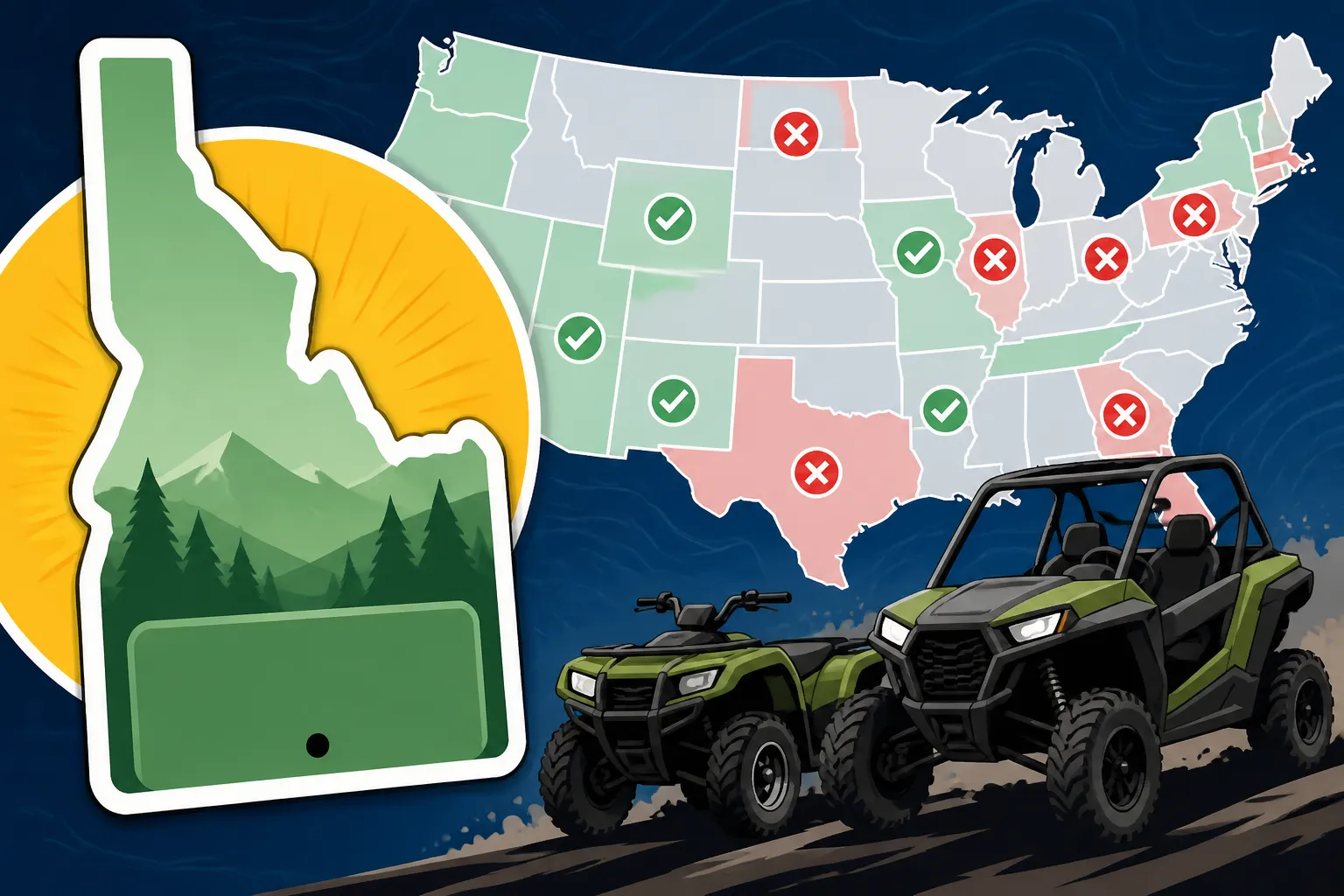
Does Any State Still Honor an Idaho Sticker?
An Idaho sticker can make an Idaho OHV legal to use under Idaho’s rules, but it is not a nationwide permit. Riders crossing state lines need to check whether the destination state recognizes their exact Idaho credential, and whether other requirements apply to the machine or route.
Does another state honor an Idaho OHV sticker?
There is no blanket rule that makes an Idaho OHV sticker valid everywhere. Another state may recognize a particular Idaho registration or permit for some purposes, but you should confirm that directly with the destination state before riding. A sticker that works on Idaho trails is not automatically permission to ride public land elsewhere.
The word “honor” can also mean different things. A state might recognize an out-of-state registration as proof that a machine is registered, while still requiring its own trail permit. Or it might have a specific reciprocity arrangement that applies only to certain machines, credentials, or places. Recognition of the sticker does not necessarily mean the rider can use every road or trail.
Idaho’s reciprocity rules have changed, and old advice can be misleading. If you have heard that a nearby state accepted an Idaho sticker in the past, don’t rely on that alone. Check the current rules for the state where you plan to ride. Why Reciprocity Ended for Idaho Riders explains the background, while Idaho’s Non-Resident OHV Sticker covers the permit Idaho requires from many visitors riding here.
A practical answer is: some states may recognize an Idaho credential under specific rules, but you should not treat an Idaho sticker as a permit for another state unless that state confirms it. This is especially important for riders planning a trip through multiple states. Each state may have its own definitions, fees, permit types, land restrictions, and rules for out-of-state machines.
What your Idaho sticker does and does not establish
Before checking another state’s rules, identify exactly what you have. “Idaho sticker” may refer to a resident OHV registration or sticker, a nonresident permit bought for riding in Idaho, or a sticker displayed with other machine paperwork. Those credentials are not necessarily interchangeable.
An Idaho resident registration or sticker is tied to Idaho’s requirements. It does not, by itself, prove that another state has granted you permission to ride there. An Idaho nonresident sticker is generally a way for a visitor to meet Idaho’s requirements; buying one does not give the machine a portable permit for other states.
A sticker also does not settle every question about the vehicle. A state may distinguish between a quad, dirt bike, side-by-side, or other off-highway vehicle. It may ask whether the machine is registered in its home state, whether it meets equipment rules for a road, or whether the rider has a separate permit for public land. A sticker should not be treated as a title, a road plate, proof of insurance, or permission to use a closed route.
| What you have | What it may show | What it does not automatically prove |
|---|---|---|
| Idaho resident OHV sticker or registration | That you have met a relevant Idaho registration requirement | That another state accepts it as its permit |
| Idaho nonresident sticker | That you have obtained a permit for riding in Idaho, if required | That you can ride in a different state |
| Idaho restricted-use plate | A separate Idaho credential with its own limits | That the machine can use every public road or trail |
| Machine title or bill of sale | Ownership or a record of the sale | That the machine has current riding permission |
For background on the credentials themselves, see Why an Idaho Plate Is Not a Registration on Its Own and What Idaho’s $3 Restricted Use Plate Covers. If your trip also includes riding in Idaho, What Idaho Riders Need Before They Ride is a useful overview of requirements within the state.
How to check before taking an Idaho machine across a state line
Do the check before loading the machine, not after arriving at a trailhead. Rules can depend on the destination, the machine, and the land manager responsible for the route. Use the destination state’s current official information, and ask for clarification if the rule does not clearly cover your credential.
-
Name the exact credential. Write down whether the machine has an Idaho resident OHV registration, an Idaho nonresident sticker, a restricted-use plate, or another document. If you are unsure what the sticker represents, check the paperwork that came with it or contact the Idaho agency or vendor that issued it.
-
Identify the machine and its use. Be ready to say whether it is a quad, dirt bike, side-by-side, or another type of OHV, and whether you plan to ride on a trail, public-land road, or local road. A rule that applies to one machine or land type may not apply to another.
-
Ask whether that exact Idaho credential is recognized. Avoid asking only, “Do you honor Idaho stickers?” Ask whether the state accepts your specific Idaho registration or permit for the machine and the planned use. Ask whether you still need a local permit, decal, or registration.
-
Check the route and land manager separately. A state permit does not necessarily open every route. Forest roads, public trails, state lands, and locally managed roads can have different access rules. Confirm that the route allows your machine’s width and type, and check for seasonal closures or other restrictions.
-
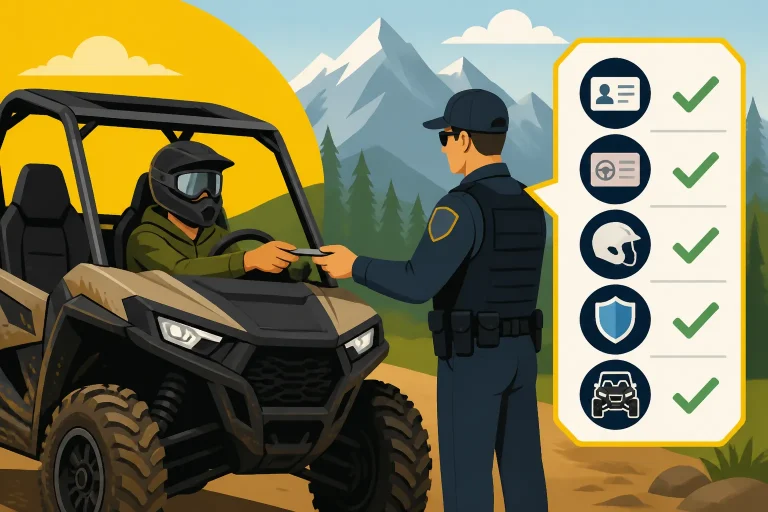
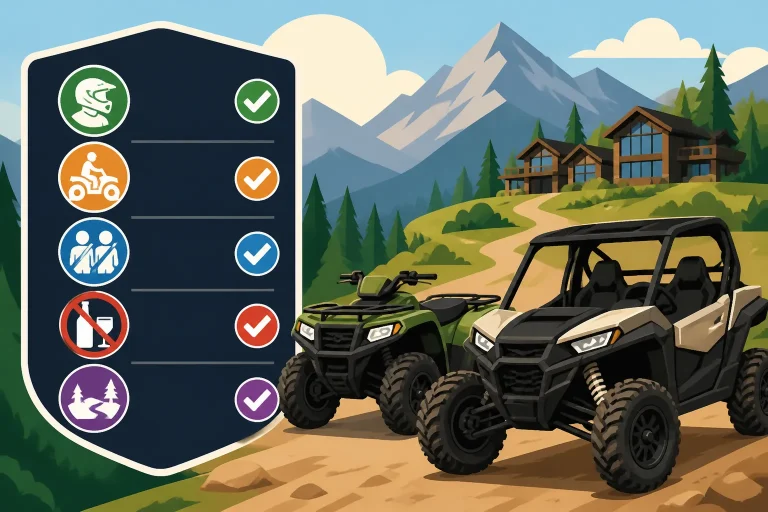
Confirm the rider requirements. Permit recognition does not waive rules for age, supervision, safety training, helmets, passengers, or road equipment. These requirements can change when you cross a state line, even if the machine itself is properly registered.
-
Carry the supporting documents. Bring the registration or permit record, proof of ownership if appropriate, and any separate permit required by the destination. Keep the documents accessible, but avoid carrying an original title on the trail unless an agency specifically requires it.
For an Idaho resident heading east or south, start with the destination’s rules rather than assuming a neighbor will accept the Idaho sticker. These pages may help narrow the question: Taking an Idaho Machine to Montana and Taking an Idaho Machine to Utah. Riders coming the other way can review Do Montana Riders Need an Idaho Sticker?, Oregon Riders Coming to Idaho, or Washington Riders Heading to Idaho.
If you are traveling across several states, make a short checklist for each one. Note the credential required, where to buy it, which routes it covers, and any rider or machine restrictions. Save the official instructions or confirmation with your trip documents. A screenshot can help when cell service is unavailable, but it does not replace carrying a required permit or displaying a required sticker.
Common mistakes when relying on reciprocity
Assuming a neighbor’s old rule still applies
Reciprocity agreements and permit programs can change. A friend’s experience from a prior trip, an old forum post, or a sticker from a previous season may not reflect the current requirement. Use current state information and verify the exact permit before setting out. What Idaho Charges an Out-of-State Rider can help visitors understand the Idaho side of a trip, but the destination state’s rules govern riding there.
Treating a sticker as permission to use every road
A sticker or registration is not a route map. It does not mean all public roads, trails, or land are open to OHVs. Check road and trail access separately, including restrictions imposed by local authorities and land managers. For Idaho routes, Which Idaho Roads Are Open to OHVs and Reading an Idaho Motor Vehicle Use Map explain why access can vary even when a machine has the appropriate Idaho credential.
Confusing registration with a road-use credential
A machine may need more than an OHV sticker to travel on a public road. Road access can depend on a separate plate or permit, the road’s designation, required equipment, and local rules. A credential that supports trail riding should not be read as a general road-use authorization. If your trip involves road sections, confirm the rules for each state and road before riding.
Assuming the sticker is the only requirement
Even if a state recognizes an Idaho registration for one purpose, the rider may still need to meet age, supervision, safety-course, equipment, insurance, or land-access rules. Passengers can have separate restrictions, and a route may have a machine-width limit. Verify the whole set of requirements rather than stopping at the sticker question.
Buying a permit at the last minute without checking the route
A permit can be valid for a state but still not cover the particular land or activity you have in mind. Some areas have additional rules or seasonal closures. Check the land manager’s information and the route conditions before traveling. If the permit is available online, confirm that you have the correct type and know whether it must be printed, displayed, or carried electronically.
When the rules are unclear, contact the agency responsible for OHV registration or the land manager for the route. Describe the machine, the Idaho credential, and where you intend to ride. Keep a note of the answer and any official instructions. That extra check is simpler than arriving with a sticker that turns out not to meet the destination state’s requirements.
Disclaimer
This article is for general informational purposes only and does not constitute professional advice. Laws, prices and regulations vary by location and change over time. Consult a qualified professional for guidance on your specific situation.