Supervising From Another Machine
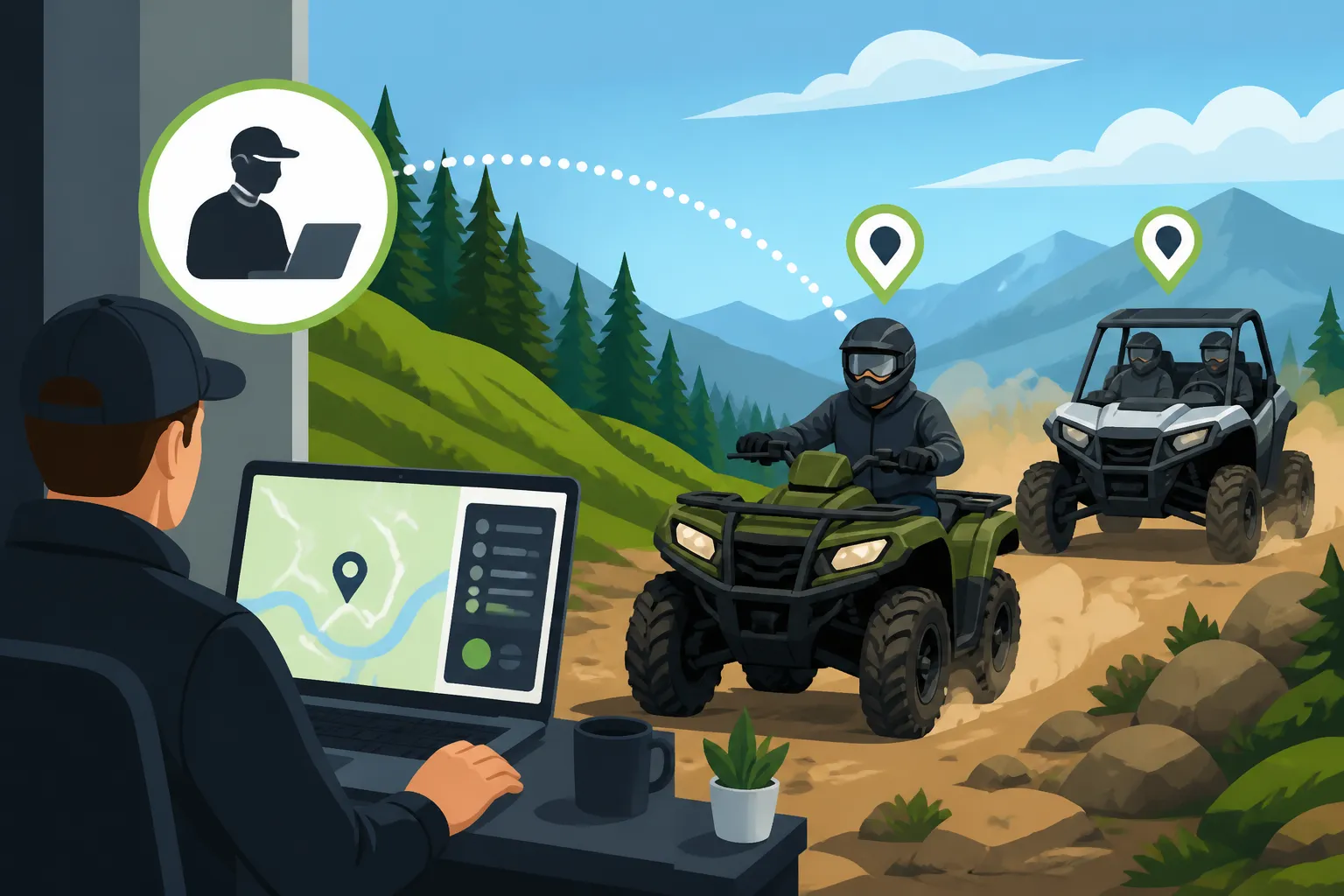
Idaho riders often want to supervise a child without walking the whole route. Riding another ATV or UTV can make that possible, but simply being in the same group may not meet the idea of direct supervision. The key is staying close enough to keep the young rider in sight and respond immediately, while checking that the age, course, machine and riding-area rules are covered.
Can You Supervise From Another Machine?
In situations where Idaho requires direct adult supervision, the adult does not necessarily have to be on foot or riding the same machine. An adult riding a separate ATV or UTV can supervise, provided the adult stays close enough to maintain effective oversight. Idaho’s supervision guidance uses a 300-foot distance, but distance alone is not a complete safety test: the adult must be able to monitor the young rider and intervene promptly.
That means a parent leading a group from far ahead, following behind out of sight, or waiting at the next trail junction may not be providing meaningful direct supervision. A supervisor on another machine should be positioned so the young rider is visible, within the applicable distance, and not separated by terrain or traffic that prevents a quick response.
The rule is most relevant to riders under 16 on public land. The details can depend on the rider’s age, the machine, the type of land and whether the rider has met applicable safety-course requirements. Don’t assume that a completed course automatically removes every supervision requirement, or that an adult’s presence makes every machine or trail appropriate. Review Idaho Supervision Rules and the 300-Foot Rule and What Counts as Direct Supervision in Idaho for the related requirements.
A useful way to think about it is this: the supervisor is responsible for more than keeping pace. They need to be close enough to observe the rider’s decisions, spot trouble early and stop or assist the rider when needed. A second machine can help with that, but only if the adult uses it to stay engaged rather than getting ahead or leaving the child to follow independently.
| Riding setup | What to consider |
|---|---|
| Adult rides beside the youth on an open, familiar route | Easier to observe and respond, if the machines can travel safely side by side |
| Adult rides just ahead | Keep the youth visible and close; stop often enough to check that they are following safely |
| Adult follows behind | Maintain a clear view and enough room to react; avoid letting dust, bends or traffic hide the youth |
| Adult is on foot while the youth rides | Check the separate guidance on distance and direct supervision; foot supervision has practical limits |
| Adult rides elsewhere in the group | Group membership alone is not a substitute for staying close and actively supervising |
The practical answer is yes: supervising from another machine can work. But the supervisor must be able to keep the rider within the relevant distance and maintain direct oversight. If the route makes that impossible, choose a different route, slow the group or have the adult ride closer.
What Direct Supervision Looks Like on the Trail
A 300-foot limit should not be treated as a target. On a winding trail, in dust, among trees or on a steep slope, 300 feet may be too far for the adult to see what is happening. A supervisor can be technically close while still being unable to notice a fall, a wrong turn or a sudden stop. The safer standard is the shortest distance that allows the adult to observe and respond.
Stay in sight where possible
On an open road or wide trail, an adult may be able to see the youth while riding ahead or behind. On a narrow route with bends, trees or elevation changes, that visibility can disappear quickly. Pause before blind corners and trail junctions, and regroup after sections where the child may be out of view.
Avoid assuming that a youth can manage a route alone just because the adult can still hear the machine. Engine noise is not a reliable way to track a rider, especially when other machines are nearby or the terrain blocks sound.
Match the pace to the least experienced rider
The adult’s machine should not set a pace that pressures the child to keep up. Give the youth room to stop, choose a line and handle small obstacles without being crowded. If the child is falling behind, struggling to control the machine or riding beyond their comfort level, stop and adjust the plan rather than calling for them to catch up.
A supervisor should also avoid riding so close that the adult’s machine creates dust, blocks the child’s view or limits their room to maneuver. On a tight trail, follow at a safe distance and stop where both machines can pull off without blocking other users.
Plan how to regroup
Before setting off, agree on simple signals and a plan for junctions. For example, the lead adult can stop at every turn and wait until the youth arrives before continuing. If the adult follows, the child should know not to continue past a missed junction without a clear plan. Do not rely on a young rider to make route decisions alone when the adult is out of sight.
Discuss what to do if a machine stalls, a rider falls, someone needs a break or the group gets separated. Keep the plan simple enough for the child to remember under stress. On a remote trail, a small mistake can become a bigger problem if the child keeps moving while the adult is trying to catch up.
For more on the distance and different supervision arrangements, see The 300-Foot Supervision Distance and Supervising on Foot Within 300 Feet. The same core point applies whether the adult is walking or operating another machine: remaining nearby is not enough if the adult cannot actually monitor the rider.
Check the Rider, Machine and Riding Area Before You Go
Supervision is only one part of whether a young person can ride. Before a trip, check the rider’s age, the machine’s size and controls, any required safety training, and the rules for the land and route. A child may be close to an adult and still be on a machine that is too powerful, too large or unsuitable for their experience.
Confirm whether a course is required
Idaho’s youth safety-course rules and supervision requirements are related, but they are not interchangeable questions. Check the current course rules for the rider’s age and the kind of riding planned. If a course certificate applies, bring it or have a reliable way to show it when needed. Read Idaho OHV Safety Course Requirements and Who Must Take the Idaho Safety Course before relying on a course to determine whether the adult must accompany the rider.
A course teaches important skills, but it does not guarantee that a rider is ready for every trail, weather condition or machine. Continue supervising according to the rules that apply, and use judgment about the child’s actual ability.
Match the machine to the rider
A youth should be able to reach and operate the controls, steer accurately, brake effectively and stop the machine without help. A machine that is too heavy or powerful can be difficult to control even at low speed. Make sure the rider understands how to start, stop and shut off the machine, and practice in a controlled area before entering a shared public route.
Idaho also has rules concerning youth riders and machine size. Check Idaho Age Rules for Riders Under 16 and Youth Machine Size Rules Idaho Parents Ask About rather than judging suitability by age alone. A young rider who is legally allowed to operate a machine may still need a smaller or less demanding one.
Verify the land and route
Public trails, roads, private property and other riding areas may have different requirements. A route that starts on private ground may connect to public land, where different permit, course, supervision or access rules apply. Check the whole planned route, not just the place where the ride begins. Idaho Permit Rules on Public Land explains why the location matters, while Idaho Rules on Private Land covers a different setting.
Confirm that the route is open to the machine’s width and type, and that the youth can handle its terrain. A narrow trail, steep descent or busy road crossing can demand more skill than a broad, easy track. If a route includes a road, check the separate rules for road riding; a supervisor’s presence does not make a closed road legal to use.
Before leaving, check helmets and other required protective equipment for the youth. Idaho has specific helmet rules for younger riders; see Idaho Helmet Requirements Under 18. Eye protection, sturdy clothing and properly fitted gear are sensible safety measures even where a particular item is not required.
A Practical Supervision Plan
A short plan helps the adult stay attentive and gives the youth clear expectations. Before starting, decide who leads, where the group stops and what happens if anyone loses sight of the others.
- Confirm the rules. Check the rider’s age, course status, machine and land type against current Idaho requirements. If anything is unclear, ask the relevant land manager or Idaho Parks and Recreation before riding.
- Choose a route the youth can manage. Consider distance, visibility, traffic, trail width, surface and difficulty. Avoid a route where the adult would have to leave the child out of sight for long stretches.
- Assign positions. Decide whether the adult will ride ahead or behind. The adult should be able to see the youth often and close the gap quickly. If the terrain blocks visibility, stop and regroup rather than continuing on assumptions.
- Set simple signals and stop points. Agree on how to signal a stop, what to do at a junction and where to wait if the group becomes separated.
- Ride at the youth’s pace. Keep enough room to avoid crowding, but do not let the distance grow until the adult cannot observe or assist.
- Reassess as conditions change. Dust, traffic, fatigue, weather or a difficult section may make the original spacing unsafe. Shorten the distance or turn back when necessary.
Riding another machine can be a practical way to supervise, especially when the adult needs to demonstrate a line or manage more than one rider. It works only when the adult remains actively responsible for the child. If the adult is focused on keeping up with other riders, navigating unfamiliar terrain or managing a separate problem, the child may not be receiving effective supervision.
When in doubt, ride closer, choose an easier route or stop. A successful youth ride is not measured by how far the group goes; it is measured by whether the child can ride within the applicable rules and the adult can respond when needed.
Disclaimer
This article is for general informational purposes only and does not constitute professional advice. Laws, prices and regulations vary by location and change over time. Consult a qualified professional for guidance on your specific situation.