Idaho Helmet Rules for a Passenger Under 18
A child riding as a passenger needs more than a seat and a ride plan: the helmet rule depends on age and, for some UTVs, the vehicle’s safety equipment. Idaho’s requirement is straightforward once you know the exception. Here’s how to check whether a passenger under 18 needs a helmet and what to confirm before heading out.
Idaho’s helmet rule for passengers under 18
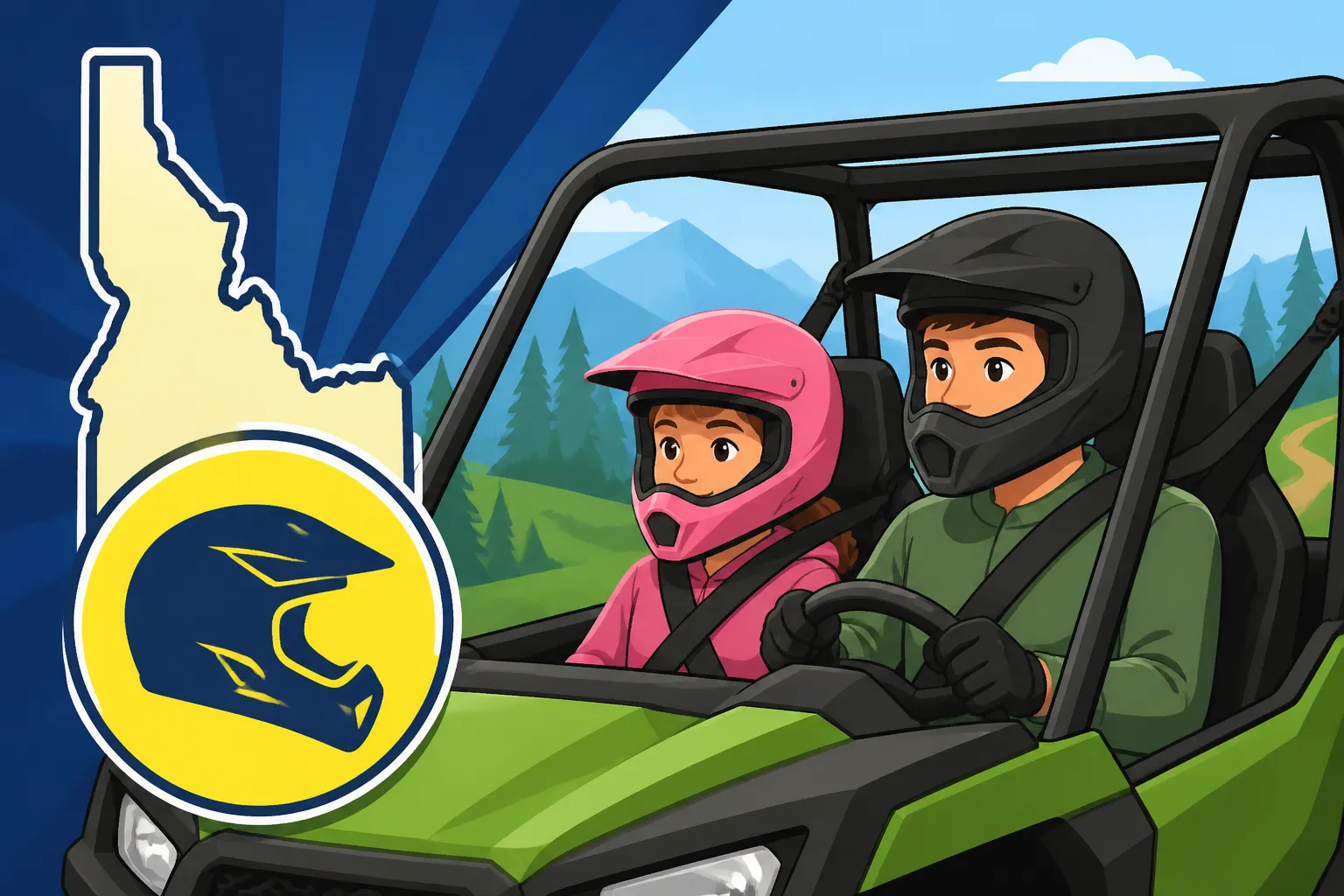
Idaho requires riders under 18 to wear a DOT-approved helmet when operating an off-highway vehicle. The Idaho Department of Parks and Recreation also specifies that a DOT-approved helmet is required for operators and passengers under 18. That means a child riding behind an adult is covered by the rule too; being a passenger does not by itself remove the helmet requirement.
The main exception concerns certain UTVs. According to the Idaho Department of Parks and Recreation, UTVs equipped with a roll cage and seat belts are exempt from the helmet requirement. The exception is tied to the vehicle’s equipment, not simply to the passenger’s age or the presence of an adult driver.
| Situation | Helmet guidance |
|---|---|
| Passenger under 18 on an off-highway ATV or other OHV | A DOT-approved helmet is required, according to the Idaho Department of Parks and Recreation. |
| Passenger under 18 in a UTV with a roll cage and seat belts | The UTV is exempt from the helmet requirement, according to the Idaho Department of Parks and Recreation. |
| Passenger under 18 in a UTV without the listed equipment | Do not assume the exception applies; confirm the vehicle’s status with the Idaho Department of Parks and Recreation. |
| Adult passenger | The specific under-18 requirement does not answer every question about adult helmet use; check the rules for the vehicle and where you’ll ride. |
The practical takeaway is to identify the vehicle before deciding what the passenger should wear. An ATV and a UTV are not interchangeable categories for this purpose, and a UTV exception should not be assumed unless the vehicle has both the listed roll cage and seat belts.
If you want more detail on the broader age rule, see Idaho Helmet Requirements Under 18 and Idaho Helmet Standards and Who Must Wear One. For a child riding in particular, Idaho Rules for a Child Passenger may help with the other passenger questions to consider.
How to check whether the UTV exception fits
Start with the machine itself, not with what a seller, rental counter, or friend calls it. Confirm that it is a UTV and inspect whether it has a roll cage and seat belts. Idaho’s stated exception applies to UTVs equipped with both. If either feature is missing, damaged, or uncertain, do not treat the exception as settled based on appearance alone.
A roof, windscreen, doors, or side nets may be useful safety features, but they are not the two items named in the helmet exception. Likewise, the fact that a passenger is seated inside a vehicle does not establish that the exception applies. Check the actual equipment and, when you are unsure about the vehicle’s classification or configuration, ask the Idaho Department of Parks and Recreation before riding.
It is also sensible to check the vehicle’s owner information or ask the owner to identify the model and its safety equipment. This can matter when borrowing a machine or renting one, because the passenger may not know whether the vehicle meets the exception. If the answer is unclear, the safer practical choice is to have the passenger wear a DOT-approved helmet and confirm the rule with the agency.
A quick pre-ride check can keep the decision simple:
- Identify whether the machine is an ATV, UTV, or another type of off-highway vehicle.
- If it is a UTV, verify that it has both a roll cage and seat belts.
- If the passenger is under 18, provide a DOT-approved helmet unless you have confirmed that the UTV exception applies.
- Check that the helmet fits the passenger and can be fastened securely.
- Recheck the requirement if the machine, passenger, or planned riding area changes.
This is a helmet-rule check, not a full vehicle-safety inspection. A UTV’s exemption from the helmet requirement does not mean that every passenger arrangement or riding situation is automatically safe. Follow the vehicle’s seating and restraint instructions, and do not carry someone in a position that the machine is not designed to accommodate.
Choosing and fitting a DOT-approved helmet
When a helmet is required, the key is that it must be DOT-approved. A helmet that merely looks like a motorcycle or off-road helmet is not necessarily enough. Check the manufacturer’s markings and product information rather than relying on a listing title or a seller’s description alone.
Fit matters, especially for a young passenger who may have outgrown a helmet since the last ride. The helmet should sit securely and stay in place when fastened, without shifting freely. Make sure the strap can be buckled and adjusted correctly. If the helmet is uncomfortable or loose enough that the passenger keeps moving it around, it may not be a good fit. Follow the helmet maker’s fitting instructions and replace a helmet that is damaged or no longer fits properly.
Whether you shop locally or order through Amazon, verify the DOT approval information for the specific helmet model before buying. Do not rely only on a broad product category or a photograph. If you cannot confirm that the helmet meets the requirement, choose a clearly documented option or ask the seller for clarification.
Helmet rules are only one part of protective gear. Idaho Department of Parks and Recreation guidance says riders must wear goggles or a face shield. For eye-protection details, including the listed lens markings and materials, see Goggles or a Face Shield on the Road. That title focuses on road riding, so confirm which rules apply to your planned route rather than assuming every road and off-highway requirement is identical.
For a family ride, a helmet that fits each passenger is more useful than a single spare helmet passed between riders. Check the fit before leaving home, not after arriving at the trailhead. If a child has no suitable helmet, arrange one before the trip or choose a plan that does not put the child on the machine.
Plan for the ride, not just the helmet
Helmet requirements can be easy to overlook when a trip includes several machines, borrowed equipment, or passengers of different ages. Make the helmet decision part of the pre-ride conversation: identify who will ride, what machine they will use, and whether any UTV exception actually applies. If a family member may switch seats or vehicles during the day, check the rule for each machine rather than assuming the first answer carries over.
The riding area also matters for planning. Idaho Department of Parks and Recreation advises users to obtain permission before entering private land and to check with the appropriate government offices for restrictions on public land. Lands, roads, and trails within National Forest boundaries may have motor-vehicle restrictions; obtain the relevant Motor Vehicle Use Map or contact the local Forest Service office for access information. A route that looks open on a general map may still have restrictions.
For family trail planning, Riding Idaho Trails With Kids can help you think through the broader trip. If you are sorting out registration and other pre-ride requirements, What Idaho Riders Need Before They Ride is a useful next step.
When in doubt about a passenger’s helmet obligation, start with the clear baseline: Idaho requires a DOT-approved helmet for an off-highway passenger under 18, unless the qualifying UTV exception applies. Confirm the machine’s type and equipment before relying on that exception. A few minutes spent checking the vehicle and helmet can prevent confusion once everyone is ready to ride.
Sources
- Department of Parks and Recreation — Trail Ranger Application | Department of Parks and Recreation (checked November 3, 2026)
- Idaho Department of Parks and Recreation — ID_OHV_LE_Guide.pdf (checked November 3, 2026)
- Idaho Department of Parks and Recreation — OHV_BOOKLET.pdf (checked November 3, 2026)
Disclaimer
This article is for general informational purposes only and does not constitute professional advice. Laws, prices and regulations vary by location and change over time. Consult a qualified professional for guidance on your specific situation.